
Authority to open border checkpoints rests with army chief, says defence forces chief
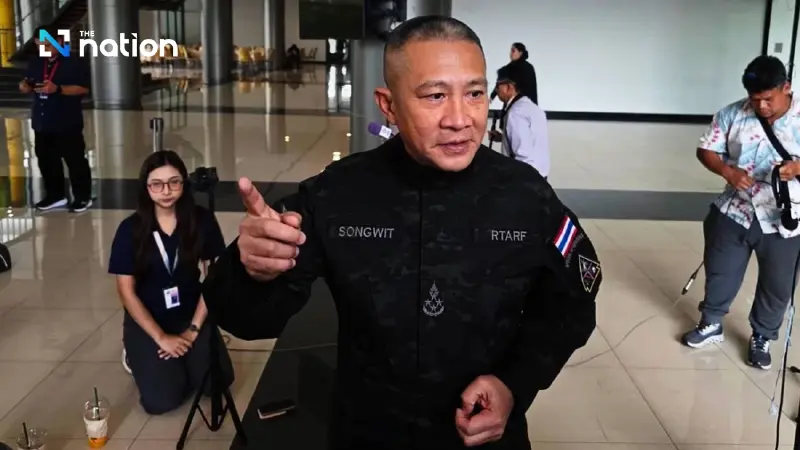


Gen Songwit Noonpackdee, Chief of Defence Forces, clarified on Friday that the authority to open or close border checkpoints lies with the Commander-in-Chief of the Royal Thai Army (RTA).
Responding to questions on who holds such authority, Songwit explained that the matter was decided at a National Security Council (NSC) meeting on June 6.
At that meeting, it was proposed that the army chief oversee operations along the border, including both military activities and the opening or closure of checkpoints.
He noted that the current authority rests with the army chief, who can exercise this power under martial law across all areas under RTA control.
Songwit emphasised that border fencing is essential, describing it as a measure to counter threats and illegal movement while safeguarding national sovereignty.
On whether construction of the fence faced obstacles, he said discussions on boundary lines and international law would fall under the NSC’s responsibility. However, he stressed that the armed forces’ commanders were unanimous in recognising the necessity of the measure to defend sovereignty from external threats.

He added that the issue was not limited to this particular area, noting that there are many other zones where continuous military patrols are not possible. He recalled that fences had been built in areas that once posed security threats around Thailand, such as in the South some 30 years ago.
Songwit asserted that border fencing is an effective measure to make illegal crossings more difficult, stressing that he considered it necessary and that state security policies would also recognise the army’s need to pursue this approach.
