
Court clears way for extradition of She Zhijiang to China, rules Extradition Act constitutional
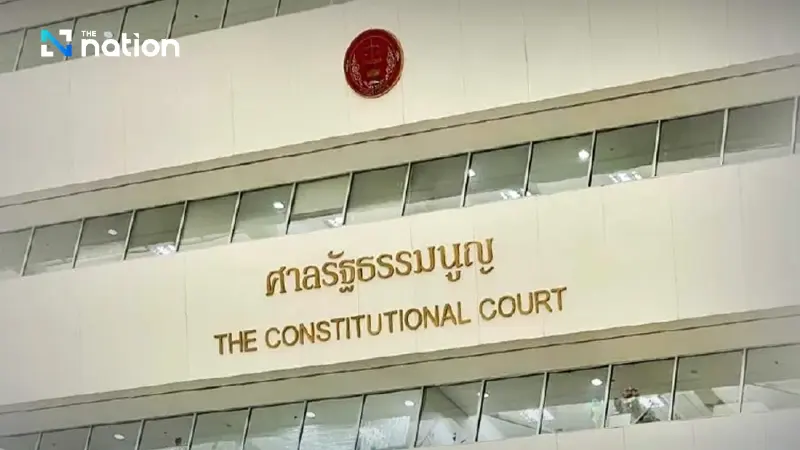


The Constitutional Court rules unanimously that Thailand’s Extradition Act is constitutional, allowing She Zhijiang’s extradition to China to proceed

The Constitutional Court ruled unanimously that provisions in the Extradition Act 2008, specifically Section 19 (2)(3) and Section 21 (2–3), do not contravene the Constitution.
The ruling follows a petition by She Zhijiang, a Chinese national wanted by Beijing for alleged involvement in operating online gambling networks and casinos in Myanmar, causing damages of over 150 million yuan (about 700 million baht). He was arrested in Thailand under an extradition request from the Chinese government.
The petition
She Zhijiang filed his petition through the Appeals Court (case No. Por Dor 1/2024, Red No. 3494/2025) asking the Constitutional Court to determine whether Sections 19 and 21 of the Act violate Sections 4, 5, 25, 26, 27 and 29 of the Constitution, arguing that they infringed upon personal rights and human liberties protected by Thai law.
The Court confirmed that, although She is a foreign national, he is protected under Section 4 of the Constitution, which guarantees human dignity, rights, and freedoms for all individuals within the Kingdom, and thus had the right to file a petition under Section 212.
Court reasoning
After deliberation, the Court found that the contested provisions do not unlawfully restrict individual rights or freedoms and provide sufficient guarantees for a fair judicial process. Therefore, they are not unconstitutional.
- Section 19 (2)(3) authorises a court to detain a person for extradition if there is sufficient evidence and the case is not political or military in nature.
- Section 21 allows appeals against the lower court’s ruling within 30 days, with the decision of the Appeals Court deemed final.
The Constitutional Court stated that both sections ensure the extradition process remains lawful, transparent, and subject to judicial oversight.
Case continuation
The Office of the Attorney General’s International Affairs Department had previously requested She’s extradition in response to the Chinese government’s request. With the Court’s decision confirming that the Extradition Act complies with the Constitution, the extradition proceedings will continue as scheduled.
Summary of ruling
- Verdict: unanimous (9 – 0)
- Outcome: Sections 19 and 21 of the Extradition Act 2008 are constitutional.
- Effect: She Zhijiang’s extradition to China can proceed under normal judicial process.
