
US Embassy Clarifies: Rare Earths MOU Is Not Legally Binding
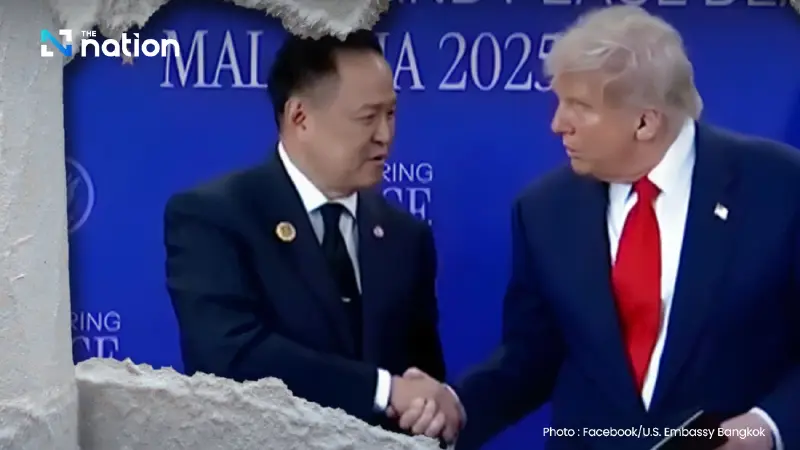


Thai cooperation aims to boost Thailand's processing industry and secure vital supply chains; agreement builds on existing trade and investment links
- The US Embassy has officially stated that the Memorandum of Understanding (MOU) with Thailand on rare earths is not a legally binding agreement.
- The agreement's purpose is to strengthen critical mineral supply chains and boost Thailand's processing industry, building on existing trade links.
- The clarification confirms the MOU does not affect existing agreements or the sovereign rights of either nation to manage their natural resources.
- Under the non-binding terms, the two countries will cooperate by sharing knowledge, technical expertise, and exploring new commercial opportunities.
Thai cooperation aims to boost Thailand's processing industry and secure vital supply chains; agreement builds on existing trade and investment links.
The United States Embassy has moved to clarify the legal status of a recent Memorandum of Understanding (MOU) signed between Washington and Bangkok concerning cooperation on critical minerals and rare earth elements.
The embassy stated that the agreement, while significant for strengthening bilateral trade and investment, is not intended to be legally binding under either international or domestic law.
The MOU was signed by the US and Thailand to fortify the critical minerals supply chain, encourage investment to drive domestic value-addition and processing industries in Thailand, and enhance the security of rare earth supply chains in both nations.

The clarification stresses that the document does not affect any existing agreements between the two countries, nor does it impact the sovereign right of either nation to manage its own natural resources.
Rather, it is designed to build upon and expand existing cooperation.
Under the terms of the MOU, the two allies will share knowledge and technical expertise on global best practices.
This is intended to increase the competitiveness of Thailand's critical minerals sector and aid Bangkok in analysing the full extent of its own mineral resource base.

The cooperation is projected to help both countries establish secure, resilient, and responsible critical minerals supply chains.
The agreement serves as a continuation of the longstanding US-Thai alliance, underpinned by robust commercial and investment ties.
It will allow both sides to exchange information on critical minerals projects, jointly explore new commercial opportunities, and seek further avenues for partnership.
