
Bangkok's 3-point anti-dust plan: Green List restricts trucks
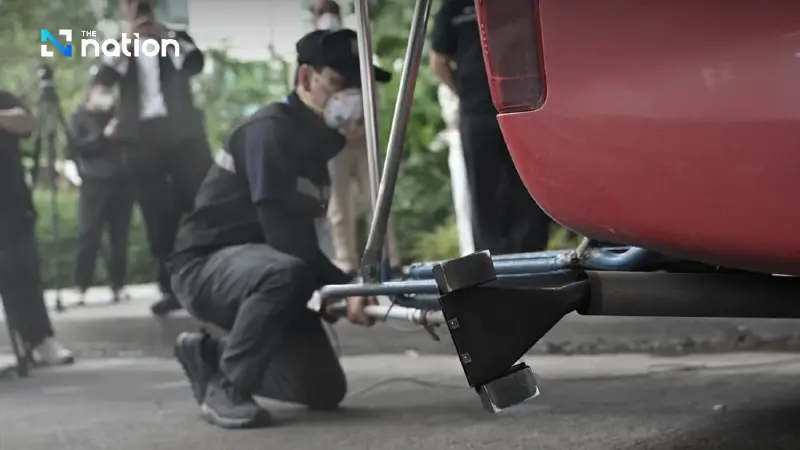


Governor Chadchart unveils 2025 Dust Season measures. Inspections target black smoke, tightening the limit to 20%. Green List system will control all heavy trucks.
- Bangkok has tightened vehicle emission standards, reducing the permissible smoke opacity from 30% to 20% to combat PM2.5 pollution.
- A "Green List" system will be enforced, prohibiting trucks with 6 or more wheels that are not registered from entering Bangkok during high-pollution periods.
- The city is also introducing a voluntary "Green List Plus" program, offering discounts to private car owners who change their engine oil and filters to reduce emissions.
Chadchart Sittipunt, Governor of the Bangkok Metropolitan Administration (BMA), disclosed information after an inspection of black-smoke-emitting vehicles at the Sathu Pradit Bus Depot and the Songthaew (pickup truck taxi) Station on Route 1261 in Yannawa District on November 3, 2025.
He stated that as of November, Bangkok has entered its "Dust Season." The main contributors to the PM2.5 problem are three key factors: stagnant weather conditions, diesel vehicle emissions, and biomass burning both within and surrounding the Bangkok area.
Stricter Black Smoke Control: From 30% to 20% Opacity
The BMA, in collaboration with the Pollution Control Department, the Traffic Police, and the Department of Land Transport, has upgraded the standard for vehicle emission control.
- New Standard: The permissible smoke opacity has been tightened, reduced from the previous 30% to just 20%.
- Implementation: The new standard took effect on November 1, 2025.
- Expected Impact: This new measure is anticipated to improve air quality by up to 24%.
Initial inspection results show 21 vehicles out of 900 checked failed to meet the standard. Notably, two songthaew vehicles were found to have an opacity exceeding 30%.
Legal action and fines under the Land Transport Act were enforced, and these vehicles must be repaired immediately to join the Green List system.
The Green List is a vehicle registration system established by the BMA as a measure to control PM2.5 air pollution, specifically from large vehicles.


Low Emission Zone (LEZ) and Green List: Targeting Trucks and Diesel Vehicles
Following the successful prohibition of trucks on the inner ring road last year, the BMA is expanding this measure across all 50 districts this year.
- Low Emission Zone (LEZ): The LEZ will be enforced during periods of poor air quality.
- Truck Restrictions: Trucks of 6 wheels or more that are not on the Green List will be prohibited from entering Bangkok. Enforcement will rely on the CCTV camera system for automatic ticketing.
- Large Vehicle Green List: Truck owners wishing to operate during high-pollution days must have their vehicles inspected, change their engine oil and filters, and register for the system.
Vehicles with good emission standards, such as EVs or those meeting Euro 5-6 standards, will be automatically included in the Green List.
Green List Plus: Encouraging Private Car Owners to Cut Dust by 42%
For 4-wheel private vehicles, the BMA is introducing the "Green List Plus" on a voluntary cooperation basis.
- Action Requested: Owners are requested to change their engine oil and air filters.
- Incentives: Participants will receive discounts from over 9 participating car and oil change companies.
- Impact: Testing showed that changing engine oil and filters can reduce PM2.5 emissions by up to 42%.
- Duration: The project is effective immediately until early next year, covering both gasoline and diesel vehicles.


Shift in Inspection Model: Checking at the Source to Alleviate Traffic
To prevent traffic congestion, the BMA is changing its black smoke checkpoint strategy to inspecting at the source, such as bus depots, ports, industrial factories, and construction sites.
Construction Sites: All vehicles entering BMA construction sites must be on the Green List. Non-compliance may lead to a construction or operation ban.
Biomass Burning Issue Traced to Nakhon Nayok
Chadchart noted that while burning within the BMA area is well-controlled, the main issue stems from adjacent provinces, particularly Nakhon Nayok, where over 5,000 rai (approximately 800 hectares) of burning was detected.
This is largely due to labour and economic constraints faced by farmers in managing rice straw. Therefore, solving the problem requires integrated efforts from multiple sectors, including the Ministry of Natural Resources, the Pollution Control Department, the Ministry of Transport, and the BMA.

Expedited Resolution: Proposing a 3-Day Repair Window
Pornprom Vikitsreth, Advisor to the BMA Governor, added that a proposal has been made to reduce the repair time for vehicles found with black smoke from 30 days to just 3 days.
Failure to comply will result in a red tag, "Absolutely Prohibited from Use," to ensure rapid resolution.
The Governor also proposed that the BMA be granted the authority to act as a Land Transport Official to directly inspect public vehicles (yellow license plates) with black smoke issues.
PM2.5 Forecast: Peak Expected in January 2026
The peak of the dust problem is anticipated to occur around January 2026, though orange-level dust is possible this week (November 6–8, 2025).
The public can track real-time dust levels via the Air BKK application (for Bangkok) and Air4Thai (nationwide).
The public is encouraged to participate in the Green List Plus project (for diesel vehicle owners) and report black smoke vehicles via the Traffy Fondue application for the BMA to follow up with relevant agencies.

