
Thailand names 13 outstanding public toilets; 90% meet standard
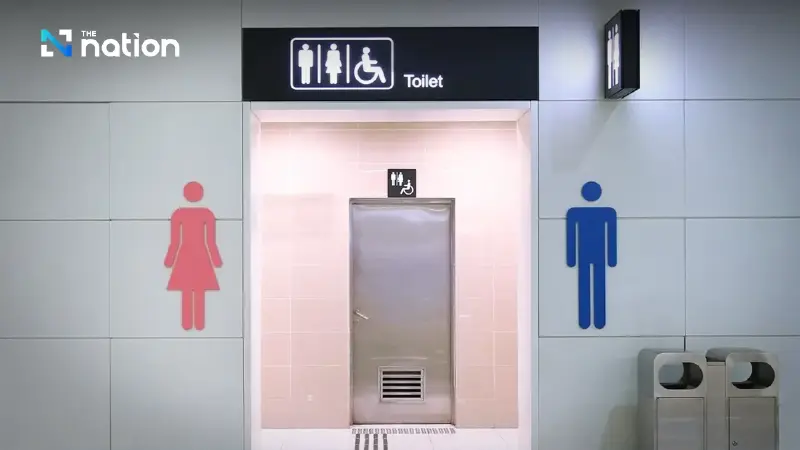


Top 13 outstanding public toilets of 2025 announced. Two categories fell short of standards. Thailand needs 0.2 % better access to reach 2030 clean toilet goal.
- Thailand's Department of Health has named 13 locations as winners of the "Outstanding Toilet of the Year" awards for 2025, including an airport, a hospital, a national park, and a shopping center.
- A national assessment of over 14,000 public toilets found that 90% met the Health, Accessibility, and Safety (HAS) standard.
- The 10% of toilets that failed the assessment were predominantly located in religious sites and educational institutions, which have been identified as the two categories most in need of improvement.
November 19 of every year is designated as World Toilet Day by the United Nations (UN). This observance aligns with the Sustainable Development Goals (SDGs), adopted by 193 UN member states, including Thailand.
Specifically, Goal 6: Clean Water and Sanitation, sets the target under sub-goal 6.2 to achieve access to adequate and equitable sanitation and hygiene for all and end open defecation.
The Department of Health (DOH) organised the World Toilet Day 2025 campaign event under the theme: “Sanitation in a changing world: New Era HAS Toilets Keeping Pace with the Changing World towards Sustainable Hygiene,” on November 19, 2025, at the Miracle Grand Convention Hotel in Bangkok.
The event aimed to raise awareness among all sectors about the critical importance of toilet and sanitation management in the face of global challenges, such as increasing demand and the need for climate-resilient toilets that can withstand impacts like flooding and disasters that affect sanitation systems.
Crucially, the proper management of faecal sludge from toilets was also emphasised. Regardless of how the world changes, we must ensure clean, safe, and accessible toilets for everyone for sustainable good health and hygiene.

13 Outstanding Public Toilets of 2025
The Department of Health presented national-level Outstanding Toilet of the Year awards for 2025 to 13 locations:


- Kajorn Rangsan Temple, Phuket Province
- Mae Fah Luang International Airport, Chiang Rai Province
- Tron Hospital, Uttaradit Province
- Sub-district Health Promoting Hospital (SHPH) Ban Ketkasorn, Kamphaeng Phet Province
- National Science Museum (NSM), Pathum Thani Province
- Samut Songkhram Provincial Land Office
- Somsakklaeng 1983 Co., Ltd. Gas Station, Rayong Province
- Phu Wiang National Park, Khon Kaen Province
- Phra Thammavisutthimongkol Luangta Maha Bua Ñanasampanno Museum (Dharma Chedi Museum), Udon Thani Province
- Surin Provincial Transport Office, Rattanaburi Branch
- Deeyiamubon Khonrakdee Co., Ltd. Bangchak Gas Station, Ubon Ratchathani Province
- Central Hatyai Shopping Centre, Songkhla Province
- PTT Station, Rama 2, 48, Bangkok
Accelerating 4 Clean Toilet Policies
Worachot Sukonkhajorn, Deputy Minister of Public Health, stated that the Ministry of Public Health recognises that toilets and sanitation systems are necessities. Ensuring access to clean and hygienic toilets for everyone is not merely about convenience but is a fundamental right for protecting health, improving quality of life, and promoting equality.
Therefore, the development of public toilets is of great importance.
While significant progress has been made, continuous and comprehensive development is needed, especially for toilets in religious sites, educational institutions, and hospitals, where vulnerable groups like children, the elderly, and the sick require special attention.

The policy for Clean Toilets, Safe Sanitation, Sustainable Hygiene targets for 2030 include:
Develop and drive a national action plan for faecal sludge management to ensure that Thailand has a safe, comprehensive, and sustainable faecal sludge management system.
Increase toilet coverage for "Every Place, Every Person, Every Age, Every Situation." The goal is for 85% of public toilets across 12 target categories to meet the HAS (Health, Accessibility, Safety) standard, and for human waste to be managed safely and appropriately, both in normal conditions and during disasters.
Ensure vulnerable groups (students, the elderly) have access to safe toilets and sanitation. Targets include:
- 50% of churches, temples, and mosques meet the HAS standard.
- 50% of schools under the Office of the Basic Education Commission (OBEC) and schools in the Border Patrol Police Development Project (BPPSD) meet the HAS standard.
- 85% of national parks meet the HAS standard.
Utilise public health technology and legislation to supervise and monitor toilet and faecal sludge management; develop a technology system to locate "Happy Toilet Near Me" public toilets; and develop a digital system to supervise and track the collection, transportation, and disposal of faecal sludge.
Two Categories Requiring Urgent Toilet Development
Dr Amporn Benjaponpitak, Director-General of the Department of Health, mentioned that while over 99.8% of Thai households have toilet access, the remaining 0.2% still lack access. At the same time, public toilets require continuous development. The DOH is consistently driving the development of public toilets to meet the HAS standard in 12 target categories:
- Tourist attractions
- Markets
- Restaurants
- Gas stations
- Bus/transport stations
- Shopping malls
- Hospitals
- Educational institutions
- Government offices
- Religious sites
- Public parks
- Roadside rest areas
DOH's assessment of over 14,000 public toilets in 2024-2025 found that places with the highest percentage of HAS standard compliance were shopping malls and gas stations. Conversely, religious sites and educational institutions still face limitations and require more extensive development.
Overall 10% Did Not Pass The Assessment
An in-depth look at the DOH's toilet assessment report reveals that out of a total of 14,152 locations assessed in 2024–2025, 12,730 locations (90%) passed the assessment, while 1,422 locations (10%) did not pass.
The two categories most in need of development are:
- Religious Sites: Of 868 assessed, 710 (82%) passed and 158 (18%) did not pass. The most failed criterion was Cleanliness (134 locations), followed by Sufficiency/Adequacy (106 locations) and Safety (82 locations).
- Educational Institutions: Of 1,026 assessed, 893 (87%) passed and 133 (13%) did not pass. The most failed criterion was Sufficiency/Adequacy (96 locations), followed by Cleanliness (87 locations) and Safety (44 locations).
DOH Recommends 10 Ways to Clean a Toilet
To ensure cleanliness and safety, the Department of Health recommends the following 10 steps for toilet cleaning:
- Place a warning sign to prohibit the use of public toilets during cleaning.
- Empty trash bins daily, and wash and clean them regularly.
- Inspect for cobwebs daily and clean them immediately upon finding them.
- Sweep the floor thoroughly.
- Clean the mirror at least once a day.
- Clean the walls, partitions, and doors (inside and out) with cleaning solution and disinfectant at least once a week.
- Clean door knobs or latches with cleaning solution and disinfectant at least twice a day.
- Clean sinks, faucets, sink edges, and the underside of the sink with cleaning solution and disinfectant at least once a day.
- Clean the flush handle/button, urinal button, bidet spray nozzle, toilet seat, and the inside and outside of the toilet bowl/urinal at least once a day.
- Clean the toilet floor every day, at least twice a day.
Always wash your hands correctly after using the toilet to prevent and reduce the spread of germs. Attention should be paid to the cleanliness of both public and private toilets at home.
