
Thailand among 89 countries approved under US fishing rules
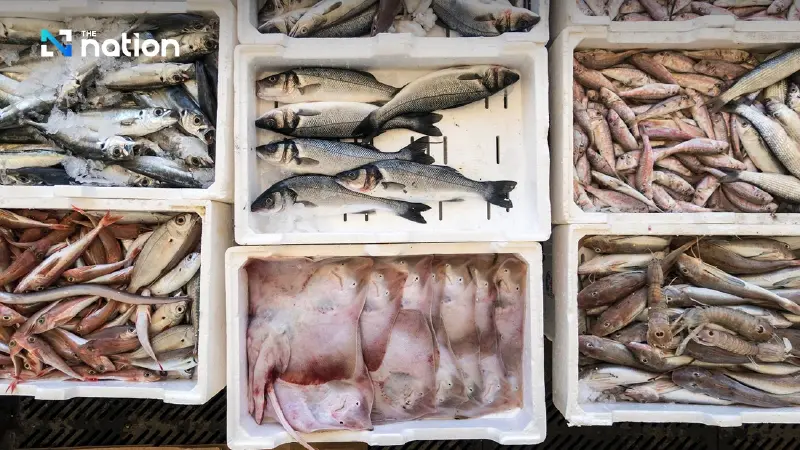


Thailand is approved by the US under MMPA rules, allowing seafood exports to continue, but must bar raw materials from 42 non-compliant countries

Thailand has been listed among 89 countries approved under US fishing-practice standards, allowing it to continue exporting domestically caught seafood to the United States. However, the country must now tighten control of imported raw materials, as seafood sourced from 42 non-compliant countries can no longer be used in products bound for the US market—worth more than 38 billion baht annually.
On September 1, 2025, the US government, through the National Oceanic and Atmospheric Administration (NOAA), officially published in the Federal Register its latest ruling under the Marine Mammal Protection Act (MMPA), covering 2,500 seafood products from 135 trading partners worldwide.

Thailand passes all criteria
Prapan Noradee, Head of the International Fisheries Trade Analysis Group at the Department of Fisheries, told Thansettakij that Thailand is one of 89 countries whose fishing practices passed the MMPA comparison assessment.
This confirms that seafood harvested by Thai fishing vessels in Thai waters does not harm marine mammals and can be exported to the US without restriction. Thailand’s foreign fisheries listed in the List of Foreign Fisheries (LOFF) also passed equivalency checks comparing Thai laws with MMPA requirements.
But Thailand must block raw materials from 42 countries
As Thailand is a major seafood processor importing raw materials from various countries, the new MMPA assessment means it cannot export products containing seafood sourced from any of the 42 non-compliant countries.
These countries include:
Bangladesh, Brazil, Cameroon, Chile, China, Colombia, Ecuador, El Salvador, Ghana, Grenada, Guinea, Indonesia, Ireland, Kenya, Liberia, Madagascar, Malaysia, Mauritania, Mexico, Mozambique, Myanmar, Namibia, New Caledonia, Nigeria, Oman, Peru, Philippines, Russia, Saudi Arabia, Senegal, Somalia, South Korea, Sri Lanka, St Kitts, St Lucia, Suriname, Taiwan, Gambia, Togo, Türkiye, UAE and Vietnam.
Thai exports in 2024 used raw materials from 21 high-risk countries
According to the Department of Fisheries, Thailand used raw materials from 21 of the 42 non-compliant countries in seafood exported to the US in 2024—totalling 22,200–33,000 tonnes, worth 1.7–2.5 billion baht, out of total Thai seafood exports to the US worth 38.4 billion baht.
Top non-compliant imports used in Thai processing
1. Skipjack tuna (tuna belly strip)
Imported: 83,557.58 tonnes, worth 9.48 billion baht
From non-compliant sources: ≈10–15% used for US-bound exports
Export volume affected: 8,355–12,533 tonnes, worth 948–1,423 million baht
2. Mackerel (Saba)
Imported: 68,650.58 tonnes, worth 3.40 billion baht
From non-compliant sources: 36,397.40 tonnes, worth 1.42 billion baht
Export volume affected: 3,639–5,459 tonnes, worth 142–213 million baht
3. Sardines
Imported: 124,997.75 tonnes, worth 3.75 billion baht
From non-compliant sources: 46,579.42 tonnes, worth 1.27 billion baht
Export volume affected: 4,657–6,986 tonnes, worth 127–191 million baht
Industry must shift to clean raw-material sources
Prapan said that to maintain Thailand’s US-bound seafood exports—235,644.77 tonnes worth 38.4 billion baht in 2024—processors must now:
- Increase use of local Thai-caught seafood, or
- Import only from MMPA-compliant countries, and
- Implement full traceability systems across supply chains
This ensures that seafood exported from Thailand is not sourced from fisheries that fail US sustainability standards, protecting both the market and the country’s reputation.
