
'Consul General' in Guangzhou Urges Thailand to Upskill Workforce and Enhance Software to Attract Chinese Investors
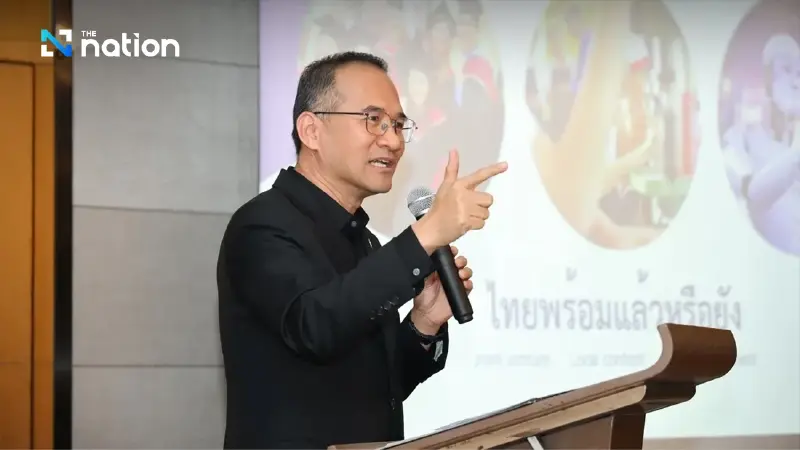


Thailand needs to upskill its workforce to attract Chinese investment, especially in the EV industry, and strengthen its software infrastructure to enhance cooperation with China in technology, energy, and agriculture

Kajtiti Wiwatwanont, the Consul General in Guangzhou, emphasized that Guangdong Province, as China’s leading economic powerhouse, remains a key trade partner for Thailand. However, Thailand’s increasing trade deficit reflects the growing wave of Chinese investment flowing into the country, a trend that presents both opportunities and challenges.
The main challenge faced by Chinese investors in Thailand is the shortage of skilled labor, particularly in the electric vehicle (EV) industry. This has led Chinese companies to implement their own Upskill/Reskill programs or collaborate with Thailand’s vocational education institutions through MOUs to address this gap.
Kajtiti suggested that Thailand should elevate its relationship with China to a "science and technology partnership" to adapt to an era driven by AI and advanced technologies. He warned that without the necessary labor skills and technological infrastructure, Thailand risks missing out on opportunities in the growing Chinese market.
In addition, he pointed out the importance of developing government software, such as immigration systems and data management, to keep pace with global standards and enhance the ease of doing business. Meanwhile, the Thai education system needs reform to better align with future industries, especially in technology, AI, and science. Kajtiti noted that many Thai students still pursue degrees in business and languages, which limits their opportunities in tech-driven industries like EVs and AI.
As China continues to advance its High-Quality Development Strategy, which includes initiatives such as the Greater Bay Area (GBA), Thailand must respond by focusing on three key areas: advanced medical technologies (ATMP), alternative energy, and precision agriculture. This shift would create new opportunities for collaboration with China, particularly in fields like gene editing, magnetic power for EVs, and AI-driven agriculture.
One of China’s successful innovations, Palm Scanning Payment (used in several Chinese cities), and the development of Small Modular Reactors (SMR), could be game-changers for Thailand. These technologies are pushing the boundaries of what is possible in both finance and energy.
Hainan as a potential new economic hub in 2035
Looking ahead to 2035, Kajtiti also pointed to Hainan as a potential new economic hub for China, with its Free Trade Port and technological developments. Thailand, due to its proximity to the equator, is seen as a potential partner in space exploration and launching satellites, as well as in advanced industries like nuclear power and aviation.
The key challenge for Thailand remains its education system. There is a significant mismatch between what Thai students are studying and what the future labor market demands. Kajtiti expressed concern that Thai students are not prepared for the industries of tomorrow, with too many focusing on traditional fields like business, while neglecting technology and science, which limits their future prospects in high-tech industries.
In conclusion, Kajtiti urged Thailand to "change the course" from relying on old trade relationships to building a future where technology, innovation, and supply chains are at the forefront, ensuring Thailand can keep up with the global competition led by China in the coming decades.
