
DE Ministry partners with Tomorrow.io to pilot NASA-grade weather forecasting in the South
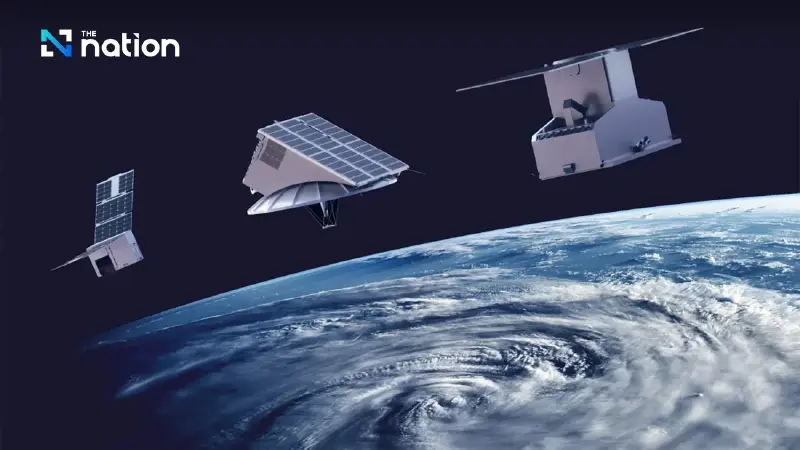


DE Ministry and Tomorrow.io launch a 3-month pilot of NASA-standard forecasting in southern Thailand, aiming for nationwide coverage within six months.
The Ministry of Digital Economy and Society (DE) has partnered with Tomorrow.io to pilot a NASA-standard weather forecasting system in southern Thailand for three months, with full nationwide coverage expected within six months. The move aims to dramatically improve the accuracy and speed of disaster warnings, especially in response to increasingly extreme weather events.
Chaichanok Chidchob, Minister of Digital Economy and Society, said on Tuesday that the Prime Minister had instructed the ministry to develop systems capable of keeping pace with global climate volatility. The sharp rise in floods and extreme weather worldwide, he said, shows these events are not random anomalies, but signs of broader climate instability. “Whether the situation improves or worsens, the most important thing is that we must keep up,” he said.

He added that the Prime Minister also wants to accelerate emergency-declaration legislation, noting that waiting until a disaster has already occurred makes rapid response impossible. This reflects the government’s determination to improve readiness across the board.
Pilot programme uses NASA-grade forecasting tools
The new strategic partnership involves the Meteorological Department, the DE Ministry, and Tomorrow.io, currently a global leader in climate intelligence whose technology is used by NASA, the US Air Force, and the Bill & Melinda Gates Foundation.
The pilot trial will test two components: Data systems and AI-driven analytical platforms.
Tomorrow.io’s satellite data uses microwave sounding technology, scanning every layer of the atmosphere to detect cloud moisture at all levels. This enables far clearer analysis and identification of phenomena such as rain bombs, without quantitative limitations.
The company currently operates 11 satellites, enhancing accuracy and enabling rapid data updates. Its platform uses AI to process information from all satellites orbiting the Earth every hour, updating forecasts every 15 minutes.
Southern Thailand to be first — no budget used
The initial trial will run for three months in the southern region, without requiring government budget. Within six months, the system is expected to provide nationwide forecasting coverage, greatly improving the granularity of weather and climate data.
Chaichanok said the enhanced forecasts will support government agencies and the public, helping them make timely decisions and prepare for emergencies. The data will also be integrated into Thailand’s long-term meteorological infrastructure.
He emphasised that the ministry is focusing on the South first to help prevent a repeat of the devastating floods currently affecting the region.
