
Floods in the South Impact Confidence as Consumer Index Continues to Grow for the Second Month
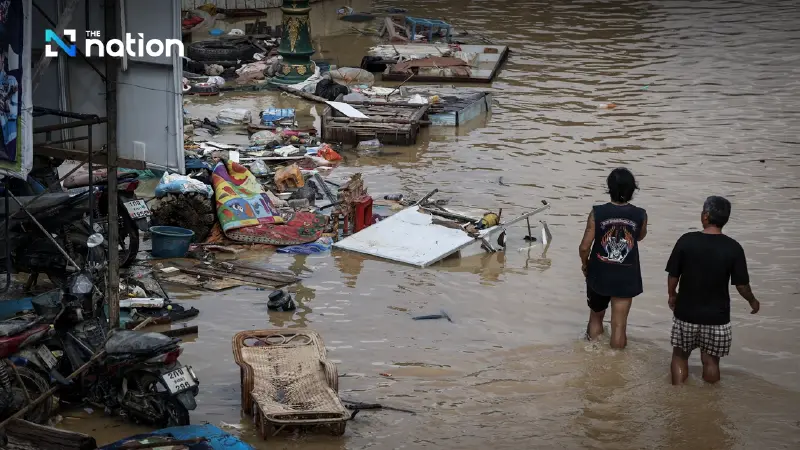


Consumer confidence in Thailand rises for the second month in November 2025, but floods in the South and other challenges affect future outlook
The Trade Policy and Strategy Office (TPSO) has released the results of a public survey involving 6,456 respondents nationwide on November 2025 consumer confidence.
Nantapong Jiralertpong, Director-General of the Trade Policy and Strategy Office (TPSO) and spokesperson for the Ministry of Commerce, stated that consumer confidence in November 2025 had increased, thanks to the official launch of the "Let's Go Halves Plus" scheme and optimism regarding the tourism sector during the end-of-year period.
However, key issues in November include border tensions between Thailand and Cambodia, concerns over agricultural product prices lower than last year, and ongoing trade issues. The flooding in the South remains a significant concern and could affect future consumer confidence levels.
The consumer confidence index for November 2025 stood at 51.8, marking the second consecutive month of growth, up from 50.9 in October 2025.
The future confidence index (for the next three months) increased to 58.0, from 57.6 in the previous month. Factors contributing to this increase include:
- Ongoing government measures like Quick Big Win, which boost the economy, assist both individuals and businesses, and help reduce household and business costs.
- The expanding tourism sector during the peak travel season, supported by government policies, has increased both domestic and international visitors, positively impacting trade and service businesses.
- Thai exports continue to grow due to increasing demand in international markets, supported by government trade policies to promote continuous export growth.
However, current consumer confidence remains low at 42.6 (increase from 40.9 in prior month), still below the threshold of 50, indicating a lack of confidence. Contributing factors include high household and business debt, low agricultural product prices, the flooding situation, and border conflicts.
Additional challenges that may affect confidence in the near future include the ongoing impact of the floods on citizens and businesses, as well as geopolitical tensions and international trade issues that could affect Thailand’s production, employment, and exports.
Key drivers of consumer confidence include the Thai economy (49.75%), government measures (14.95%), global economy (8.09%), agricultural product prices (8.01%), social stability (7.47%), politics (5.85%), natural disasters/epidemics (2.43%), fuel prices (2.06%), and others (1.39%).
Regionally, consumer confidence indices show that Bangkok and surrounding areas (61.1), Central Thailand (52.4), and Northern Thailand (50.7) remain confident. However, Northeastern Thailand saw a slight drop to 50.6, primarily due to the border conflict with Cambodia, and the Southern region dropped below confidence levels to 49.9, largely due to concerns over the flood situation.
“The severe flooding in late November, although not yet clearly impacting consumer confidence in November, must be closely monitored. It is expected that the full impact of the floods will be more apparent and significantly affect the consumer confidence index in the coming months,” said Nantapong.
