
Why Thai troops still cannot hold Prasat Ta Kwai – despite pushing Cambodian forces out
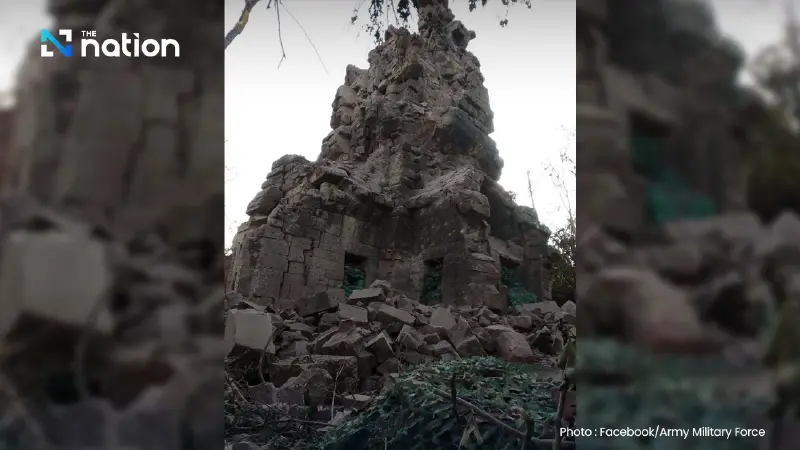


Although Thai forces have succeeded in driving Cambodian troops out of Prasat Ta Kwai in Surin province, they have still not been able to fully secure and occupy the area.
On December 9, Army spokesman Maj Gen Winthai Suvaree said Thai troops had pushed Cambodian forces back from around Prasat Ta Kwai and were trying to establish control over the surrounding area. However, Cambodian units responded with intense supporting fire, repeatedly shelling both the sanctuary and nearby positions, leaving Thai soldiers wounded and causing heavy damage to the structure and its environs.
A senior source in the Army’s battle command team said on December 10 that, while Thailand now holds a better tactical position than in previous days, Prasat Ta Kwai remains a highly contested zone.
The source acknowledged that both sides’ attacks have damaged parts of the temple complex, altering its appearance, but insisted the structure is still in a condition that can be restored.
The main reason for the damage, the source said, is that Cambodian troops occupied the temple itself, turning it into a firing position and weapons depot. They used the sanctuary as a base to attack Thai forces, causing casualties – and forcing Thailand to return fire.
“At present there are no Cambodian soldiers inside Prasat Ta Kwai,” the source said. “The structure has been damaged to the point where it can no longer be used as a concealment point or a firing base.”

Why Thai troops still cannot move in
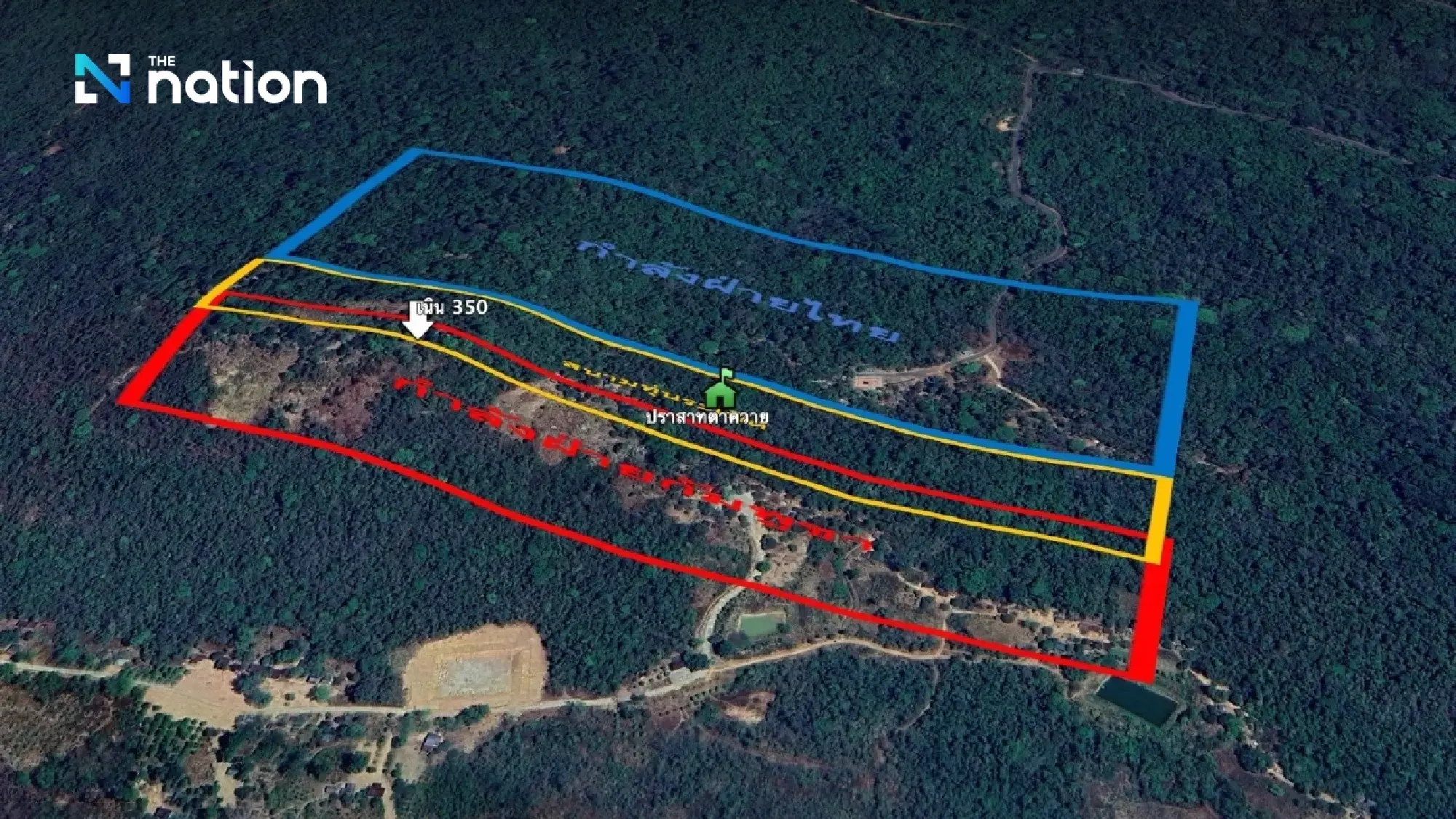
Despite that, the Army has not moved large numbers of Thai troops into the temple area, for two key reasons:
- There are minefields around the sanctuary and in adjacent areas.
- Behind the temple rises Hill 350, described as a strong Cambodian stronghold with firing positions, concrete bunkers and a substantial number of troops who live in the area as “soldier-villagers” and know the terrain extremely well.
Above the sanctuary, around 200 metres up on Hill 350, Cambodian forces have established a village-like firing base, the source said. The approaches are littered with minefields, trenches, anti-tank ditches and barbed wire, while reconnaissance and attack drones are deployed to detect and strike any attempted advance.
“This is a very difficult area to deal with, and it’s a different problem from the temple structure itself,” the source explained. “In theory, we should not occupy the temple, because it sits lower than Hill 350 and would become an easy target. Thailand must first take Hill 350, using air power and indirect fire.”
Hague Convention concerns
Asked about concerns that military operations around Prasat Ta Kwai might breach the 1954 Hague Convention on the protection of cultural property in armed conflict, the Army source insisted Thailand has clear evidence that Cambodia militarised the site.
According to the source, Cambodian forces seized the temple, converted it into a gun position and weapons store, and laid mines around it, in violation of its protected status. Under such circumstances, the source argued, Thailand had no choice but to act.
“Cambodia turned a protected cultural site into a base for attacks on Thai troops,” the source said. “Given that reality, Thailand could not avoid taking military action.”
