
Russian AI drug ring busted after QR code stickers found across Bangkok
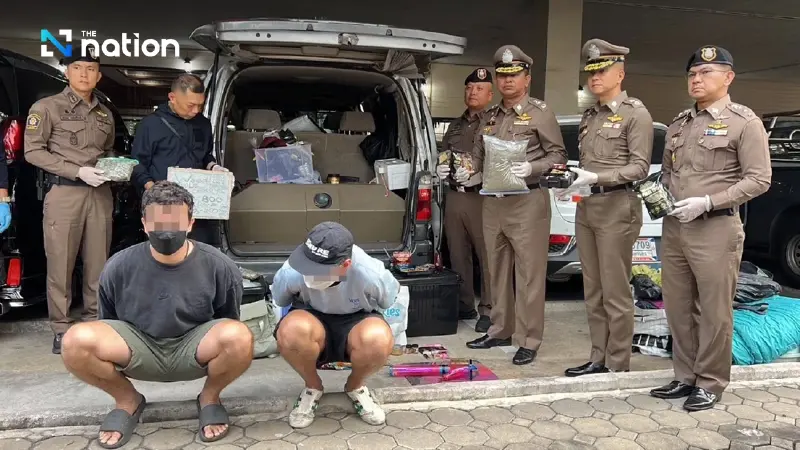


Bangkok police arrest two Russians accused of using an AI Telegram bot, QR codes and crypto payments to run a “ghost” drug network across the capital
Bangkok police have smashed what they describe as a “ghost-like” Russian drug network that used artificial intelligence, QR code stickers and cryptocurrency to sell narcotics across the capital without any visible dealers.
On December 9, 2025, Pol Maj Gen Teeradej Thamsuthee, deputy commissioner of the Metropolitan Police Bureau in charge of narcotics, led a multi-agency operation targeting the gang. The team included senior officers from Metropolitan Police Divisions 2 and 6, the Metropolitan Police Bureau’s Investigation Division, the Royal Thai Police Narcotics Suppression Centre and officers from Yannawa and Sutthisan police stations.
Two Russian nationals were arrested at separate luxury hotels in Bangkok: Ivan Volnov, 34, and Mark Maolopuro, 35. One was tracked down to a hotel in Soi Ekamai 10, while the other was detained at a hotel in the Ratchada–Sutthisan area.

QR codes, Telegram and an AI “shop”
The investigation began on November 13, 2025, when Teeradej’s online patrol team spotted a post on the Facebook page Drama-addict showing QR code stickers in Russian offering narcotics for sale and pasted on roadside poles in Bangkok.
Police ordered all stations in the capital to check their areas and soon found the stickers in several downtown districts, including Lumpini, Pathumwan and Yannawa. The QR code led to a Telegram channel advertising itself in English as:
“Thai hub Telegram COCAINE KETAMINE MEPH METH MDMA”

Scanning the code took users into a Telegram chat where an AI bot handled every step of the deal around the clock, with no human “admin” visible. Officers said the system made the operation “shadowless and faceless”, as if “run from the future”.
All payments were taken in cryptocurrency only. The bot checked incoming transfers in real time and confirmed orders automatically, without requiring customers to upload payment slips.
Instead of arranging hand-to-hand deliveries, the gang pre-hid drugs at secret “dead drop” locations nationwide. Once payment was confirmed, the AI bot sent GPS coordinates and photos of the hiding place, turning each purchase into what police likened to a deadly treasure hunt. Customers were instructed to go and dig up or pick up their orders themselves.
Turning buyers into “partners”
What alarmed investigators most was the expansion model built into the AI system. After each purchase, the bot invited customers to become “business partners” through a membership scheme, offering three main “missions”:
- Refer new buyers – customers introducing others would receive tiered discounts.
- Act as “pilots” or couriers – members were ordered by the AI to bury or hide drugs at new locations, creating a chain of couriers who did not know one another, making it difficult to trace the hierarchy or reach the masterminds.
- Use an API to build their own “shops” – tech-savvy members could integrate the AI bot into their own storefronts and take a commission, allowing the network to expand rapidly and almost without limit.
Police said the architecture allowed the real organisers to remain invisible while the AI handled recruitment, logistics and payment flows.

Police fight AI with AI
Faced with a network they described as “borderless, rapid and faceless”, investigators decided to fight technology with technology. Teeradej said his team deployed their own AI-driven tools to trace digital footprints left by the bot and its users.
Within about a week, the operation identified two key Russian suspects. One of them, believed to be a central figure in the network, was detected travelling in Pattaya, Chon Buri, allegedly to dig new hiding spots for drugs.
A Metropolitan Police narcotics team and officers from Yannawa police station moved in. Using a rapid-assault tactic to prevent the suspect locking his phone, they arrested Mark Maolopuro and seized his mobile, which was still open on the Telegram application. A search of his van turned up a large quantity of cannabis products, police said.
Further investigation pointed to a second Russian, believed to be the man who had been pasting the QR code stickers across Bangkok. Officers traced Ivan Volnov to a hotel in the Ratchada–Sutthisan area and raided his room, seizing a laptop that was still logged into Telegram and other items allegedly linked to the operation.
Denials and excuses
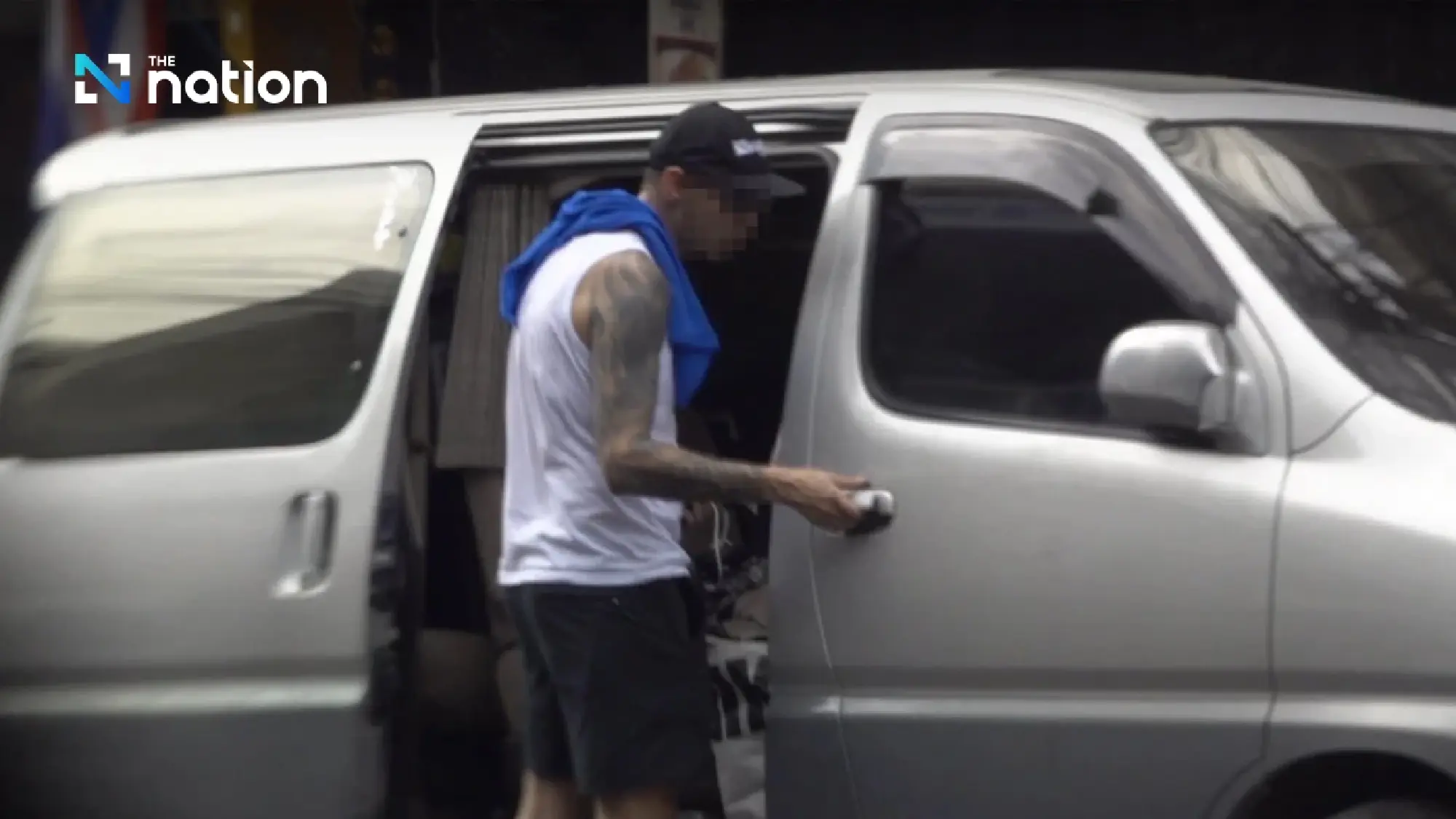
During questioning, Volnov denied all charges. He claimed the person captured on CCTV putting up QR code stickers was not him, insisting that any screenshots of news about drug QR codes on his WeChat account had been taken automatically by the app.
He also said a photograph of himself wearing a cap identical to the one worn by the man in the CCTV footage was a coincidence, and argued that the person in the video merely “looked similar” to him. Volnov admitted he had met Maolopuro but insisted they were not close and had no business together.
Maolopuro gave a partial admission. He conceded that he had overstayed his visa but denied any illegal cannabis dealing, claiming he had a medical certificate allowing him to use cannabis and a company licence to sell it.
He told police he had lived in Thailand for three years, frequently travelling between Bangkok, Pattaya in Chon Buri, Chiang Mai and several southern provinces. He explained that the rice cooker found in his van was simply because he liked to cook Japanese rice in his room, and that the cat litter – often used to mask strong smells – was just something he kept in the vehicle despite not having a cat.
He said that if deported he planned to return to live with his girlfriend in Russia.
“Cutting the fire at the fuse”
Pol Maj Gen Teeradej said the operation had “cut the fire at the fuse just in time”, warning that the model used by the gang showed how AI could be weaponised to build a fast-growing, hard-to-trace drug empire.
“This network was designed to expand quickly, cleverly and without a face,” he said, adding that both Russians were considered key figures in the organisation.

Seized assets and evidence
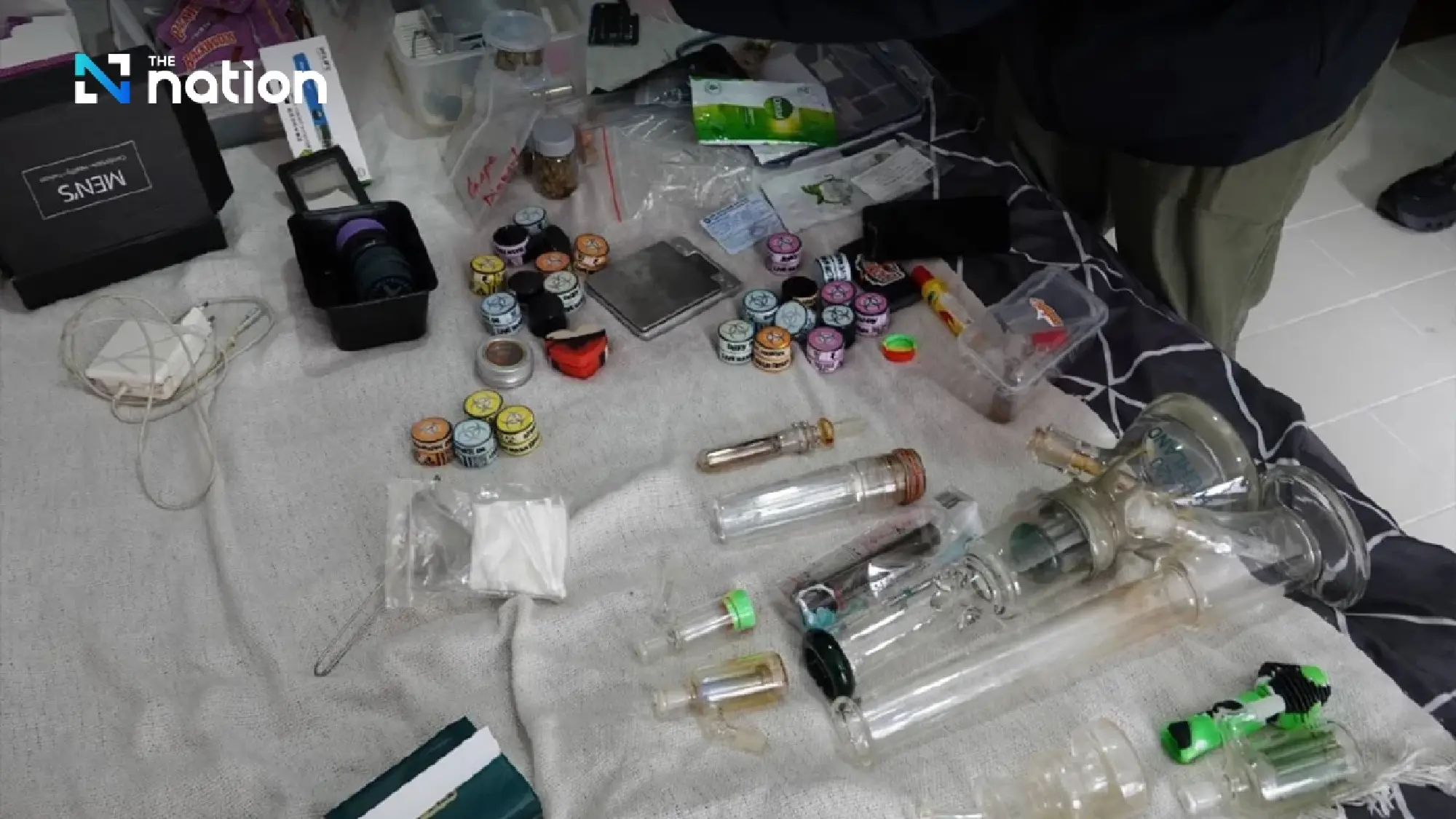
Police listed the following items seized in the operation as evidence:
- 200,000 baht in cash
- One grey Toyota Granvia van
- Two MacBook Pro laptops
- Seven mobile phones, many still containing extensive Telegram data
- Twenty memory cards and USB flash drives, now under forensic examination
- Five bank passbooks
- Forty-one bags of cannabis buds
- Twenty-five jars of cannabis extract
- Twenty packets of cannabis seeds
- Numerous cannabis grinders and related paraphernalia
The two suspects have been charged under Thailand’s narcotics and immigration laws as police continue to analyse the seized devices and investigate whether the AI-driven network extended beyond Thailand’s borders.
