
“Anutin” insists there is no ceasefire deal after Anwar posts call for a 10pm halt to fighting tonight
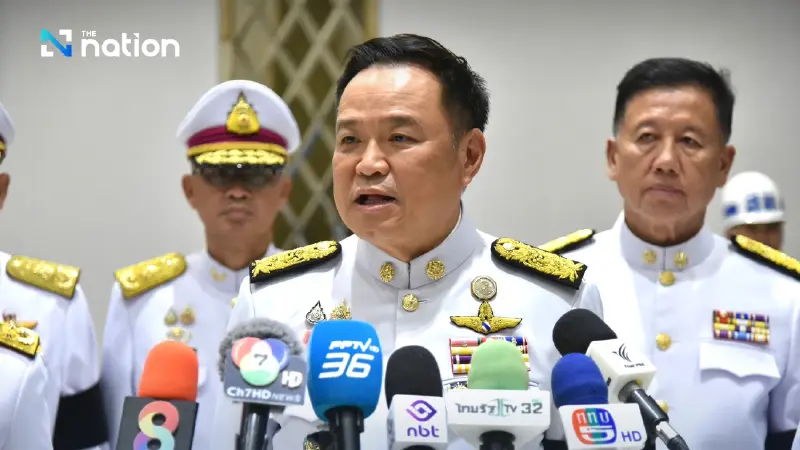


The prime minister stressed that any ceasefire proposal must come directly from Cambodia, not through pressure from other nation's leader

Speaking at RTAF Wing 6, Anutin said there had been no talks on such an arrangement, and stressed again that the public should rely on information from the military’s twice-daily briefings. Other sources, he said, should not be used as a reference.
Asked whether he had spoken to Anwar beforehand, Anutin said they had been in contact throughout the situation, but at no point had Anwar said there needed to be any ceasefire agreement or related action.
On the military’s position, Anutin said he had spent the afternoon with Lt General Chaiyapruek Duangprapat, the Royal Thai Army Chief of Staff, and that operations were being carried out according to the plan already in place.
As for Cambodia’s response to Anwar’s pressure to stop fighting today, Anutin said that any commitment to do anything would require proper discussions, and a clear, sincere stance on ending clashes or attacks against each other.
He reiterated that Thailand is the side whose sovereignty has been violated, and that Thailand’s response has been an act of self-defence—to protect sovereignty and the public—sending a message that Cambodia must not harm Thailand. While Thailand is demonstrating it is defending its sovereignty, he said, no one can dictate that the two sides should stop fighting at 10pm and “each pull back”. By common sense, he said, that is not realistic. If there is to be a genuine ceasefire, Cambodia must present the proposal directly to Thailand, not have another country’s leader speak on its behalf. If either side wants to end the dispute, he said, it must be proposed by one side to the other.
Anutin said that even yesterday there were claims about a ceasefire, but the reality was different from the morning onwards. This time, he said, the targets were not soldiers, but Thai civilians and communities, causing damage—something he said was clear from the events.
“Anyone can say anything,” he said. “If there is a ceasefire, it must be seen in practice.” A ceasefire, he added, must also include withdrawing readiness to fire—not merely stopping shots while still keeping weapons aimed at Thailand and remaining ready to shoot. If it is truly a ceasefire, he said, it must be a full stand-down, with forces pulling back. Thailand, he added, would be the one to assess whether a ceasefire is genuine.
He also rejected the idea of conducting such talks via social media, saying this is a matter of national concern and cannot be treated as a public online exchange. He stressed: “Be clear about that.”
On Cambodia not reopening border crossings to allow Thais in Cambodia to return home, Anutin said this was another issue: Thai nationals should have the right to return home at any time. He said he hoped it would not reach the point where civilians were taken as hostages, as they have nothing to do with the conflict.
Asked about reports that Thai citizens working in Poipet had been assaulted, Anutin replied briefly: “I think we have contingency plans for every situation.”
