
2nd Army Area: ICJ never ruled on the 4.6 sq km around Preah Vihear
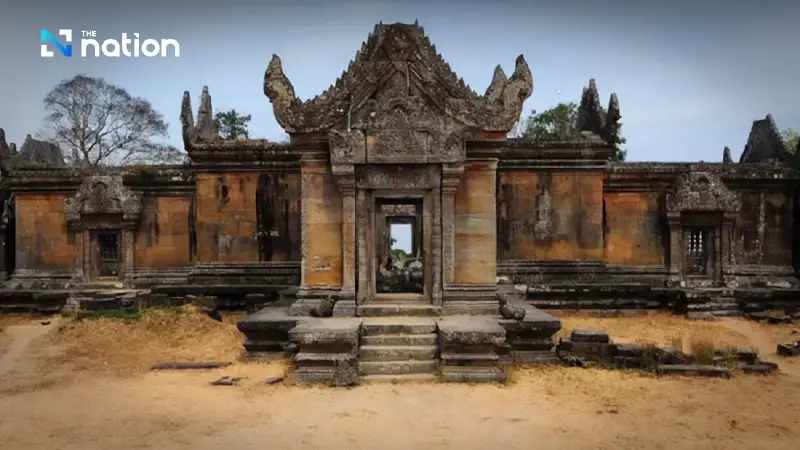


2nd Army Area Post says the ICJ never ruled on the 4.6 sq km around Preah Vihear, accusing Cambodia of using World Heritage status to press claims

On December 25, 2025, the 2nd Army Area’s page posted a message saying the roots of the Thai–Cambodian border dispute centre on Preah Vihear, the 4.6-square-kilometre area, and territory Thailand lost in the past.
1) Origin of the dispute: the Preah Vihear case
The post said a key starting point of the Thai–Cambodian border dispute was the Preah Vihear case, when Cambodia filed a lawsuit at the International Court of Justice (ICJ).
It said Thailand participated at the time believing the ICJ would act as a court of justice, but argued the outcome reflected “international political adjudication” more than a judgement based on the actual terrain.
The 1962 ruling had three main points:
- The Preah Vihear sanctuary is located in Cambodian territory.
- Thailand must withdraw its forces from the area of the sanctuary.
- Thailand must return antiquities removed after 1954.
Key point: the post argued the court never ruled on the boundary line and never specified the surrounding area.
2) The 4.6 sq km area: a “gap” left by the judgement
It said Thailand’s Cabinet in 1962 interpreted Cambodia’s right as applying only to the sanctuary itself, and Thailand therefore placed barbed wire around the sanctuary as narrowly as possible.
However, it claimed Cambodia used a 1:200,000-scale map as the basis for its claim, and that if this were followed, Thailand would lose large areas, including:
- Phu Makuea
- Phlan Inthri
- Chong Khan Ma
- ancient sites along the border
- and strategic interests in the Gulf of Thailand
This, it said, led to the emergence of the overlapping 4.6-square-kilometre area.
3) Using World Heritage status as a political tool
The post said that between 2006 and 2008, Cambodia sought to register Preah Vihear as a World Heritage Site while including the 4.6 sq km area, whereas Thailand insisted registration should cover only the sanctuary itself.
It noted that on July 7, 2008, UNESCO listed Preah Vihear as Cambodia’s World Heritage Site without covering the 4.6 sq km area, but said tensions along the border had already begun to flare.
4) Violence and territorial advances (2008–2011)
It listed incidents during that period, including:
- October 2008 – clashes around Huai Tani–Phu Makuea
- April 2009 – Phu Makuea–Pha Mo E Daeng
- February 2011 – a four-day war near Preah Vihear
- April–May 2011 – Prasat Ta Kwai–Ta Muen Thom
It claimed Cambodia carried out systematic territorial advances, including:
- establishing settlements
- building concrete roads
- building Wat Kaew Sikkhakirisvar
- linking routes up to Chong Khan Ma–Phlan Inthri–the sanctuary
It said these actions were a clear violation of MOU43.
5) The 2013 interpretation ruling: did not award the 4.6 sq km
The post said Cambodia asked the ICJ to interpret the judgement again, and that the court found:
- it did not grant the 4.6 sq km area to Cambodia
- Phu Makuea was not part of the Preah Vihear sanctuary issue
- but Thailand’s boundary enclosure was “too narrow” to the Preah Vihear site
It added that the court still did not specify a clear boundary line and left the two countries to negotiate.
6) Strategic realities today
The post alleged Cambodia has used multiple methods—such as infiltration, establishing military positions, and citing joint patrols—to gradually expand its presence. It listed areas it said are under threat, including:
- Phlan Inthri
- Chong Khan Ma
- Huai Ta Maria
- the cliff-front side of Phu Makuea
- Chong Don Ao
- Phlan Yao–Phlan Hin Paet Kon
It said firing positions and indirect-fire weapons from the Preah Vihear side pose a direct threat to Thai troops.
7) Thailand’s right to self-defence
It argued that under international law, Thailand has a legitimate right to self-defence and to neutralise threats to its personnel and sovereignty.
It said the stated strategic objective is to re-establish Thai state authority in line with the 1:50,000 map, close Chong Khan Ma, and cut supply routes up to Preah Vihear from the Cambodian side.
The post concluded that this is not only about the past but about memory, sovereignty and national dignity, and expressed support for Thai troops on the frontline.
