
Navy cites serious Ottawa breach over new mines at Ban Nong Ri
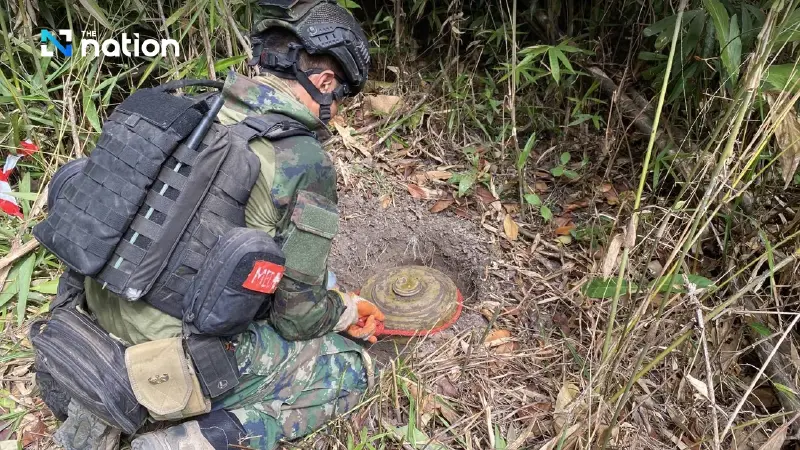


Thai navy says new anti-personnel mines, a PMN-2 manual and a minefield map found at Ban Nong Ri link to Cambodian forces and breach the Ottawa Convention
Rear Admiral Parach Rattanaichaiyapan, the navy spokesperson, said the navy — through the Chanthaburi and Trat Border Defence Command — had taken control of and cleared parts of the area around Ban Nong Ri (Ban Sam Lang) in recent days.
He said the navy’s humanitarian demining unit has continued to detect large numbers of anti-personnel mines and modified explosive devices across the same area over the past several days.

Earlier, the demining unit, working with combat engineers from the Marine Corps Command, found what it described as key pieces of evidence: a user manual for PMN-2 anti-personnel mines and a map showing the placement of minefields around the Ban Nong Ri base area. The navy said the evidence was clear, consistent and directly connected to the deployment of Cambodian troops in the area.
The navy said the findings could not be interpreted as “old mines left over from the past”, as the Cambodian government has repeatedly claimed.


Instead, it said the evidence strongly indicated that the Cambodian military has intentionally used and stockpiled anti-personnel mines in a continued and systematic way. The navy said this amounted to a serious violation of international humanitarian law and a breach of obligations under the Convention on the Prohibition of the Use, Stockpiling, Production and Transfer of Anti-Personnel Mines and on Their Destruction (1997), commonly known as the Ottawa Convention.

It noted that Cambodia is a state party to the convention and is required to comply strictly. Based on the concrete facts and evidence now emerging, the navy said Cambodia’s past explanations do not align with the situation on the ground, and raised questions over whether the international community can continue to trust such statements.

Rear Admiral Parach said the navy will continue inspections, clearance operations and careful evidence collection, while adhering to international law, with the aim of ensuring maximum safety for personnel and the public.

