
Galápagos rail reappears on Floreana island after 190 years
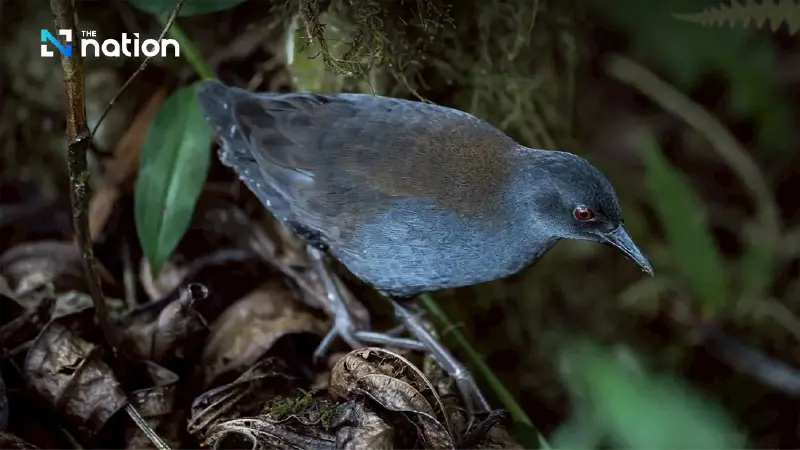


Scientists have confirmed the Galápagos rail on Floreana for the first time since Darwin’s 1835 visit, after invasive cats and rats were removed.
The Galápagos rail (Laterallus spilonota) — known locally as the pachay — has been confirmed on Floreana Island for the first time in nearly two centuries, marking a major milestone for conservation work in the Galápagos.
The small, secretive, ground-dwelling bird was last officially recorded on Floreana when Charles Darwin visited the archipelago in 1835. Despite repeated surveys over the decades, including targeted searches using playback recordings, it went undetected and was widely considered locally extinct on the island.
Conservationists say the bird’s disappearance was driven by human-introduced invasive predators, particularly rats and feral cats, which preyed on eggs and chicks and disrupted the island’s ecosystem.
The breakthrough follows a major eradication campaign at the end of 2023 led by the Galápagos National Park Directorate and partners, aimed at removing invasive mammals and creating safer conditions for native wildlife.
During the latest annual landbird monitoring expedition, researchers recorded the rail at three sites in Floreana’s transition zone — a guava-shaded grassland away from farming areas — including six acoustic records, two visual sightings and a photograph.

Island restoration specialist Wilson Cabrera, working with Fundación Jocotoco, said the finding reflected long-term efforts to restore Floreana’s ecology. Island Conservation’s Paula Castaño said the rail’s return underlined how quickly native species can rebound once invasive threats are removed.
A similar case occurred with a gecko on Rábida Island, which had been absent for as long as 5,000 years before reappearing when conditions became favourable. Genetic testing is expected to be used in future to determine their precise origins.
For locals who grew up on the archipelago, such as Paola Sangolquí, seeing a bird that had existed only in childhood stories now walking on the island feels extraordinary. “The island is recovering,” she said. “After 200 years, we are seeing this creature again.”
Beyond the rail’s return, the removal of predators has also triggered a major behavioural shift — described as a “cultural revolution” — among finches.
They have begun singing unfamiliar new tunes, including calls such as “Choo-waa!” and distinctive buzzing sounds, unlike the past when their songs tended to follow standard patterns to avoid drawing attention and revealing their location to predators.
In today’s safer environment, the finches have become bolder and are learning to mimic melodies across species.

Sonia Kleindorfer, a behavioural biologist at the University of Vienna, said: “Birds face very high risks if they stand out or make different sounds in an environment with predators. But when danger is removed, we become brave enough to try new things.”
The speed of the change has surprised researchers, but it also offers a rare opportunity to study how behaviour can evolve when fear disappears from an ecosystem. The finches are not only producing new songs — the survival rate of chicks has also risen to levels not seen before.
The next step for Floreana is to bring back 12 more native species that have been lost locally under the restoration plan, including the Floreana giant tortoise, the mockingbird, the rat snake and the barn owl.
This project is not simply about reintroducing animals — it is about repairing the workings of nature that once fascinated Darwin, and restoring them to full health.
The rail’s rediscovery has therefore become a symbol of victory and hope. As Cabrera put it: “This discovery reflects sustained efforts to restore ecosystems, and marks another important step towards conserving biodiversity.”
