
Doi Tung and community forests turned into global biodiversity data hubs to tackle the climate crisis
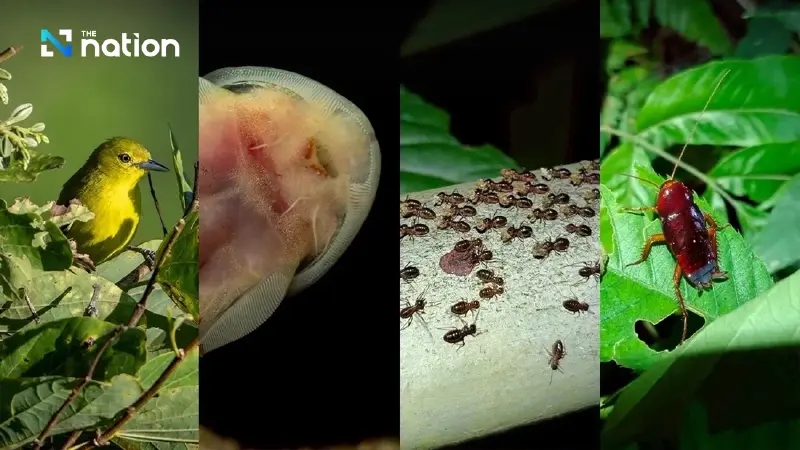


The Mae Fah Luang Foundation is expanding work from Doi Tung to community forests nationwide, building biodiversity databases and using tools such as bioacoustics, machine learning and eDNA to strengthen climate and conservation action.
As the world faces escalating climate change alongside accelerating biodiversity loss, many ecosystems risk reaching a point where they cannot recover fast enough. The crisis is sending a clear signal: protecting forests alone is not enough. Biodiversity is increasingly recognised as the foundation of water and food security, public health and long-term economic resilience.
The Mae Fah Luang Foundation under Royal Patronage is among the organisations working on biodiversity from sustained, on-the-ground experience. Through the Doi Tung Development Project in Chiang Rai, the foundation has worked with local communities for nearly four decades, guided by the late Princess Mother’s approach of “planting forests, planting people”, restoring more than 90% of forest cover.

Forest recovery, the foundation says, is not only about green space—it also means the return of life, including rare wildlife, local species and potentially organisms not yet recorded by science. Continuous research and ecosystem management have been used to ensure the restoration is accurate and sustainable. Doi Tung has therefore become not only a model for community development, but also an ecologically significant area at both national and regional levels.
Building on Doi Tung, the foundation has expanded into biodiversity data collection across community forests nationwide through a project focused on forest carbon credits for sustainable development, covering both terrestrial forests and mangroves. The aim is to create a data platform linking conservation, development and climate-change response.

2025 has marked a step into a new role for the foundation as an organisation working on biodiversity in a more systematic way, both nationally and internationally.
One key milestone has been its participation in implementing Thailand’s National Biodiversity Strategy and Action Plan (NBSAP 2023-2027) in collaboration with the Office of Natural Resources and Environmental Policy and Planning and the Biodiversity-Based Economy Development Office. The work seeks to translate field lessons into policy—from expanding conservation areas and strengthening biodiversity databases, to developing biodiversity finance tools, building youth awareness and scaling efforts across community forests.
In the same year, the foundation worked with the Department of Marine and Coastal Resources, Chulalongkorn University, and Rajamangala University of Technology Srivijaya to survey biodiversity in Trang’s mangrove forests, where it has long partnered with communities and the private sector. The site is considered important for the global blue carbon agenda, and building a national-standard database reinforces the foundation’s role in linking fieldwork, academia, government agencies and local communities.
Internationally, a partnership between the Mae Fah Luang Foundation and the National University of Singapore (NUS) has become another major milestone. NUS—one of the world’s leading institutions in environmental and tropical ecosystem research—selected the Doi Tung project area as a research site, reflecting international recognition of Doi Tung as a standout example of forest restoration in Southeast Asia driven by sustained community collaboration over more than 36 years.
The partnership led to the first BioBlitz survey in Doi Tung in October 2025, using 24-hour bioacoustics recording and machine-learning analysis to identify more than 30 species of birds and bats. The team also used environmental DNA (eDNA) to detect genetic traces of rare animals that are difficult to observe directly.
The findings pointed to the richness of the restored landscape and provided evidence of community-led conservation, which remains relatively rare in the region. Researchers found multiple species of freshwater crabs, some of which may not yet have been scientifically recorded, with different species living in different streams—highlighting how each waterway supports its own distinctive ecosystem. They also detected signs of otters, an indicator of clean, healthy water, and observed a variety of birds living close to communities without fear.
Another encouraging sign was the discovery of a white-rumped shama chick, a songbird that is threatened in Southeast Asia—suggesting the area remains a safe and suitable breeding habitat.
Local communities were central to the survey. Drawing on place-based knowledge and wildlife behaviour, residents helped researchers access deeper insights, from identifying aquatic species and tracking animal signs to sharing traditional, low-impact methods of catching fish and crabs. The collaboration not only strengthened scientific understanding, but also reflected the mutual relationship between people and forests that underpins the Doi Tung approach.
While the first survey produced clear signs of ecological recovery, the foundation said it is only the beginning of a long-term collaboration. The Mae Fah Luang Foundation and NUS plan to build on the research, aiming to strengthen Thailand’s role on the global stage in studying tropical mountain ecosystems.
In 2025, the foundation said, it has moved beyond being a restorer of landscapes to becoming a national driver of biodiversity action, based on the belief that conservation can only be sustainable through cooperation across all sectors—with communities at the heart. Biodiversity, it stressed, is natural capital that supports human life every day, and safeguarding it is a shared responsibility in shaping the future for the next generation.
