
Cambodia returns 162 Thais via Ban Laem border checkpoint
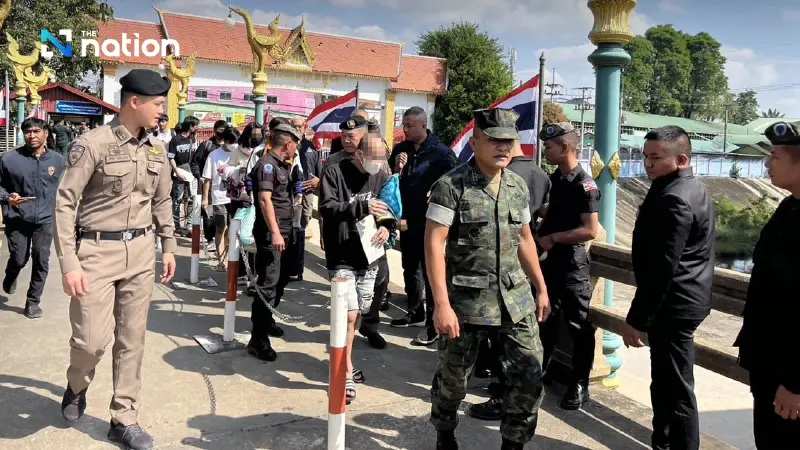


162 Thais held in Siem Reap returned via Chanthaburi’s Ban Laem border checkpoint on Jan 3, with Thai officials conducting checks and screening

Cambodian authorities have returned 162 Thai nationals from Cambodia to Thailand via the Ban Laem permanent border checkpoint in Pong Nam Ron district, Chanthaburi, after they had been held in Siem Reap.
Reports said that on January 3, Cambodian officials escorted the group to the border in a convoy of six buses, arriving at the Cambodian-side checkpoint with Cambodian soldiers and officials overseeing the transfer. The group was described as Thai nationals who had been stranded during heightened tensions and fighting along the Thai–Cambodian border, before being detained and moved to Siem Reap to wait. Coordination between the two countries later led to the repatriation operation.

On the Thai side, authorities prepared a strict reception and screening process led by Pol Gen Thatchai Pitaneelaboot, deputy national police chief, alongside Chanthaburi provincial police, Chanthaburi immigration officers, marine ranger forces, and personnel from the Chanthaburi and Trat Border Defence Command.

The Royal Thai Navy later issued further details. Rear Admiral Parach Rattanachaiphan, the navy spokesperson, said that the Chanthaburi and Trat Border Defence Command coordinated with the Royal Thai Police and the Immigration Bureau to facilitate the entry of the 162 Thai nationals at the Ban Laem checkpoint. The process was carried out in an orderly, systematic and safe manner, under the relevant legal framework and prescribed measures, taking humanitarian principles into account alongside national security.
Some of those returning were individuals deported by foreign authorities, and Thai officials will conduct detailed and careful checks. Authorities will consider the reasons and circumstances behind the deportation, examine whether any offences under Thai law have been committed, and chassess whether the individuals are linked to, or have participated in, transnational criminal networks in any form. He said proceedings will be conducted strictly and fairly based on evidence and due process.
All returnees will enter screening and verification procedures and be processed through public health checks, immigration procedures and police processes to ensure full compliance with applicable laws, regulations and measures.
He added that the navy will continue tightening and upgrading border entry and exit controls along the frontier, including at permanent checkpoints, temporary crossing points and natural routes, to prevent illegal entry and the infiltration of transnational crime groups—particularly cyber-scam operations—and other security threats, in line with government policy.
