
OPSEC alert: the battle moves from border to information war
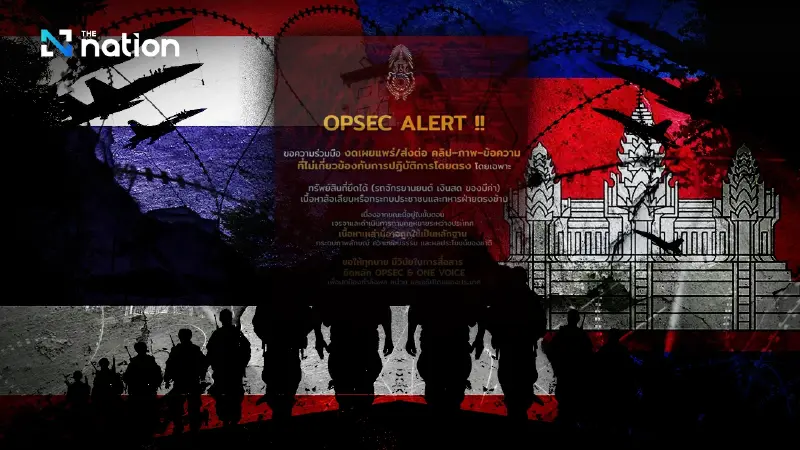


OPSEC alert: the guns may be quiet on the border, but the fight has moved to a new battlefield—information and legitimacy.
Amid growing calls from the military and security agencies for the public to remain vigilant about OPSEC (operational security)—the protection of sensitive information linked to operations against Cambodia to prevent leaks to the opposing side.
Insights from security scholars, including Kritsada Boonruang, an independent academic based in the United States, have been summarised in plain terms.
Silence as a weapon
Security agencies are increasingly recognising that “silence is a weapon”. The aim is to control the flow of information so that the opposing side cannot take Thai social media content and weaponise it to attack Thailand on the international stage.
Modern warfare has changed
In the past, victory was often measured by territorial control. Now, success is increasingly judged by information superiority—in other words, controlling how the world sees and understands the conflict.

OPSEC as a marker of “modern war”
Operational security has become a key concept in the study of modern warfare, reflecting a shift from physical war (weapons and battlefield engagements) to cognitive war—a struggle for legitimacy and control of the information space.
The renewed emphasis on OPSEC suggests lessons have been learned from earlier vulnerabilities, including:
-
The “celebration trap”
After a successful operation, soldiers or civilians may post photos of weapons systems, give clear location details, or share movement plans online. Even if intended to boost morale at home, from a military standpoint it effectively hands the opposing side free intelligence.
-
Information leakage
This may not look like defeat on the battlefield, but it can become defeat in the information space. Oversharing can allow the opposing side to map out Thailand’s standard operating procedures and anticipate actions.
-
The “nationalist viral clip” trap
Attempts to create nationalist-style videos can be strategically risky. Such clips can become material for the opposing side to edit and distort—framing Thailand as an “aggressor” or as using force to intimidate—and then take those narratives to global forums.

On the international stage, the side perceived as weaker often attracts greater sympathy. Over-displaying military strength can unintentionally cast Thailand as a bully targeting a neighbour, even if Thailand is acting to defend its sovereignty.
Many viral clips also reveal soldiers’ faces, unit insignia, or identifiable terrain—details that make it far easier for the opposing side to analyse Thailand’s forces and deployments.

The new battlefield: legitimacy in the global arena
Even if armed clashes have paused, the decisive contest may now be the international political battle—a fight conducted through narratives, perception, and legitimacy.
In today’s environment, winning on the ground but losing in the media can lead to sanctions, the loss of partners, and setbacks in international legal arenas, including institutions such as the International Court of Justice.
The struggle, therefore, has moved from the border forests into the information environment, where outcomes can be just as consequential.
