
Commerce Ministry suspends nine tapioca chip importers over substandard quality
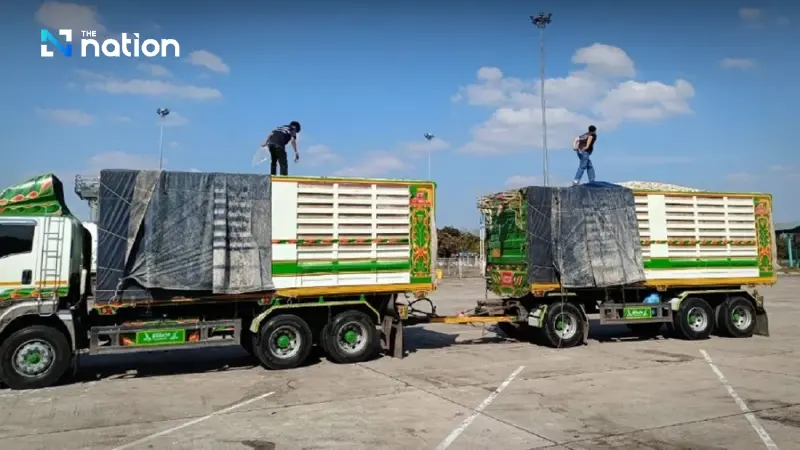


Thailand’s Department of Foreign Trade has suspended nine importers of tapioca chips after border inspections found moisture levels above the Commerce Ministry’s standard, aiming to protect cassava prices and Thailand’s product reputation.
Arada Fuangtong, director-general of the Department of Foreign Trade, said that since December 2025—when cassava output in Thailand and neighbouring countries began entering the market—the department has deployed tapioca chip quality inspection teams along the Thai-Lao border, a key entry route for imports.
From December 1, 2025 to January 14, 2026, inspectors found nine importers bringing in tapioca chips that failed to meet the required standard. The department penalised those importers by immediately suspending their import privileges, to prevent further inflows of cheap, low-quality tapioca chips.

Arada said substandard imports harm the reputation of Thailand’s tapioca chip standards, undermine buyer confidence, and can have knock-on effects on domestic cassava price stability.
“The nine importers were detected at Chong Mek customs checkpoint in Ubon Ratchathani (two cases), Mukdahan customs checkpoint in Mukdahan (two cases), and Bueng Kan customs checkpoint in Bueng Kan (five cases). In all cases, moisture levels exceeded the limit set by the Commerce Ministry,” she said.
Arada added that inspections of imported tapioca chip quality will be stepped up to protect domestic cassava price stability, in line with the policy of the National Cassava Policy and Management Committee. Enforcement will focus particularly on four provinces—Ubon Ratchathani, Mukdahan, Bueng Kan and Loei—over a four-month period from December 2025 to March 2026, which coincides with the tapioca chip trading season for Thailand and neighbouring countries.

She said the import inspections will run in parallel with checks on export-quality tapioca chips, to assure Thailand’s trading partners that product quality is the government’s top priority. This approach supports sustainable trade and reflects Thailand’s role as a regional leader in the tapioca chip industry.
Maintaining internationally accepted quality standards, she said, will also help Thailand expand into new markets and reduce reliance on China, currently the main market. Potential new markets include Saudi Arabia, the United Arab Emirates, Japan, Türkiye and New Zealand.

