
State tightens factory controls on PM2.5 to protect public health
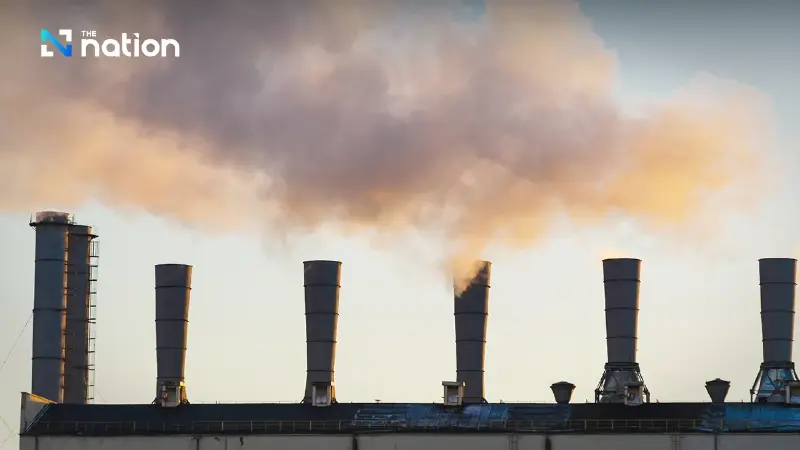


Government steps up proactive factory inspections, pushes real-time CEMS stack monitoring, tightens Bangkok emission standards, and opens public reporting channels
- The government and relevant agencies are proactively inspecting industrial factories, especially those at high risk of emitting high levels of pollution, to enforce the law strictly.
- Efforts are being pushed to upgrade laws to require factories to install Continuous Emissions Monitoring Systems (CEMS) at exhaust stacks for real-time surveillance and tracking.
- Air-emission standards from factory stacks are being prepared for revision to become stricter, especially particulate standards in the Bangkok area.
- The public is being encouraged to participate by reporting tips or filing complaints about factories with high emissions through hotlines and online channels.
From the measures set by the government and assigned to relevant agencies to supervise, and to develop mechanisms for preventing, controlling, monitoring and inspecting all sources of PM2.5—across agriculture, transport and industry—every agency has carried out strict and serious oversight.
For the industrial sector, actions include inspection and legal enforcement measures, support and promotion measures, legal upgrades, stricter dust controls, and participation measures—particularly for industry, where many types of factories discharge particulate matter into the atmosphere and are major sources of PM2.5.
Surin Worakijthamrong, Director-General of the Pollution Control Department (PCD), said that under inspection and enforcement measures, the PCD has inspected particulate emissions from factory stacks to strengthen surveillance and strict law enforcement.
Examples include inspections of cement plants and lime plants in Saraburi province, inspections of sugar factories and biomass power plants, as well as providing advice and explaining requirements to operators to reduce emissions effectively.
The target is to provide inspection guidance covering a total of 58 sugar factories and biomass power plants nationwide. In addition, the Ministry of Industry has a proactive factory inspection plan. In 2025/2026, inspections in Bangkok, the metropolitan area, and 17 northern provinces have covered 519 factories, and orders have been issued to 14 factories.

Support and promotion measures: The government supports and promotes the use of fuel from agricultural residues, such as promoting power plants that use biomass fuel from agricultural waste, and encouraging sugar factories to purchase fresh sugarcane and use bagasse fuel to reduce burning.
Legal upgrade measures: The Ministry of Industry has drafted legislation requiring factories to install automatic pollution monitoring equipment at exhaust stacks (CEMS) as a tool for pollution surveillance and real-time monitoring of air emissions from factory stacks, enabling continuous tracking of emissions at all times. This would be enforced nationwide for factories with high emissions.
In Bangkok, the Ministry of Industry has required 11 production units to install CEMS. At present, 405 factories nationwide have already submitted and linked data into the system, covering 823 stacks, and 148 additional stacks in Bangkok will be added. Basic parameters required for monitoring include total suspended particulates (TSP), sulphur dioxide (SO2), and nitrogen oxides (NOx), among others.
Stricter dust control measures in Bangkok: The Ministry of Industry has drafted new stack-emission standards for boilers, to be enforced for Type 3 factories using boilers in Bangkok. The standards would tighten TSP, SO2 and NOx limits discharged from boiler stacks, especially particulate limits from stacks using solid and liquid fuels—reducing the standard from the existing 320 and 240 milligrams per cubic metre (mg/m³) to 90 mg/m³. For gas fuels, the standard would be reduced from 320 mg/m³ to 60 mg/m³, among other changes.
In addition, Bangkok plans to tighten smoke opacity standards from stacks to better suit local conditions. The PCD has supported this and trained officials in all 50 districts to strengthen understanding of visual smoke opacity measurement for inspecting factory stacks, incinerators and other industrial sources, so that officers are prepared to work correctly and enforce the law effectively.
Participation measures: The public can report tips or file complaints about factories with high emissions that may affect public health via the Pollution Control Department hotline 1650, the Department of Industrial Works hotline 1564, and Bangkok’s online channels via the Traffy Fondue Line application, as well as other hotlines.
Surin emphasised that the government is using both support measures and legal enforcement to control PM2.5 sources across agriculture, transport and industry equally, with the primary aim of protecting public health, alongside supporting a better economy and society and improving people’s quality of life.

