
Thailand assumes chairmanship of UN space subcommittee in Vienna
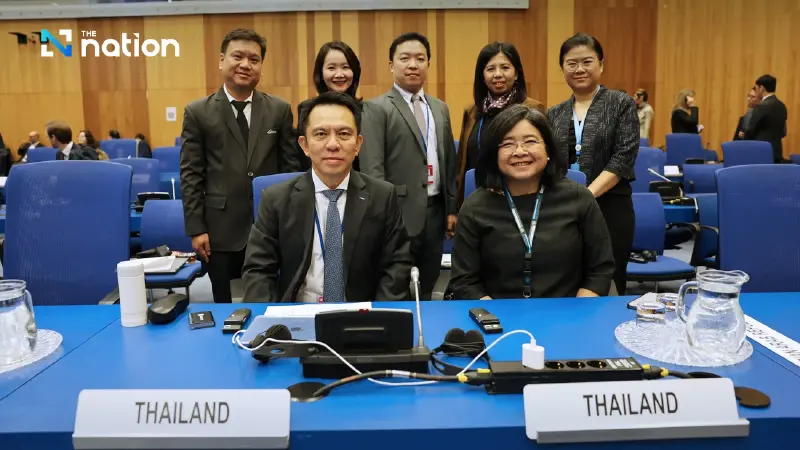


Dr Pakorn Apaphant of GISTDA to lead the UN STSC in 2026, positioning Thailand as a key mediator in global space governance and debris management
- Thailand has been appointed to the Chairmanship of the UN's Scientific and Technical Subcommittee (STSC) for the year 2026, with the appointment taking place in Vienna.
- Dr. Pakorn Apaphant, the executive director of Thailand's space agency (GISTDA), will serve as the chair.
- In this role, Thailand will mediate among 110 member states on technical issues like space debris, sustainability, and space traffic management.
- The appointment makes Thailand only the 15th nation to hold the STSC Chairmanship, positioning it as a key leader in global space governance.
Dr Pakorn Apaphant of GISTDA to lead the UN STSC in 2026, positioning Thailand as a key mediator in global space governance and debris management.
Thailand has secured a prominent role in global space diplomacy after being appointed to the Chairmanship of the Scientific and Technical Subcommittee (STSC) for 2026.
The appointment took place on 2 February at the United Nations in Vienna, marking a significant ascent for the nation within the international space community.

The STSC operates under the United Nations Committee on the Peaceful Uses of Outer Space (UN COPUOS), the world’s primary forum for establishing the governance and sustainable use of the final frontier.
Dr Pakorn Apaphant, executive director of the Geo-Informatics and Space Technology Development Agency (GISTDA), will serve as the chair.

Operating under the Ministry of Higher Education, Science, Research and Innovation, Dr Pakorn’s tenure comes at a time of intensifying geopolitical friction within multilateral platforms.
"It is a tremendous honour for Thailand to be entrusted with this mission," said Dr Pakorn. "UN COPUOS is the heartbeat of international space regulation. While the Legal Subcommittee handles the framework, the STSC is the technical engine. We are tasked with filtering critical issues—ranging from space debris and space weather to long-term sustainability and space traffic management—to create actionable international guidelines."

The role is as much about diplomacy as it is about science. With 110 member states holding vast differences in technological capacity and national interests, the Chair must act as a mediator.
Dr Pakorn noted that achieving consensus requires a delicate balance of academic rigour and diplomatic tact to ensure the subcommittee remains both productive and balanced.

Thailand’s election is a rare feat; of the 110 member states, only 14 nations have previously held the STSC Chairmanship.
Thailand becomes the 15th, a move that GISTDA believes reflects a "profound confidence" from the global community in the kingdom's capabilities.
The appointment is expected to yield benefits beyond the halls of Vienna. By taking a leadership role, Thailand aims to showcase its domestic technological progress and foster new links within the global space economy.

Furthermore, the government hopes this international visibility will inspire a new generation of Thai students to pursue STEM subjects, viewing space science as a viable and prestigious career path.
To ensure a successful term, GISTDA is collaborating closely with the Permanent Mission of Thailand to the United Nations in Vienna and the Ministry of Foreign Affairs.
Together, they aim to act as a "bridge" between competing global interests, ensuring that space remains a sustainable resource for the benefit of all mankind.

