
Energy Ministry warns against fuel hoarding
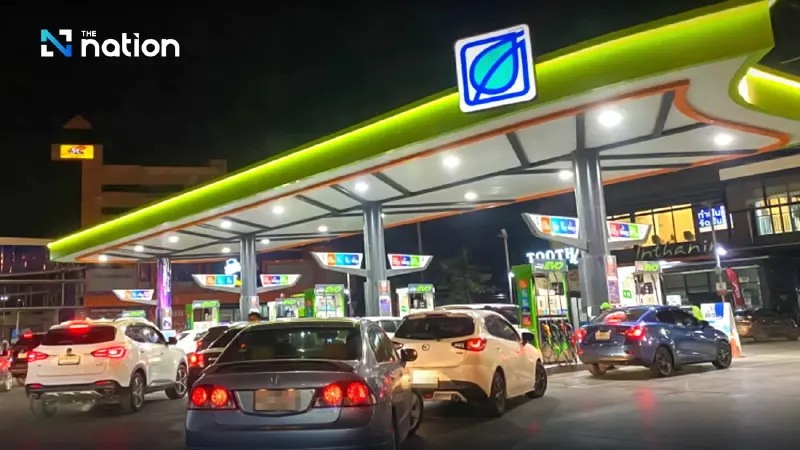


Energy Ministry says fuel supplies are sufficient for about 60 days and warns hoarding is illegal, as firms hold pump prices
The Energy Ministry has urged the public not to panic or hoard fuel, insisting supplies remain sufficient and saying it is preparing to use the Oil Fuel Fund mechanism to help manage prices.
PTT Group has said it will not raise retail prices of refined fuel at this time, while Bangchak said it will keep prices unchanged until any further announcement.

On March 3, 2026, Veerapat Kiatfuengfoo, deputy permanent secretary and spokesperson for the Energy Ministry, said the ministry—through the Department of Energy Business—had called an urgent meeting of oil traders to ensure readiness, accelerate procurement and strengthen supply plans following Iran’s announcement that it had closed the Strait of Hormuz, which could affect imports.

He said traders had been instructed to continue sourcing from alternative supply regions outside the Middle East—such as the United States, West Africa and Malaysia—to ensure domestic reserves remain sufficient to meet public demand.
The ministry is also preparing to use the Oil Fuel Fund to compensate for higher prices if oil prices rise.
The ministry said it has been continuously assessing risks and measures to prevent any fuel shortages.
As of March 1, 2026, domestic stocks of refined fuel and legally required reserves stood at 4,877 million litres, while crude oil in transit totalled 2,783 million litres—a combined 7,660 million litres, sufficient for 60 days even if new procurement could not be arranged.
In reality, procurement can still continue from other regions, though prices may rise in line with the global market.
On reports that Thailand is exporting fuel to Laos and neighbouring countries, the ministry said the exports are being carried out under contracts signed earlier. It added that Thailand and Laos maintain strong energy cooperation—not only through Thai fuel exports to Laos, but also through Thailand’s electricity imports from Laos.
The ministry said it has emphasised stricter controls to prevent fuel exports being re-exported onward to a third country.
If the situation becomes prolonged and reaches crisis levels, the Department of Energy Business would set appropriate conditions for measures to suspend exports to strengthen Thailand’s energy security, while also considering impacts on neighbouring countries that matter to Thailand’s own energy security.
The ministry again urged the public not to panic or hoard fuel.
It warned that hoarding large quantities may be illegal and could cause danger if stored improperly.
The ministry said it remains confident that domestic reserves are sufficient, and that procurement continues from outside the Middle East. It also reiterated that it is preparing to use the Oil Fuel Fund to help reduce the burden on the public.
On the issue of fuel exports to neighbours under pre-existing contracts, the ministry said it will monitor the situation closely and, if conditions become critical, is ready to implement appropriate export-suspension measures. It said all actions would be guided by the interests of the Thai public.
PTT–Bangchak hold prices
PTT Group said it will not adjust retail prices of refined fuel at this time. It said the worsening conflict in the Middle East has pushed up global crude and refined-product prices, and that PTT is closely tracking developments with the Energy Ministry.
PTT said it has coordinated with OR to keep retail prices unchanged for now to help ease impacts on the public, and urged consumers not to panic or hoard because domestic reserves and transport systems are operating normally.
PTT said it remains committed to maintaining energy stability so the public and the country can continue functioning. It warned that if the conflict drags on, it could affect energy procurement—especially shipping routes in the Middle East—and raise crude costs due to tighter supply.
Bangchak said it is monitoring the situation closely and coordinating with relevant state agencies to assess impacts and support national energy stability.
It said it will maintain current retail prices until any change is announced, prioritising impacts on the public and energy users, while managing procurement and costs carefully.
It asked consumers not to panic or hoard, stressing that domestic reserves and logistics remain normal even as international uncertainty persists.
