
Qatar halts Ras Laffan LNG plant after drone attack, prices jump 50%
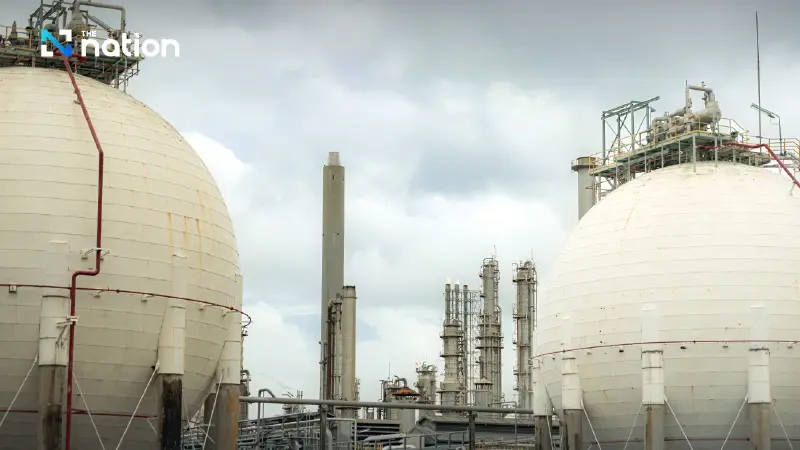


Qatar has shut the world’s largest LNG export plant at Ras Laffan after an Iranian drone attack, pushing European gas prices up by more than 50%.
Qatar announced on Monday (March 2) that it had halted liquefied natural gas (LNG) production at the Ras Laffan plant — the world’s largest LNG export facility — after it was hit by an Iranian drone.
The move sent European gas prices surging by more than 50% and sent shockwaves through global energy markets.
QatarEnergy’s Ras Laffan complex accounts for roughly one-fifth of global LNG supply, and this unprecedented shutdown is now threatening energy security worldwide.
European natural gas futures posted their sharpest jump since the 2022 energy crisis triggered by the Russia–Ukraine war, after QatarEnergy confirmed on Monday that it had suspended output.
At the same time, most energy tankers had already stopped sailing through the Strait of Hormuz — a critical route for global energy shipments.

Simon Tagliapietra, an analyst at Bruegel, said the threat to supply security was materialising in real time, and that while the scale of the impact would depend on how long the shutdown lasted, the market had now entered a new situation.
Asian countries are currently the main buyers of Middle Eastern LNG. This supply disruption is expected to intensify competition for alternative sources, driving prices higher worldwide — including in Europe.
Bloomberg reported that European gas prices jumped sharply because gas inventories are unusually low, and the region needs to import large volumes of LNG this summer to refill storage ahead of the next winter.
Although the intraday increase was the biggest since Russia invaded Ukraine four years ago, the benchmark gas price has reached only a one-year high so far, as regional supply has not yet been directly affected and investors are still assessing how long the conflict may drag on.

The Strait of Hormuz is a vital energy chokepoint, handling about 20% of the world’s LNG shipments. A severe slowdown in transit through the strait has created a logistics bottleneck and could cause QatarEnergy’s LNG storage facilities to fill up more quickly.
Sources said QatarEnergy has declared force majeure on its LNG delivery contracts with customers. However, there have been no reports of damage to the plant so far.
The key question for markets is “how long will the disruption last”. Goldman Sachs Group Inc. has initially estimated that if shipping through the Strait of Hormuz is disrupted for one month, European gas prices could more than double.
Even if the United States increases LNG output, it is unlikely to be enough to offset Qatar’s supply in the near term. QatarEnergy is due to begin an expansion project in the US within the next few weeks, but the facility will not be able to run at full capacity until next year.
Meanwhile, Israel has ordered a temporary shutdown of some gas production, including the Leviathan field — the largest — forcing Egypt, a major importer, to urgently secure additional LNG supplies.
