
Energy minister shifts crude imports to West Africa, US amid Hormuz risk


Thailand plans to import crude from West Africa and the US to cut Hormuz risk, with deliveries expected by late April; Oil Fuel Fund stands at +Bt2.46bn.
- The Ministry of Energy has adjusted its plan to import crude oil from West Africa and the United States to reduce risks from unrest in the Middle East.
- The key driver is concern over the safety of oil tankers that must transit the Strait of Hormuz.
- Oil from the new sources is expected to be secured and delivered by late April to strengthen the country’s energy security.
- The ministry is preparing to use the Oil Fuel Fund to compensate costs if it becomes necessary to stabilise domestic retail fuel prices to reduce impacts on the public.
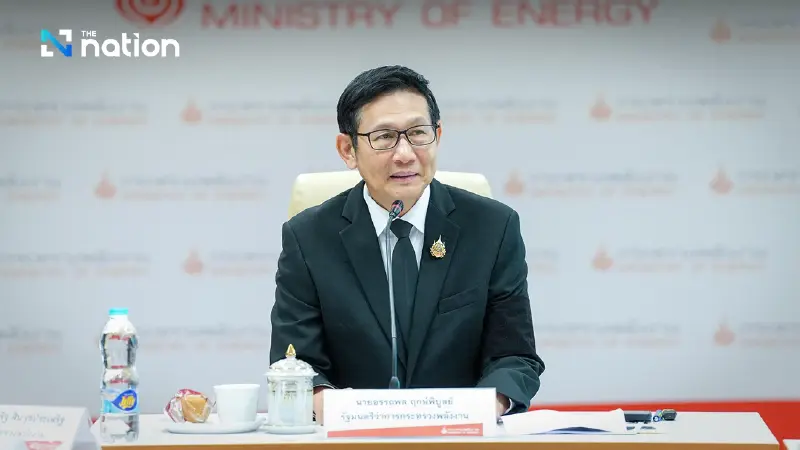
Energy Minister Auttapol Rerkpiboon said he has planned to shift crude purchases to West Africa and the United States, with supplies expected to be secured and shipped by late April, due to concerns over tanker safety for crude that would otherwise be imported from the Middle East in March and would need to pass through the Strait of Hormuz.
He said the ministry has opened and convened an emergency energy monitoring centre to track the Middle East situation.
Although the Strait of Hormuz has not been “100% closed”, global oil prices remain highly volatile, averaging around $75–$85 a barrel, up about 7%.
If it becomes necessary to stabilise domestic retail fuel prices, the Oil Fuel Fund can be used to provide compensation.
The fund’s position as of March 1, 2026 was positive at 2,459 million baht.
On measures to suspend oil exports for domestic energy security, he said Laos would be exempt, with Thailand still supplying some oil because Thailand continues to rely on energy from Laos.
However, controls will be tightened to prevent onward shipment to third countries.
For countries with pre-existing purchase contracts, the ministry will proceed accordingly, while also checking and seeking cooperation from oil traders to ensure there is no stockpiling beyond what is necessary.
For LPG, he said there has been no impact at present.
For April, the ministry will manage supply through refineries and petrochemical sources, and may procure additional volumes from Petronas (Malaysia).
For LNG, which Thailand imports from Qatar and which must pass through the Strait of Hormuz, the ministry is checking whether deliveries can proceed.
It has also negotiated for spot LNG from other suppliers such as the United States, and is considering postponing maintenance plans to reduce impacts.
He noted that spot LNG procurement could be priced higher than the level set by the regulator and could affect Thailand’s pool gas price, but said the ministry will manage the situation to avoid impacts on reserve volumes and prices.
On electricity, he said peak demand is expected at about 36,000 megawatts, likely in late April. EGAT will manage fuel supplies to be efficient and sufficient—such as increasing hydropower generation and boosting coal-fired output—and there will be no planned power plant maintenance shutdowns during this period.
To reduce fuel imports, the ministry also asked for cooperation from the private sector and industry to adjust production plans appropriately and reduce energy use as much as possible.
Auttapol said the ministry will implement every measure—securing adequate reserves of oil, LPG, LNG and electricity to meet domestic demand during ongoing Middle East unrest.
On prices, he said the Oil Fuel Fund will be used to help reduce impacts on the public if necessary.
He added the ministry will continue to monitor the situation closely and asked the private sector to maximise energy efficiency, government agencies to cut energy use, and the public to conserve energy and use public transport instead of private cars to help reduce energy imports as much as possible.
