
Middle East Tensions Rattle Markets as Oil and Gold Surge on Regional Conflict Fears
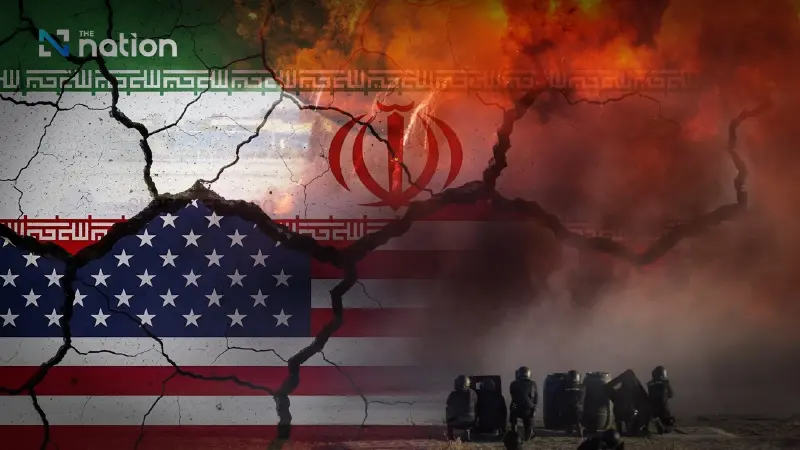


Thai financial analysts warn of prolonged volatility in commodities and risk assets as geopolitical uncertainty grips global markets following the escalation of Middle East conflict
- Escalating Middle East tensions caused a sharp surge in commodity prices, with oil jumping 7.4% and gold climbing 2.6%.
- Global stock markets reacted negatively to the conflict, with significant declines in Asian markets, including a 2.2% drop in Japan's Nikkei 225 and a 3% plunge in Thailand's SET Index.
- The market volatility created clear winners and losers; oil, energy, and shipping stocks gained, while tourism and hospital stocks fell on fears of reduced travel from the region.
- Analysts predict prolonged uncertainty for oil prices, with scenarios ranging from $70-$80 per barrel to as high as $120 if the conflict disrupts key shipping routes like the Strait of Hormuz.
- Investors moved towards safe-haven assets, evidenced by the rise in gold prices and a strengthening of the US dollar and Japanese yen against other currencies.
Thai financial analysts warn of prolonged volatility in commodities and risk assets as geopolitical uncertainty grips global markets following the escalation of Middle East conflict.
Global markets on Monday under pressure as the intensifying conflict in the Middle East sent commodity prices sharply higher, though analysts cautioned that the sell-off had yet to escalate into outright panic.
Dr Kobsak Pootrakool, deputy managing director of Bangkok Bank and chairman of the Federation of Thai Capital Market Organisations (FETCO), noted in a social media post on 2 March that early trading had not yet triggered the kind of widespread alarm seen in previous geopolitical crises.
Japan's Nikkei 225 led declines with a fall of 2.2 per cent, while European equity futures tracked similar losses. Markets in Australia and New Zealand saw more modest declines of around 1 per cent.
Commodity markets, however, told a different story. Oil prices surged 7.4 per cent, gold climbed 2.6 per cent to approach $5,400 per ounce, and silver also gained 2 per cent.
"This story is far from over," Dr Kobsak wrote. "The fighting in the Middle East will continue for some time, and the impact on various assets — particularly oil and energy — will persist."
SET Index Closes Lower Amid Geopolitical Headwinds
The Stock Exchange of Thailand took a sharp hit on 2 March, as the SET Index plunged by over 3% to close at 1,466.51. The 61.75-point drop reflects heightened investor anxiety amid the escalating Middle East crisis.
Tourism and hospital stocks bore the brunt of the decline, weighed down by fears that the Middle East conflict would deter regional travellers, while oil-related stocks moved in the opposite direction, buoyed by surging crude prices.

Phillip Securities (Thailand) warned that the market remains shackled by the escalating conflict, identifying several key channels of impact for listed firms.
With the Strait of Hormuz—a chokepoint for over 20% of global oil supply—under threat, shipping freight rates and crude prices are projected to climb.
Analysts view this as a boon for shipping stocks, upstream energy producers, and refiners. Conversely, the tourism and healthcare sectors face significant headwinds; hospitals catering to Middle Eastern clientele are braced for a downturn as travel is curtailed.
The Thai baht tumbled to 31.45 per dollar by the close of trade on 2 March, as investors retreated to the safety of the US dollar and Japanese yen.
While the currency's weakness pressures the broader market, it offers a silver lining for export-oriented stocks with heavy exposure to China and Japan.
Ultimately, Phillip Securities maintains that the SET Index will endure persistent geopolitical pressure. Despite emerging reports that Iran’s new leadership may be open to dialogue with Washington, the brokerage warns that the conflict shows no signs of a swift resolution.
Three Scenarios for Oil Prices
SCB Chief Investment Office (CIO) outlined three potential scenarios for how the conflict might unfold, assigning a 65 per cent probability to a base case in which hostilities remain intense in the short term but ultimately lead to negotiations, with Brent crude settling in the $70–$80 per barrel range.
A best-case scenario — given a 25 per cent probability — envisages a rapid change of government in Iran that brings oil supply back online swiftly, pulling Brent down to $55–$60 per barrel.
The worst case, at a 10 per cent probability, involves a prolonged and widening conflict, including the permanent closure of the Strait of Hormuz, which could push Brent as high as $120 per barrel.

Sornchai Suneta, CFA and deputy head of High Net Worth and Affluent Banking at SCB, said the risk of escalation in the short term remained elevated.
"Gold and oil are both likely to spike in the near term," he said, adding that the bank did not recommend selling equities in response to the current tensions, as the impact on the broader economy remained limited.
Instead, SCB CIO advised investors to adopt a buy-on-weakness strategy in fundamentally strong equity markets, both for core long-term portfolios and opportunistic short-term positions.
On Thai equities specifically, SCB noted that while the country's energy-heavy stock index offered some short-term support, the SET Index remained vulnerable to a broader global sell-off.
With the index already up 21.3 per cent year-to-date, profit-taking pressure was seen as a meaningful risk. Investors already holding Thai equities were advised to hold their positions and wait for a recovery, though the bank flagged that SET's earnings growth outlook lagged behind many regional peers.
Diversification into markets with stronger earnings momentum — such as Japan and South Korea — was recommended for those comfortable with currency risk.
Thailand Faces a "Fiscal Vacuum"
Dr Amornthep Chawla, assistant managing director and head of Research at CIMB Thai Bank, raised more pointed concerns about Thailand's capacity to respond to an energy shock, highlighting what he described as a "fiscal vacuum" caused by the country's ongoing governmental transition.
In a research note, Dr Amornthep outlined three conflict scenarios broadly consistent with those of SCB, ranging from contained skirmishes with oil at $70–$80 per barrel to a closure of the Strait of Hormuz sending prices to $90–$100, and finally a protracted war involving the United States, Israel, Iran, and Russian backing that could drive crude beyond $120 per barrel.
His most pressing concern, however, was not the conflict itself but Thailand's limited capacity to cushion the blow.
With an acting government unable to authorise new spending programmes or emergency relief measures, and the national oil fund already carrying debt beyond its statutory ceiling, households would bear the full brunt of any energy price spike without the subsidy buffers deployed in previous crises.
Dr Amornthep also warned of potential credit rating pressure should Thailand slip into a technical recession during a period of political instability, which would drive up sovereign borrowing costs.
For businesses, he recommended building cash reserves to manage logistics and energy costs that could rise by 20 to 30 per cent, urged importers to hedge currency exposure against the baht breaching the 34-per-dollar level, and advised households and small businesses to avoid taking on new debt.
"The Thai economy is facing a major test," he said. "The speed at which a new government is formed and the budget unlocked is the single variable that will determine whether the impact of the Middle East war becomes a national economic crisis."
