
Hormuz crisis disrupts trade as freight rates double, exporters warn


Thai shippers warn the Hormuz crisis is forcing reroutes via Africa, doubling freight rates and hitting exports, with 32bn baht of goods stuck in transit
Thanakorn Kasetsuwan, chairman of the Thai National Shippers’ Council (TNSC), told Thansettakij that escalating tensions in the Middle East between Iran, Israel and the United States are severely affecting supply chains and the mechanisms of global trade.
The crisis has had an immediate impact on maritime traffic in the Persian Gulf.
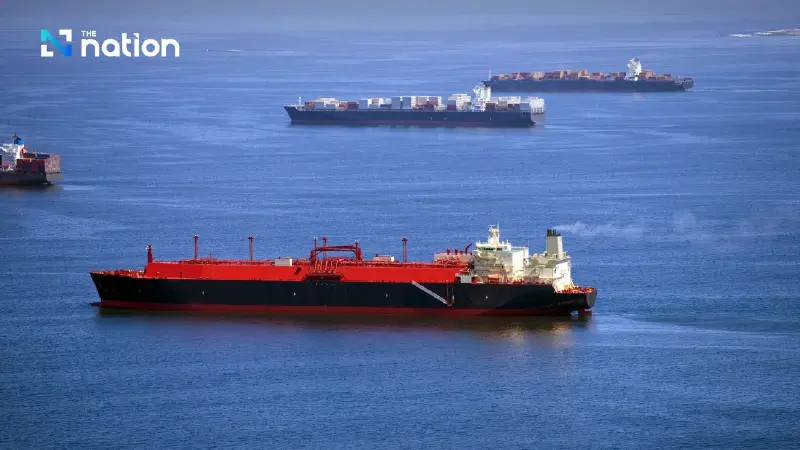
The latest information indicates that a large number of cargo vessels have been forced to drop anchor and stop moving to assess the situation.
Shipping lines have had to avoid the Strait of Hormuz and other high-risk areas, switching to routes around the African continent via the Cape of Good Hope.
This has pushed shipping costs up sharply, with freight rates effectively doubling. Estimates show the cost for a 40-foot container has risen from $3,500 per container to $7,000 per container.
Exporters must also shoulder additional war-risk surcharges and higher fuel fees, reflecting the longer sailing distances.
Thai exports to the Middle East account for about 5% of Thailand’s total global exports, worth around 400 billion baht per year.
The council estimates damage of roughly 33.3 billion baht per month, averaging about 8.3 billion baht per week, due to disruptions to shipping.
It also estimates that around 32 billion baht worth of Thai goods are currently in transit and stuck within the logistics system, unable to enter destination ports on schedule.
On containers, shipments that have already been exported cannot rotate back to Thailand as planned.
The standstill on both the import and export sides is creating bottlenecks in container allocation at major ports.
Smaller exporters may be unable to book vessel space because shipping lines prioritise larger trading partners with the ability to pay higher freight rates.
“Right now, quite a lot of ships have left, and containers will probably be in short supply — but hopefully it won’t be too severe because it’s frozen on both sides.
Exports can’t go out, imports can’t come through, because all the ships are stuck at port,” he said.
The product group suffering the greatest impact is food, as Thailand is a major exporter in that category.
Higher shipping costs are also pushing end-market prices beyond consumers’ purchasing power, while longer transit times increase the risk of quality deterioration.
For the energy and crude oil industry, Thailand imports more than 50% of its oil from the Middle East.
Thanakorn said the main risk is not a shortage of supply volumes, but higher import costs. Diverting routes around the Cape of Good Hope would raise crude prices delivered to refineries, reflecting higher freight costs and longer transit times.
