
Trump Signals Prolonged Conflict in Iran as 'Big Wave' Looms
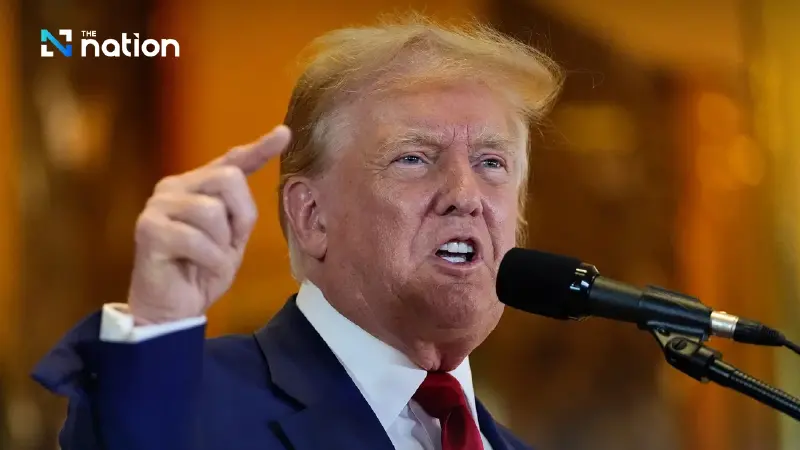


President Trump outlines four key goals for Operation Epic Fury while warning the "big one" is yet to come, amid conflicting signals over ground troops
- President Trump has indicated the military conflict with Iran may be more prolonged than initially anticipated, warning that a major escalation he calls "the big one" or "big wave" is still to come.
- The administration has outlined four extensive strategic goals for the operation, including the complete destruction of Iran's missile and naval capabilities, suggesting a lengthy campaign.
- Despite an initial focus on air and sea strikes, Trump has refused to rule out a ground invasion, and the Pentagon has suggested a potential conflict timeline of two to six weeks.
- Trump is sending conflicting signals, claiming the US is "ahead of schedule" with major successes while simultaneously preparing the public for a protracted and escalating conflict.
President Trump outlines four key goals for Operation Epic Fury while warning the "big one" is yet to come, amid conflicting signals over ground troops.
President Donald Trump has signalled that the US military campaign against Iran may be more protracted than initially anticipated, even as he maintains that the most devastating phase of the assault has yet to begin.
In a series of weekend communications and a Monday morning interview with CNN, the 79-year-old president sought to clarify the objectives of Operation Epic Fury, which he described as the "last best chance" to neutralise Washington’s long-standing adversary.
However, his rhetoric remains a study in contrasts, blending claims of being "ahead of schedule" with warnings of an impending escalation.
The Four Pillars of 'Epic Fury'
For the first time, the administration has articulated four specific strategic objectives for the strikes, which began on Saturday:
Missile Neutralisation: The total destruction of Iran’s ballistic missile capabilities and industry.
Naval Elimination: The dismantling of the Iranian Navy.
Nuclear Denial: Ensuring the regime never acquires a nuclear weapon.
Proxy Disruption: Ending Tehran’s ability to fund, arm, and command "terrorist armies" beyond its borders.
Conflicting Signals on Ground Troops
Despite the Pentagon’s initial focus on air and sea strikes—totalling over 1,250 targets—the President has refused to rule out a ground invasion.
Speaking to the New York Post, Trump used a golfing metaphor to describe his lack of hesitation: “I don’t have the ‘yips’ about boots on the ground,” he said, breaking with the standard presidential protocol of dismissing land-based intervention.
This stance was echoed by Defence Secretary Pete Hegseth, who, while insisting the US would not be dragged into an "endless" Iraq-style quagmire, told reporters: "We're not going to get into the details of what we will or won't do."
Hegseth suggested the timeline for the conflict remains fluid, potentially lasting anywhere from two to six weeks.

'The Big One is Coming'
During a nine-minute phone interview with CNN’s Jake Tapper, Trump claimed the US is currently "knocking the crap" out of Iran but warned that "the big wave hasn’t even happened. The big one is coming soon."
The president also revealed that the initial strikes were more successful than publicly known, claiming 49 Iranian leaders were killed in a single strike after they gathered in one location.
"They got a little bit arrogant... they thought they were undetectable," Trump said, comparing the current state of Iranian leadership to an "unemployment line."
Internal Pressure and Logistics
The administration's shifting timeline has sparked friction within the Make America Great Again (MAGA) base, many of whom supported Trump on the promise of ending "foreign wars." White House Press Secretary Karoline Leavitt has spent the last 24 hours defending the mission's clarity on social media.
Beyond the political fallout, military analysts are raising questions regarding logistics. While the US has already spent upwards of $33bn on regional conflicts since late 2023, experts wonder if current stockpiles are sufficient for a prolonged war of attrition against a determined enemy, should the "big wave" fail to result in a swift capitulation.
