
Govt orders all foreign fuel retailers to freeze diesel price
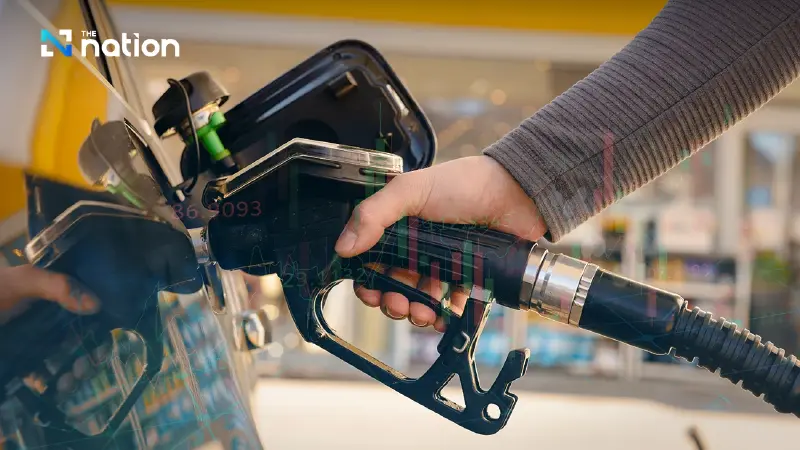


Thailand orders foreign fuel retailers to freeze diesel below Bt30/litre for 7–10 days, using the Oil Fuel Fund to offset costs
The government has ordered all foreign oil retailers to freeze diesel prices after large numbers of motorists crowded petrol stations amid concern over the Middle East situation, according to a source at Government House.
The source said that on March 3, 2026, Prime Minister Anutin Charnvirakul, who also serves as interior minister, instructed the Energy Ministry and relevant agencies to monitor the situation closely and provide regular updates.
He also ordered the Energy Ministry to hold a briefing and provide information to the public on March 4, 2026.
The source said that while the Strait of Hormuz has been closed, most oil tankers and LNG carriers were not stuck in the strait and had already sailed through to deliver cargoes to their destinations, with some shipments destined for Thailand.
This, the source said, means Thailand will have adequate oil and gas reserves during the period in which authorities accelerate procurement from sources outside the Middle East.
The Energy Ministry and PTT Plc are working closely to secure additional energy supplies from outside the region, and more clarity is expected.
On the issue of some foreign oil retailers having already raised diesel and petrol prices, the source said the Energy Ministry has announced a diesel price freeze for 7–10 days.
The government will use the Oil Fuel Fund mechanism to compensate all eligible oil traders under Section 7, requiring foreign retailers to lower diesel prices back to the same level as PTT and Bangchak—below Bt30 per litre, as currently sold.
The source said funds from the Oil Fuel Fund will be mobilised to subsidise prices, particularly diesel, which the government wants held for 7–10 days to avoid impacts on transport costs and the cost of living.
In response to criticism that Thailand’s oil reserve of about 61 days is lower than many countries, the source said a 60-day reserve is not small when measured against the size of the economy, consumption levels and existing management mechanisms.
Some countries maintain reserves for several months because they have larger economies, are farther from crude sources, or depend heavily on a single supplier.
For Thailand, expanding reserves beyond 60 days would require additional budget and storage capacity, which is not considered necessary at this time.
