
Thai government warns of summer drowning risk as 10-year toll nears 10,000
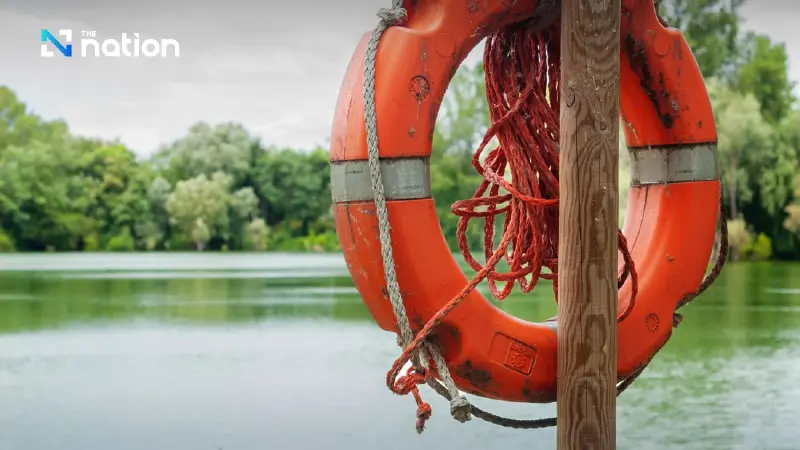


Statistics from the past 10 years (2016–2025) show that nearly 10,000 people died from drowning during the summer months, with those aged 45–59 the hardest hit.
Airin Phanrit, deputy government spokeswoman, said on Saturday (March 7) that every year during the summer season, from March to May, Thailand sees a recurring rise in drowning deaths.
Data from the past 10 years, covering 2016 to 2025, showed an average of 964 drowning deaths per year. The age group with the highest proportion of fatalities was 45–59 years, accounting for 27.9%, followed by those aged 60 and above at 21.7%, and children under 15 at 20.3%.
However, during the school holiday period, child drowning deaths account for as much as one-third of all drowning fatalities recorded throughout the year.
The main causes of drowning were swimming or playing in water, which accounted for 51.6% of cases, and accidental falls or slips into water, at 25.2%. Most incidents occurred in agricultural water sources and natural bodies of water, such as excavation ponds, pools, canals and rivers, which together accounted for 73.1% of cases.
Importantly, almost all of those who died were not wearing life jackets, representing 98.4% of fatalities. The peak period for incidents was between 12.00pm and 5.59pm, accounting for 60% of cases, while 41.4% of victims were with friends at the time of the incident.
Of all drowning victims, 76.5% died, reflecting how rapidly drowning incidents unfold and how severe they can be. This highlights the need to place prevention as the top priority.
The government has urged the public to exercise greater caution when taking part in water-related activities during the summer, particularly by closely supervising children and elderly people.
It also advised people to wear life jackets at all times when travelling by boat or engaging in water activities, and to avoid drinking alcohol in order to reduce the risk of drowning and prevent avoidable losses.
The government also stressed that water-based tourist attractions should clearly zone swimming areas, provide lifeguards and ensure there is adequate life-saving equipment, while also enforcing measures to prohibit the consumption of alcohol.
Local administrative organisations and network partners have meanwhile been asked to inspect and manage high-risk water sites by installing fences, warning signs and safety regulations in order to prevent water-related accidents and reduce loss of life.
