
Energy Business chief apologises after fuel shortages at some stations, insists Thailand has 101 days of reserves
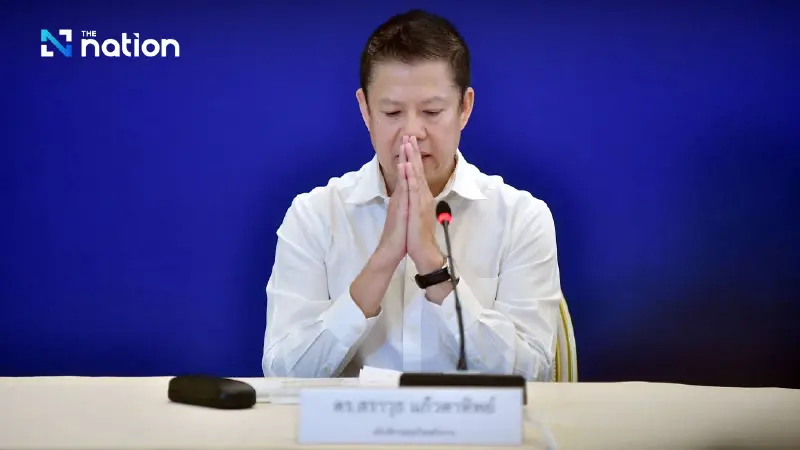


Department of Energy Business director-general Sarawut Kaewtathip apologised for disruption after reports of stations running dry, saying Thailand still has at least 101 days of fuel reserves and is working to speed up deliveries and prevent hoarding.
Sarawut Kaewtathip, director-general of the Department of Energy Business, on Tuesday apologised to the public—making a wai gesture—after confusion and disruption surrounding the latest briefing on Thailand’s energy situation. He stressed that Thailand still has fuel reserves for no fewer than 101 days.
He said authorities are urgently coordinating with refineries to ensure they do not halt operations, while working with the Interior Ministry, the Transport Ministry, the police and the Bangkok Metropolitan Administration (BMA) to extend transport hours so fuel can be delivered to service stations more quickly. The department is also coordinating with the Commerce Ministry to help prevent stockpiling.
“I would like to inform the public that we still have sufficient reserves in the country, and I ask everyone to please carry on with daily life as normal,” he said.

Earlier, Deputy Prime Minister and Transport Minister Phiphat Ratchakitprakarn said the Prime Minister had convened relevant agencies to address the situation, and asked the Energy Ministry to confirm that fuel supplies remain adequate.
He said the Energy Ministry and PTT Plc had confirmed that, based on data from March 16, 2026, Thailand had fuel supplies for 96 days, meaning reserves remain available.
Phiphat said the main issue affecting some service stations was delivery delays, rather than an overall lack of fuel. He said major-brand stations—such as Shell, PTT, Susco, Bangchak and Caltex—number around 10,000 nationwide, while about 23,000 non-branded stations and small village “pump kiosks” do not have fuel for sale. As a result, many vehicles have shifted to the major-brand stations, putting pressure on deliveries and causing some outlets to close intermittently or run out of certain fuel types.
He said solutions would be discussed at a Cabinet meeting, including what measures should follow.
On fuel price policy, Phiphat said officials would meet on Tuesday evening and indicated that from March 18, 2026, prices for both petrol and diesel would be adjusted. He said petrol prices have already been moving over the past one to two weeks, while diesel will begin to rise from Wednesday.
He said the increase would be in satang, not even reaching one baht, and that the government aims to keep diesel below 33 baht per litre.
He added that during Anutin’s first four months in office, diesel prices fell to 32 baht, from a previous peak of 34.94 baht, while earlier administrations had reduced diesel from around 35 baht. Going forward, he said, prices would need to be adjusted gradually.
Phiphat also said Thailand will move towards fuel blend adjustments. Petrol has already been structured with E10, E20 and E85, and diesel blending changes will follow a similar approach with price adjustments. He said an initial plan would direct B20 diesel towards industry, transport and agriculture, with preliminary estimates suggesting B20 could be 4-5 baht cheaper than B7, though he said this remains an estimate and has not yet been finalised, pending Tuesday evening discussions.
