
Chiang Mai’s Red Line tram aims to cut pollution and improve city transport
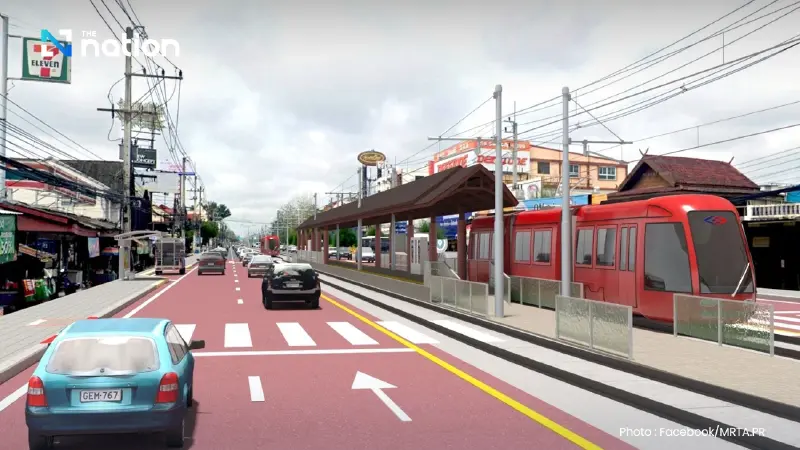


Chiang Mai’s planned Red Line tram will link Mae Hia to Royal Park Rajapruek, aiming to ease traffic, cut air pollution and support Smart City goals
Chiang Mai is preparing for a major shift in urban transport with plans for a new electric tram system aimed at easing congestion, cutting air pollution and improving mobility as the city pushes ahead with its Smart City ambitions.
The Mass Rapid Transit Authority of Thailand (MRTA) has unveiled the findings of its study into the Chiang Mai mass transit Red Line project, covering the section from the Mae Hia Samakkhi junction to Royal Park Rajapruek. The proposed route is seen as an important part of efforts to tackle traffic problems and modernise transport in the northern city.

The project details were presented at a recent public hearing by Saroj T. Suwan, MRTA deputy governor for strategy and planning, together with Nakprat Chaiyanon, Head of the Chiang Mai Provincial Office, who attended as the governor’s representative.

Under the plan, the system will use a tramway, with electric trams running on rails laid along the road. The line will cover a distance of about five kilometres, starting at the Mae Hia Samakkhi junction, running along Highway 108 and continuing onto Chiang Mai rural road 3028 before ending at Royal Park Rajapruek.
The Red Line has been designed with five stations to serve both local residents and tourists. These are Ban Don Pin station, Phuetsa Suan Lok junction station with a park-and-ride area, Ban Uea Athon station, Rajapruek junction station with a park-and-ride area, and Royal Park Rajapruek station.

The project is intended not only to make travel more convenient, but also to deliver environmental benefits by reducing dependence on private cars. Officials say that lowering the number of car journeys should help cut air pollution caused by fuel combustion, supporting a more sustainable form of urban development.

According to the current timeline, the project will be developed under a public-private partnership (PPP) model. The MRTA expects the private partner selection process to begin in 2027, with construction scheduled to run from 2028 to 2031. Official operations are expected to begin in 2032.
Once completed, the line is expected to provide Chiang Mai residents and visitors with a new transport option that is more convenient, faster and safer, while helping to reshape the city’s transport network into one that is more modern and environmentally friendly.
