
Southern palm growers demand export curbs be scrapped
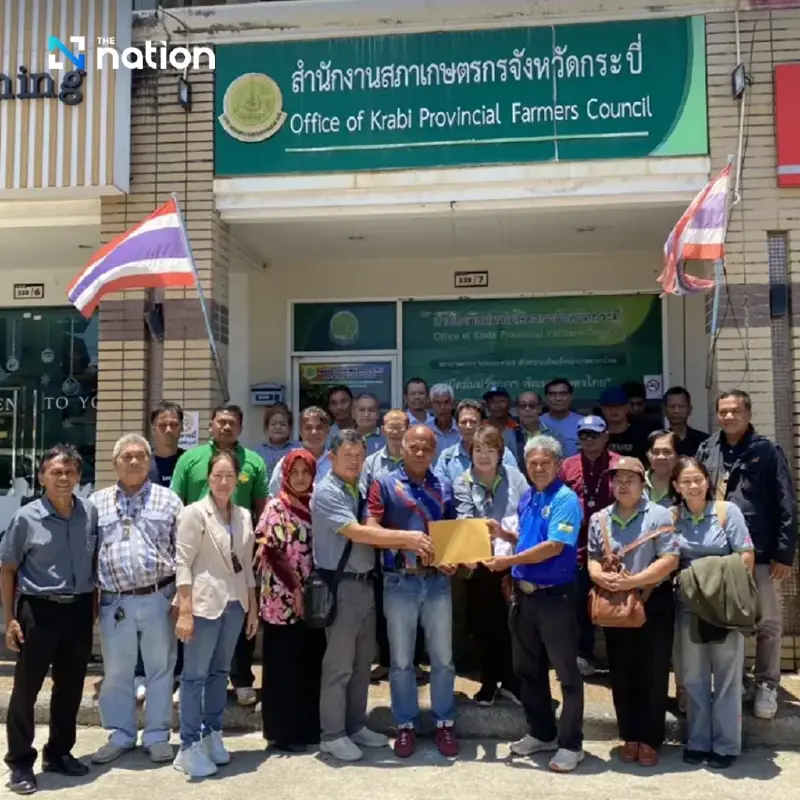


Southern palm growers threaten a post-Songkran protest at the Commerce Ministry after export controls sent fresh fruit bunch prices sharply lower
Palm growers in southern Thailand are threatening to escalate their protests after a government move to control crude palm oil exports triggered a sharp fall in prices, prompting anger across the sector and fresh demands for urgent policy changes.
The latest dispute follows a decision announced on April 7, 2026, by the Central Committee on Prices of Goods and Services to impose controls on crude palm oil exports, citing energy security and living costs. But growers say the measure has backfired badly, sending palm prices into freefall and inflicting immediate damage on producers.

Athirat Damdee, president of the Krabi Palm Oil Growers Association, who is among the farmer leaders moving under the banner of the Southern Palm Oil Growers and Collection Yards Network, said the impact was severe and immediate.
He said the price of fresh fruit bunches at collection yards had plunged from 8.90 baht to just 7.00 baht per kilogramme in only four days. According to the network, that swing has translated into economic losses of as much as 120 million baht a day from farmers’ incomes, or nearly 500 million baht over the past few days, directly contradicting the Commerce Ministry’s explanation.
The network says the policy amounts to a “conspiracy theory” aimed at forcing raw material prices lower in order to keep bottled cooking oil below 50 baht a bottle, while pushing the cost of that policy failure entirely on to growers and collection yards.
To defuse the situation and prevent a wider escalation, the network has submitted four demands to the government.
First, it wants the export controls eased immediately to restore balance to the trading system and protect overseas customers, warning that more than 50 billion baht a year in trade value could be at risk.
Second, it is calling for B10 to be declared the standard diesel blend so that the energy sector can absorb surplus output of around 60,000 tonnes a day, which growers say would be a fairer pricing mechanism than direct intervention.
Third, it wants a restructuring of the pricing system based on a “quality-linked” model, ending daily state-directed pricing and adopting the model proposed by the National Farmers Council so that raw material prices move more fairly in line with downstream products.
Fourth, it is urging the government to develop biodiesel production based on domestic raw materials by supporting the use of locally produced ethanol and alcohol instead of imported high-cost chemicals.
Athirat said the government must stop relying on policies that distort market mechanisms and damage the production sector. Instead of acting as a command authority, he said, the state should ensure fair price transmission throughout the supply chain. He argued that if the government is worried about the cost of living, it should use targeted subsidies through discount card systems or state welfare support for vulnerable groups, rather than distorting prices in a way that harms more than 100,000 farming households nationwide.
The statement was signed by representatives of palm grower associations from several southern provinces, including Krabi, Trang, Surat Thani, Chumphon and Nakhon Si Thammarat. The network has demanded a clear answer from the government within this week. If there is still no response, southern palm growers and their allies in nearby provinces say they are ready to march on the Commerce Ministry immediately after the Songkran holiday to demand justice.
“We are not demanding a promise over what price it should be,” Athirat said in closing. “We are demanding the return of fairness in the production structure of oil palm and in a proper palm oil market.”

