
Thailand plans single-owner rail model, buyback talks with BTS and BEM
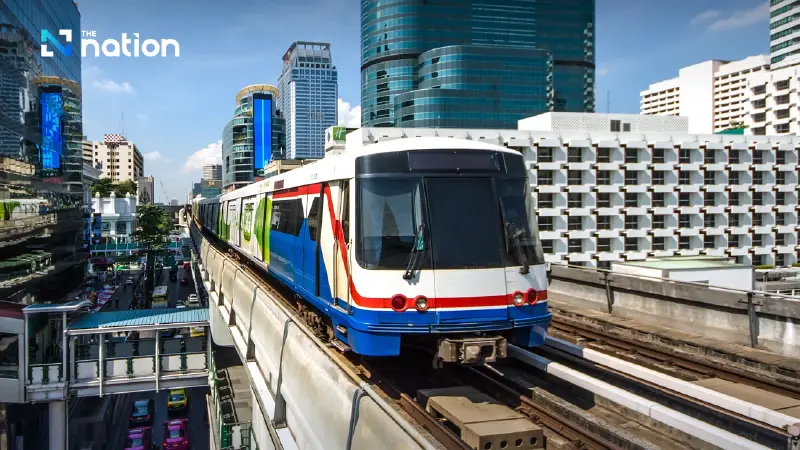


Transport Ministry plans to buy back four PPP net-cost rail concessions, paving the way for a single-fare ticketing system and a 40-baht cap from 2027.
Thailand is pressing ahead with a common-ticket, single-fare policy for urban rail, with the key mechanism centred on buying back operating rights from private concessionaires so the state can set fares directly.
The buyback plan currently covers four projects under PPP Net Cost concession structures, where the private sector invests in systems and operations, runs services and collects fare revenue.
The four concession projects targeted for buyback talks:

1) BTS Green Line (Sukhumvit and Silom lines)
Bangkok Metropolitan Administration (BMA) holds the main concession contract with Bangkok Mass Transit System Plc (BTSC) for Mochit-On Nut (Sukhumvit/Light Green) and National Stadium-Saphan Taksin (Silom/Dark Green), with the main concession ending in 2029.
Separate operation and maintenance contracts run to 2042, covering the main sections and extensions, including Saphan Taksin-Bang Wa and On Nut-Bearing (Extension 1), and Mochit-Khu Khot and Bearing-Samut Prakan (Extension 2).

2) MRT Blue Line (Hua Lamphong-Bang Sue and Hua Lamphong-Lak Song extension)
The Mass Rapid Transit Authority of Thailand (MRTA) has a concession with Bangkok Expressway and Metro Plc (BEM) covering operations, fare collection and commercial development, running to 2049.
The contract also requires BEM to pay MRTA revenue shares from fares and commercial development under rates set in the agreement, with the concession period referenced to end in 2050.

3) Pink Line (Khae Rai-Min Buri)
MRTA has a PPP Net Cost concession with Northern Bangkok Monorail Co., Ltd. (NBM). The private partner invests in civil works, systems and rolling stock, and handles operations and maintenance for 30 years from the service opening, with the state providing support for civil works. The concession is due to end in 2053.

4) Yellow Line (Lat Phrao-Samrong)
MRTA has a PPP Net Cost concession with Eastern Bangkok Monorail Co., Ltd. (EBM) on the same structure as the Pink Line. The private partner invests in civil works, systems and rolling stock, and runs operations and maintenance for 30 years from the service opening, with state support for civil works. The concession is due to end in 2053.
Transport minister expects talks to start in May
Deputy Prime Minister and Transport Minister Phiphat Ratchakitprakarn said the common-ticket fare policy has been supported by two laws—the Rail Transport Act B.E. 2568 (2025) and the Common Ticket System Management Act B.E. 2568 (2025)—which have passed the Senate and are now moving through the process of drafting subordinate regulations.
Once that legal process is completed, the package will be submitted to the Cabinet. The government would then begin the buyback process, with the broader goal of moving towards a single ownership model—bringing rail lines under the MRTA to enable integrated management.
Under the plan, passengers would pay using a single EMV contactless card, with fares brought under one pricing framework.
Phiphat said the subordinate legislation is expected to be completed by June 2026, and the Transport Ministry plans to begin parallel negotiations with BTS and BEM in May.
He said the government aims to deliver a “gift” to the public through a unified fare policy, with all lines required to apply a single starting fare capped at 40 baht throughout the day from January 1, 2027, and with the common-ticket tap-and-pay system to be expanded to cover buses and passenger boats as well.
MRTA speeds up valuation of rail concession contracts
MRTA Governor Gardphajon Udomdhammabhakdi said the MRTA is compiling data on assets, operation-and-maintenance (O&M) management contracts, and all rail concession agreements in order to assess the value of each contract for use in negotiations with private concessionaires.
A Transport Ministry source said the combined value of assets and O&M contracts under the BTS and BEM rail concessions is initially estimated at 140 billion baht.
The source added that the government does not plan to use the state budget to buy back rail concessions. Instead, bringing the concessions back under state control would be done by amending contracts from a PPP Net Cost model—where the private sector has the right to invest, operate services and collect fare revenue—into a PPP Gross Cost model, under which the state bears all fare-revenue risk and hires the private sector to operate and maintain the system.
“Buying back rail concessions will certainly not involve using public funds to purchase them back from the private sector, as that would add to public debt,” the source said. “Based on the study, the approach will be to revise the contracts into PPP Gross Cost so the state becomes the concession holder and continues to hire the private sector to operate the system as before.”
Under this approach, the private operators would retain operating rights for the concession period as originally specified, receive operating payments, and—once the state’s fare revenue moves out of a loss position—would be paid back for assets gradually in line with the agreed valuation.
The Transport Ministry believes that shifting management rights back to the state through PPP Gross Cost negotiations would allow the state to avoid budget spending and additional public debt, while also allowing the private sector to use the revised concession as collateral for borrowing from financial institutions, continue receiving operating payments, and be repaid for civil works assets once state revenues are sufficient—meaning private firms would not lose out under the plan.
Fast-tracking a 40-baht all-day fare
The source said that once management rights are transferred back to the state, the Transport Ministry will move ahead with a policy setting a 40-baht starting fare all day. Preliminary studies suggest an appropriate structure would be:
- A flat 40 baht all day if a passenger’s trip takes no more than 40 minutes per journey, or roughly up to 10 stations per trip, with no limit on the number of trips per day.
- If travel time exceeds 40 minutes, an additional 20 baht would be charged—bringing the daily cap to 60 baht all day—allowing connections across all lines and colours within the rail network.
BTS says talks could be “win-win”
Surapong Laoha-Unya, chief executive of Bangkok Mass Transit System Plc (BTSC), said the Transport Ministry has not yet scheduled talks with BTS, but the private sector is ready to negotiate and believes the approach can be win-win for the state, the public and operators.
He said it is possible a conclusion could be reached by June 2026, noting the issue had been raised by the previous government and is now being carried forward, and that the concession agreements already provide for such negotiations.
He added that the outcome will depend on agreement over the buyback valuation and the benefits linked to the common ticket policy, while ensuring no state budget is used—so passengers benefit through fares while private operators can continue operating their business.
