
Six major dams under watch as water levels fall
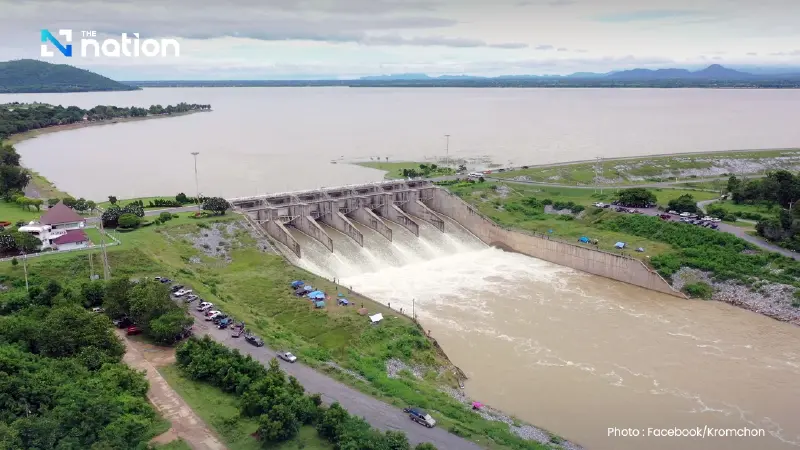


ONWR says Thailand has enough water until the end of the 2025/26 dry season, despite six major dams falling below control levels
Thailand is monitoring six major reservoirs where water levels have fallen below the minimum control level, although the Office of the National Water Resources (ONWR) insists supplies remain sufficient for public consumption and economic activities through to the end of the 2025/26 dry season.
In its latest update on April 27, 2026, ONWR said overall water storage nationwide stood at 48.39 billion cubic metres, or 60% of total capacity, with usable water at 24.287 billion cubic metres, or 43%.
Meanwhile, upper Thailand is bracing for summer storms and heavy rainfall. Between April 28 and May 1, thunderstorms, strong winds and isolated hail are expected, initially affecting the Northeast, North and East, before spreading to the Central region, Bangkok and surrounding areas.

Key reservoir figures
- Total water nationwide: 48.39 billion cubic metres (60%)
- Usable water: 24.287 billion cubic metres (43%)
- Medium-sized reservoirs below 30%: 67 nationwide
Reservoir levels by region
West: 68% — 19.308 billion cubic metres
South: 64% — 5.017 billion cubic metres
North: 60% — 16.455 billion cubic metres
Northeast: 48% — 5.789 billion cubic metres
East: 37% — 1.125 billion cubic metres
Central region: 35% — 696 million cubic metres
In the Eastern Economic Corridor (EEC), key reservoirs remain at moderate levels:
- Prasae Reservoir: 172 million cubic metres (58%)
- Bang Phra Reservoir: 58 million cubic metres (50%)
- Nong Pla Lai Reservoir: 78 million cubic metres (48%)
However, six large reservoirs are now under close watch after falling below minimum control levels:
- Mae Mok Dam (North)
- Pa Sak Jolasid Dam (Central region)
- Khun Dan Prakan Chon Dam (East)
- Khlong Si Yat Dam (East)
- Vajiralongkorn Dam (West)
- Pran Buri Dam (West)


Despite these concerns, ONWR stressed that the overall water situation remains manageable.
Water quality checks conducted at 7am showed salinity levels at all monitoring points within normal standards. The Chao Phraya River at the Sam Lae pumping station met drinking water criteria, while the Tha Chin River at Khlong Chinda, the Mae Klong River at Amphawa and the Bang Pakong River at Bang Taen all met agricultural-use standards.
Authorities said that while some reservoirs remain under pressure, current reserves are still adequate. However, residents in vulnerable areas are advised to closely monitor weather updates as summer storms intensify towards the end of April.
