
Suphajee says THB100 durian deal is sales tactic, not quality issue
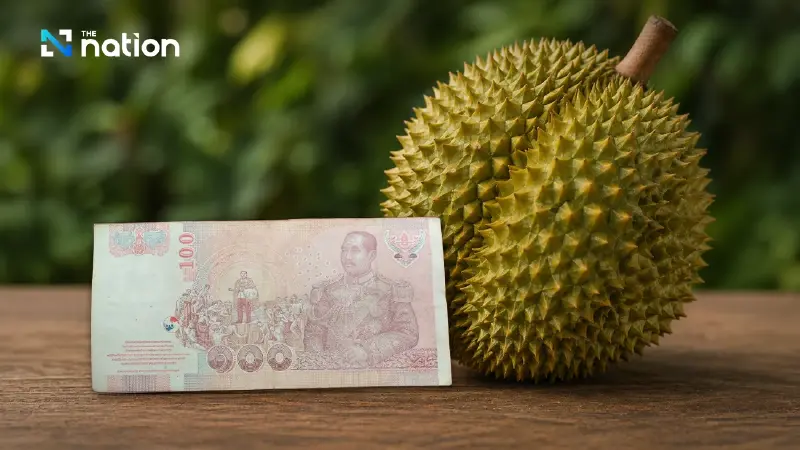


Commerce Minister Suphajee says Pimrypie’s THB100 durian offer is a promotion, as Thailand faces a 33% jump in durian output
Deputy Prime Minister and Commerce Minister Suphajee Suthumpun has responded to the controversy over durians being sold for THB100 each, saying the offer appears to be a sales-promotion technique rather than a quality problem.

Speaking at Government House on April 28, Suphajee said Thailand’s durian output this year had risen by more than 33%, reaching around 2 million tonnes. The increase has prompted the Commerce Ministry to pursue more proactive marketing by looking at both supply and demand, as well as domestic and overseas markets.
For international markets, she said Thailand would expand durian sales further into second-tier cities in China. Domestically, the ministry would look at multiple sales channels to help absorb the larger supply.
Addressing criticism of online seller and influencer Pimrypie’s plan to sell durians for THB100 each, Suphajee said she believed the price was part of a promotional strategy. Details such as conditions and sales duration would have to be seen first.
She said she did not believe there would be a problem with the fruit not matching the advertised quality, as the campaign had attracted major public attention and relevant regulatory agencies would also be watching closely.
“With this much attention, many people are watching. The agencies responsible for supervision must also keep an eye on it, so I believe Pimrypie would not dare to do that,” she said.
Suphajee added that durian prices remained at a good level despite the large harvest. Grade A and B durians, which are export grades, are priced at around THB140-150 per kilogramme. She stressed that durians vary by grade, variety and quality, and urged the public to wait and review Pimrypie’s promotion first.
She said the campaign was expected to proceed correctly based on arrangements made with growers. The Commerce Ministry’s role, she added, was to support market mechanisms, proactive marketing and new sales channels, particularly because this year’s output was high.

Asked whether the controversy stemmed from unclear communication, Suphajee said it appeared to have arisen from the statement that Pimrypie would sell durians for THB100 each. She reiterated that the promotion should be assessed once its conditions become clear.
She stressed that the Commerce Ministry was not involved in setting the details of the promotion. Its role was to monitor quality, oversee overall prices and treat all influencers equally.
Suphajee also denied reports that she would join Pimrypie’s livestream sales event, saying she was working throughout the day and would not attend. She added that claims she had previously joined a three-hour livestream selling to Chinese consumers were incorrect, saying the actual appearance lasted only three minutes.
Responding to opposition calls for the Commerce Ministry to study market mechanisms more carefully to avoid worsening farmers’ problems, Suphajee said the ministry had prepared plans at least three months in advance.
Once it became clear that supply would exceed demand this year, she said, solving the problem at the end of the process would not be enough. The ministry therefore had to open new sales channels and manage marketing from upstream to midstream and downstream.
She said the ministry would also focus on processed products so that lower-grade durians could still be sold and remain in the market throughout the year.
Suphajee added that the ministry had plans for all agricultural products, including mangosteen and rambutan, with a calendar tracking which crops would enter the market in each month. However, she noted that durian, known as the “king of fruits”, plays a key role.
“If durian prices are good, prices of other fruits will also be good,” she said.
