
Labour Ministry Busts 'Hopes and Dreams' Recruitment Scammers After $600,000 Fraud
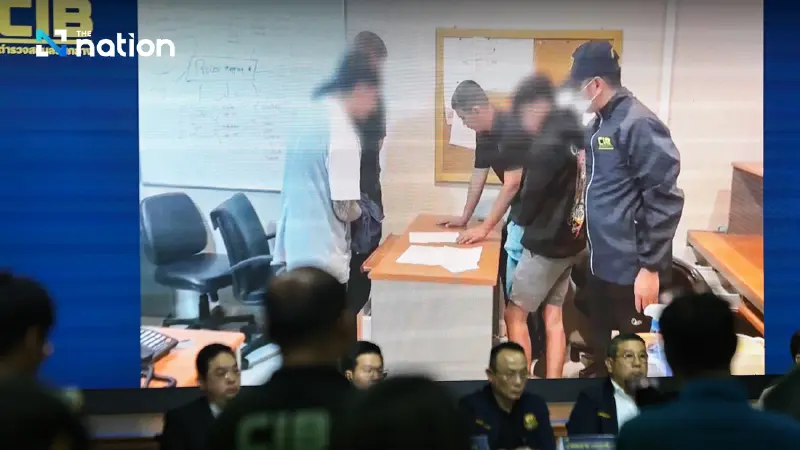


Police dismantle a sophisticated criminal network that preyed on over 100 jobseekers with fictitious agricultural roles in Australia and New Zealand
- Thai authorities dismantled a recruitment gang that defrauded over 100 jobseekers of approximately $600,000 (20 million Baht).
- The scammers used social media to offer non-existent, lucrative agricultural jobs in Australia and New Zealand, specifically targeting economically vulnerable individuals.
- The arrests were the result of a coordinated sting operation involving the Labour Ministry, the Central Investigation Bureau (CIB), and the Anti-Human Trafficking Division (AHTD).
- In response, officials are urging citizens to use official government portals for job seeking and to be wary of any agency demanding significant upfront fees.
Police dismantle a sophisticated criminal network that preyed on over 100 jobseekers with fictitious agricultural roles in Australia and New Zealand.
Thai authorities have dismantled a predatory recruitment gang that allegedly swindled more than 100 vulnerable workers out of 20 million baht ($600,000). The group stands accused of exploiting the economic desperation of labourers by promising lucrative agricultural placements in Australia and New Zealand that did not exist.
On Saturday, Labour Minister Julapun Amornvivat, flanked by high-ranking officials from the Central Investigation Bureau (CIB) and the Anti-Human Trafficking Division (AHTD), detailed the results of the coordinated sting operation.
The gang operated primarily through digital channels, using polished social media profiles to masquerade as legitimate employment agencies.

The investigation revealed that the syndicate functioned with the clinical precision of a modern "scam centre," but with a more malicious edge. Detectives noted that the criminals specifically targeted individuals struggling with the rising cost of living and global energy price hikes.
"These suspects did not just steal money; they traded on the hopes and dreams of people looking for a better life," Julapun told a press conference. "The Ministry will not tolerate the exploitation of Thai workers, especially during these periods of global economic instability."

The arrests were the result of a "proactive" intelligence-sharing partnership between the Ministry of Labour and the CIB. Authorities are now focusing on tracing the financial trails to recover as much of the 20 million baht ($600,000) as possible, though they warned that such funds are often moved rapidly through offshore accounts.
Lt Gen Nattasak Chaowanasai, commissioner of the CIB, confirmed that officers are currently widening the net to identify any potential "money mules" or secondary companies involved in the laundering of the stolen fees.

In the wake of the bust, Somchai Morakotsriwan, director-general of the Department of Employment, urged citizens to bypass social media recruiters and use official government portals.
He reminded the public that any agency demanding significant upfront fees without a verifiable licence from the Ministry should be treated as a criminal threat.
The Ministry has pledged to expand its "blacklisted" database of rogue agencies and is currently working on bilateral agreements to create safer, state-monitored "labour corridors" for those wishing to work in the Pacific region.
