
Too late to stop — fatal rail crash exposes safety failures
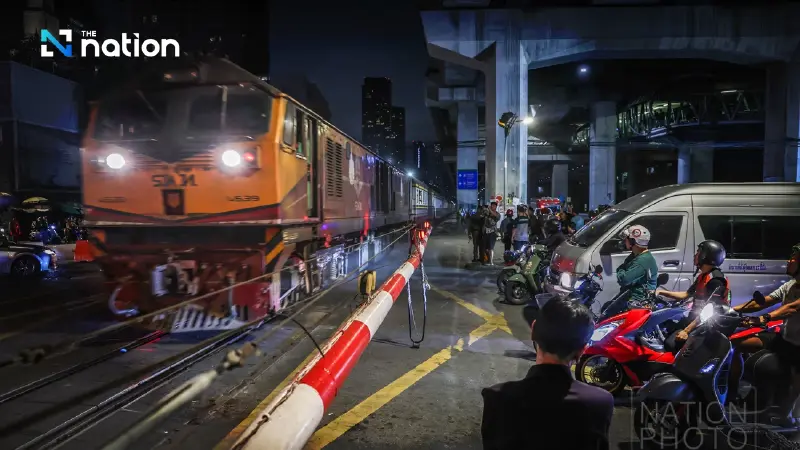


Investigation into the deadly Makkasan train-bus crash reveals drug use, licensing failures and wider gaps in Thailand’s rail safety system
- The train driver was allegedly operating without a valid license and tested positive for illegal substances.
- A railway crossing officer has been charged with negligence over alleged failures in signalling procedures that contributed to the collision.
- The investigation is examining broader supervisory negligence for allowing an allegedly unfit and unlicensed employee to operate the train.
- The tragedy has highlighted longstanding weaknesses in Thailand's rail safety, prompting calls for stricter staff screening and infrastructure upgrades at dangerous crossings.
The deadly collision between a freight train and a public bus at Bangkok’s busy Asok-Makkasan intersection has intensified scrutiny of Thailand’s rail safety system after investigators uncovered a series of alleged operational failures behind the disaster.
The crash, which occurred at around 3.41pm on May 16, left eight people dead and more than 30 injured after freight train No. 2126 travelling from Laem Chabang to Bang Sue slammed into bus route 206 before flames engulfed the vehicle.
Preliminary findings from the Department of Rail Transport (DRT), supported by data recovered from the train’s black box, suggest the train driver applied the emergency brake only about 100 metres before impact despite the heavy freight convoy requiring a much longer stopping distance.
The findings also raised serious questions over the driver’s response. The train was moving at 34 kilometres per hour before the crash, but the emergency brake was reportedly applied only 100 metres before impact, far short of the 500 to 2,000 metres normally needed for a heavily loaded container train to stop completely.

The investigation took a more serious turn after forensic tests reportedly found illegal substances in the urine of the train driver, identified as Sayomphorn Sonkul. Authorities also discovered he allegedly lacked the legally required rail operating licence issued by the DRT.
The findings have triggered questions over internal oversight and whether unqualified personnel were allowed to operate trains responsible for public safety.
Police at Makkasan station have since pressed ahead with legal action against several individuals linked to the incident.
The train driver has been suspended from duty by the State Railway of Thailand (SRT), while a serious disciplinary investigation and possible criminal proceedings linked to alleged drug use and negligence are now under way.
Meanwhile, railway crossing officer Uthen Jomkiri has been charged with negligence causing death and serious injury after investigators found alleged failures in signalling procedures that may have contributed to the bus stopping across the tracks.
The DRT is also widening its investigation to examine whether supervisors or senior officials could face disciplinary or criminal consequences for allowing allegedly unlicensed or unfit staff to remain on operational duty.
The tragedy has reignited wider debate over longstanding weaknesses in Thailand’s rail safety infrastructure, particularly at vulnerable crossing points in urban areas.

Authorities say the government is now considering a stricter “Zero Tolerance” approach, including mandatory alcohol and drug screening for rail staff before every shift without exception.
Officials are also reviewing hundreds of unauthorised rail crossings nationwide, many of which have long been viewed as high-risk accident zones.
Longer-term proposals include constructing more underpasses and flyovers at dangerous intersections, as well as upgrading signalling systems capable of detecting obstacles on tracks earlier to give train operators more braking time.
The Makkasan disaster has rapidly evolved from a traffic tragedy into a national warning over operational negligence and outdated transport safety systems, one that officials now face mounting pressure to address before another fatal accident occurs.

