
Is longevity trend or transformation?


While Thai citizens have rapidly heightened their awareness of longevity and health in 2026, many are questioning whether this phenomenon is a genuine shift in the national psyche or merely a well-curated digital mirage.
A medical doctor at the forefront of this movement suggests that the growing participation in intense, data-driven sports is more than just a social media trend. It represents a deepening commitment to personal discipline.
“Health is a new luxury. You can find ways to make income, but health is not something you can easily buy. It takes time, discipline, and sacrifice.
“People see it as a trend because of social media, but for many, it’s a long-term commitment that is finally being visualised through wearables,” Dr Sinthu Kosasih said.

Thai participation in HYROX Bangkok has reached staggering new heights, seeing a 100% year-on-year surge. According to Richard Cowley, Head of Operations at HYROX APAC, over 17,000 athletes took to the floor this year.
However, this sport comes with a price tag. In Bangkok, a single ice bathing session now ranges from 500 to 800 THB, while private Pilates sessions can soar past 3,000 THB per hour, driven largely by a lifestyle showcased by celebrities.

According to the 2026 ACSM Worldwide Survey of Fitness Trends, the industry is witnessing a profound generational divide in how health is prioritised.
Gen Z is increasingly leveraging fitness as a tool for identity and community-building, leading a 5x surge in "social" sports such as tennis, badminton, and pickleball.
Meanwhile, Millennials have emerged as the industry's power users, characterised by an obsession with data-driven health metrics, specifically deep tracking of sleep quality and Heart Rate Variability (HRV).
In contrast, Gen X and Boomers have pivoted their focus toward longevity.

This demographic is investing more heavily than ever in specialised wellness centres and advanced recovery gear, viewing fitness not just as a hobby, but as a strategic investment to extend their active years.
Strength is the new cardio. The Garmin Connect 2025-2026 Report reveals that strength training has officially unseated cycling as Thailand’s third most-logged activity. Alongside physical power, mental resilience is booming; mindfulness practices have seen a massive 148% increase this year.

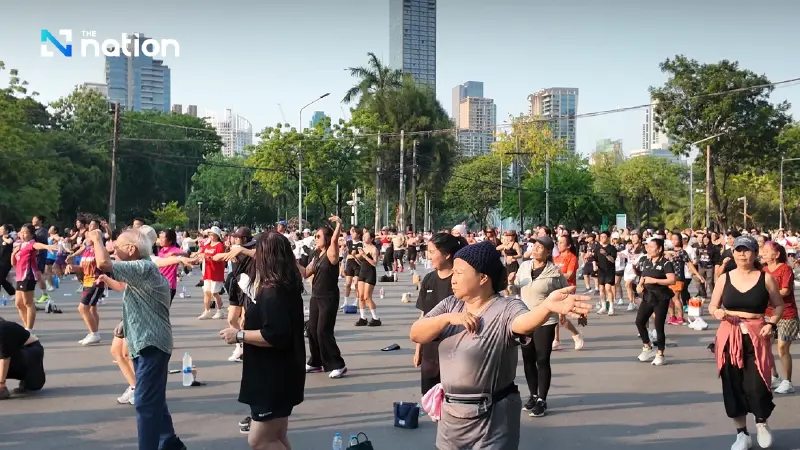
Dr Sinthu also pointed out that this shift has also birthed a new phenomenon, Fitness Tourism. Beyond the traditional Muay Thai camps, global travellers are now flocking to places like Lumpini Park to join local aerobic troupes.
This suggests that Thailand’s fitness culture has become a landmark in its own right, where the "group energy" transcends language barriers and attracts a diverse international crowd.

“It’s beautiful to come into a crowd with this group energy. The language barrier isn’t there when you’re dancing. I love this. I literally come every second day just for this,” a traveller told The Nation Thailand at the Lumpini Park.
For travellers, while social media provides the fuel for these trends, the engine is a genuine craving for real-world connection.
Bangkok’s health surge proves that while the content might get people to the park, it is the community that makes them stay. In 2026, looking good is merely the side effect; feeling better is the true goal.
