
Meta, RTP crack down on online scams, remove 1.4m scam-linked accounts
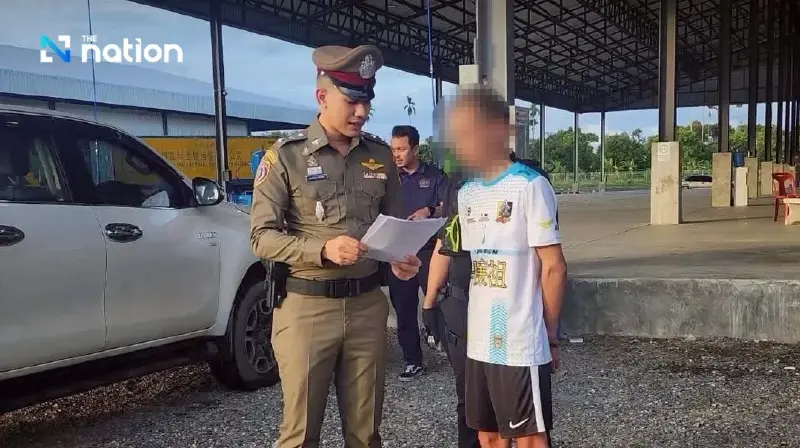


The cross-sector effort led to 63 arrests, while Meta removed more than 1.4 million accounts, pages and groups linked to scams on Facebook and Instagram.
- Meta removed over 1.4 million accounts, pages, and groups on Facebook and Instagram that were linked to online scams.
- The crackdown was a joint operation between Meta, the Royal Thai Police (RTP), the US Department of Justice, and other international law enforcement agencies.
- As a result of the operation, the Royal Thai Police arrested 63 suspects connected to the scam networks.
- The broader effort also involved freezing over $3 million in cryptocurrency and sharing intelligence to identify additional criminal networks.
Meta, in cooperation with the Royal Thai Police (RTP), the US Department of Justice and law enforcement agencies from several countries, is pressing ahead with an operation to crack down on online scam networks in Southeast Asia.
The operation led to the arrest of 63 related suspects.
On Meta’s digital platforms, more than 1.4 million accounts, pages and groups linked to scams on Facebook and Instagram were removed.
Intelligence was also shared between private companies and government agencies to help identify additional networks and suspected locations linked to call-centre gangs, which remain under investigation.

Joint operation results
- Digital platform disruption: Meta said it had shut down more than 1.4 million accounts, pages and groups linked to scams, while Microsoft suspended around 20,000 accounts connected to fraud.
- Law enforcement: The RTP arrested 63 suspects linked to scam operations.
- Digital asset freezes: Coinbase said it had frozen more than US$3 million worth of cryptocurrency linked to criminal networks.
- Communications network disruption: Starlink terminated connectivity for thousands of devices found to be linked to illegal use.
- Intelligence gains: Information exchanges between agencies helped identify additional scam network structures, which were passed to law enforcement agencies for action.
The operation began on Monday (May 18, 2026) under the US Department of Justice’s “Scam Centre Strike Force”, with coordination between the private sector and law enforcement agencies from the United Kingdom, Australia, Canada and New Zealand, as well as work in Bangkok and Washington, DC.
Agencies involved said scam networks often use multiple platforms at the same time, including investment scams, romance scams and other forms of fraud.
Their cross-border and cross-platform operations require cooperation from several sectors to intercept them.
Pol Lt Gen Jirabhop Bhuridej, assistant commissioner-general of the Royal Thai Police, said this was the third joint operation with Meta and foreign agencies.
Transnational scams could not be solved by any one agency and required continuous intelligence-sharing, he said.
Chris Sonderby, vice-president and deputy general counsel at Meta, said the operation reflected cooperation between industry and law enforcement, including the removal of more than 1 million accounts, the arrest of suspects and the freezing of assets linked to criminal networks.
Online scammers are continually changing their tactics, often using several applications and platforms at once to avoid detection.
Responding to the challenge requires cooperation from all sectors, including technology platforms, internet service providers, financial institutions, governments and law enforcement agencies worldwide.
Agencies involved said scam networks are constantly adapting, and that the response requires continued cooperation among technology platforms, financial institutions and law enforcement agencies internationally.
