
Thai border security drive targets scam centres and trafficking
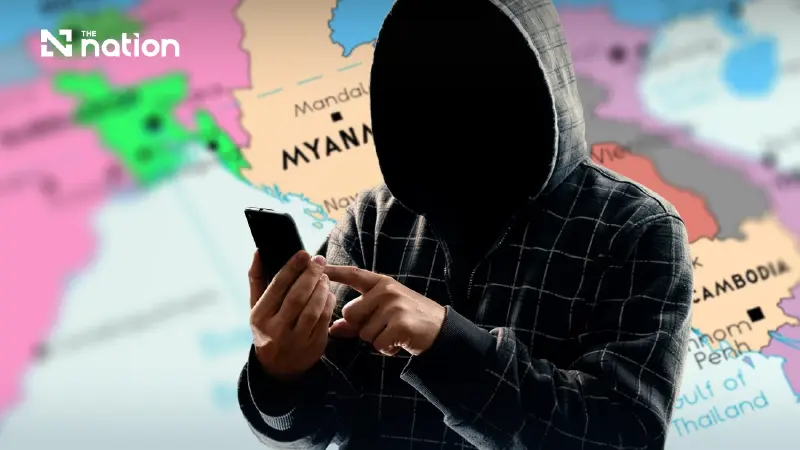


Gen Ukrit says operations will cover the western and eastern borders and maritime areas, with a focus on scam centres and human trafficking.
- Thailand's Border Security Integration Centre is launching a new drive targeting technology-related crime, human trafficking, and scam centres.
- The operation will focus on two main fronts: the western border with Myanmar and a newly prioritized eastern front with Cambodia.
- A new special operations unit is being established to coordinate with the Royal Thai Police and integrate the mission with national defense.
- The initiative will focus on scams and trafficking, while drug-related matters will continue to be handled by a separate agency.

Gen Ukrit Boontanon, Chief of Defence Forces, in his capacity as director of the Border Security Integration Centre, speaking about a meeting of the centre at 12.05pm on Tuesday (June 30, 2026) at the Royal Thai Armed Forces Headquarters on Chaeng Watthana Road in Bangkok concerning efforts to tackle call-centre gangs along the border, said operations had two fronts.
Viewed under the Ministry of Defence’s orders and announcements on the control of cross-border goods, there was the western front adjoining Myanmar, the existing operational area where work was carried out last year, and an added eastern front adjoining Cambodia, as well as maritime areas.
These were areas being prioritised in pushing the suppression of technology-related crime, human trafficking and scam centres.
Ukrit said drug-related matters were already handled by the Office of the Narcotics Control Board (ONCB).
The Border Security Integration Centre would only monitor and supervise work related to narcotics, and would not create a new organisation that would add complexity.
However, work involving scammers and human trafficking needed to be tightened, making it necessary to set up an organisation to coordinate with the Royal Thai Police and relevant agencies.
Ukrit said the body would be set up as a special operations unit and linked to national defence because all missions had to be mutually supportive and not conflict with one another.
As he was performing both roles, work had to be integrated and coordinated.
The suppression of scammers and national defence had to support each other and proceed in both dimensions.
Relations with the armed forces of other countries also had to follow the same approach, within the conceptual framework of strengthening security.
Addressing public unease over the border situation, Ukrit said information was circulating in many forms and people should follow developments carefully.
The best safeguard, he said, was not to believe information immediately after receiving it, but to verify the facts with reliable government agencies to better understand the situation.
He confirmed that the overall border situation was still not a cause for concern.
Ukrit said that even if they had made preparations, Thailand had also made preparations.
In some areas, Thailand could do better than them, but he did not want to explain the details.
In some matters, based on news images, they had done some things well, but people should not assume they did everything well.
By nature, they would speak about what they could do, while keeping quiet about what they could not do, and that perspective also had to be understood, he said, asking the public to have confidence in the capabilities of the armed forces.
