
Thai shrimp industry urges government to seal Malaysia export deal within 30 days
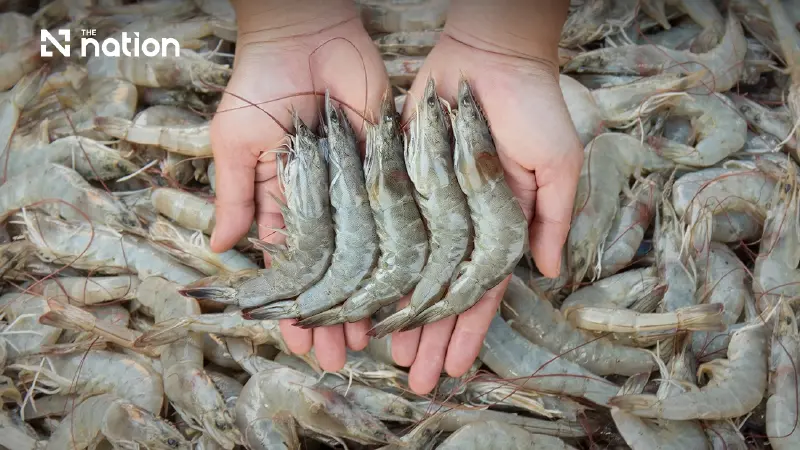


The Thai Shrimp Association is urging the government to finalise talks with Malaysia within 30 days to restore shrimp exports before wild shrimp supplies rise after the end of the bay-closure period.
The Thai Shrimp Association has called on the government to accelerate negotiations with Malaysia and complete them within the 30-day timeframe agreed by both sides.
The appeal follows positive signals from bilateral talks and comes ahead of the Prime Minister’s visit to Malaysia on July 8, when the association hopes Thailand will push for the unlocking of Thai shrimp exports, particularly as wild shrimp supplies are expected to increase after the end of the bay-closure measure.

Ekapoj Yodpinit, president of the Thai Shrimp Association, said after learning the outcome of bilateral talks between Agriculture and Cooperatives Minister Suriya Juangroongruangkit and Malaysia’s Agriculture and Food Security Minister Datuk Seri Mohamad Sabu on July 1, 2026, that both sides had agreed to speed up residue and sanitary inspection procedures.
The talks concerned Malaysia’s suspension of shrimp imports from Thailand. Both sides agreed to work towards restoring normal import and export procedures within no more than 30 days.
On behalf of the Thai Shrimp Association and shrimp-farming networks nationwide, Ekapoj thanked the government for urgently addressing the hardship faced by shrimp farmers and pushing talks with Malaysia towards concrete progress.
Trade talks and food-safety standards highlighted
Ekapoj said the success of the latest talks was an important first step, paving the way for Thailand’s negotiating team to proceed with discussions on both trade and technical issues related to food-safety standards.
He said the process must be conducted carefully and transparently, while taking into account the national interest in terms of both exports and consumer protection.
He stressed that food-safety inspections were necessary and should be carried out strictly. However, they must also be transparent, swift and not used as a trade barrier, in order to ensure fairness for all parties.
Hopes pinned on PM’s Malaysia visit to close deal
With Prime Minister Anutin Charnvirakul scheduled to visit Malaysia on July 8, 2026, together with a Thai delegation, the Thai Shrimp Association urged the government to push for negotiations and related procedures to be completed within the agreed 30-day framework.
The move is aimed at resolving obstacles to Thai shrimp exports, especially for wild-caught shrimp, whose supply is expected to rise after the end of the Department of Fisheries’ bay-closure measure.
Ekapoj concluded that, as a representative of the Thai shrimp industry, he wished to encourage the government and the negotiating team assigned to hold talks with Malaysia.
He said he hoped the negotiations would succeed, as shrimp farmers across the country had placed their hopes in the government and the negotiating team this time.
