
AOT deploys K-9 teams at Suvarnabhumi after Thai crew drug case in Australia
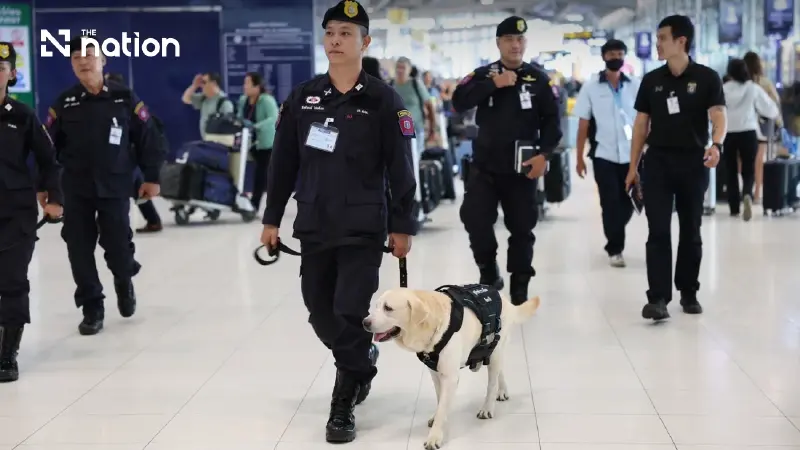


Airports of Thailand has deployed K-9 narcotics-detection teams at Suvarnabhumi Airport, adding police dogs to outbound baggage checks after a Thai flight attendant was arrested in Australia.
Airports of Thailand Public Company Limited (AOT) is pressing ahead with a full-scale upgrade of aviation security at Suvarnabhumi Airport, deploying K-9 police dog units to strengthen outbound narcotics screening.
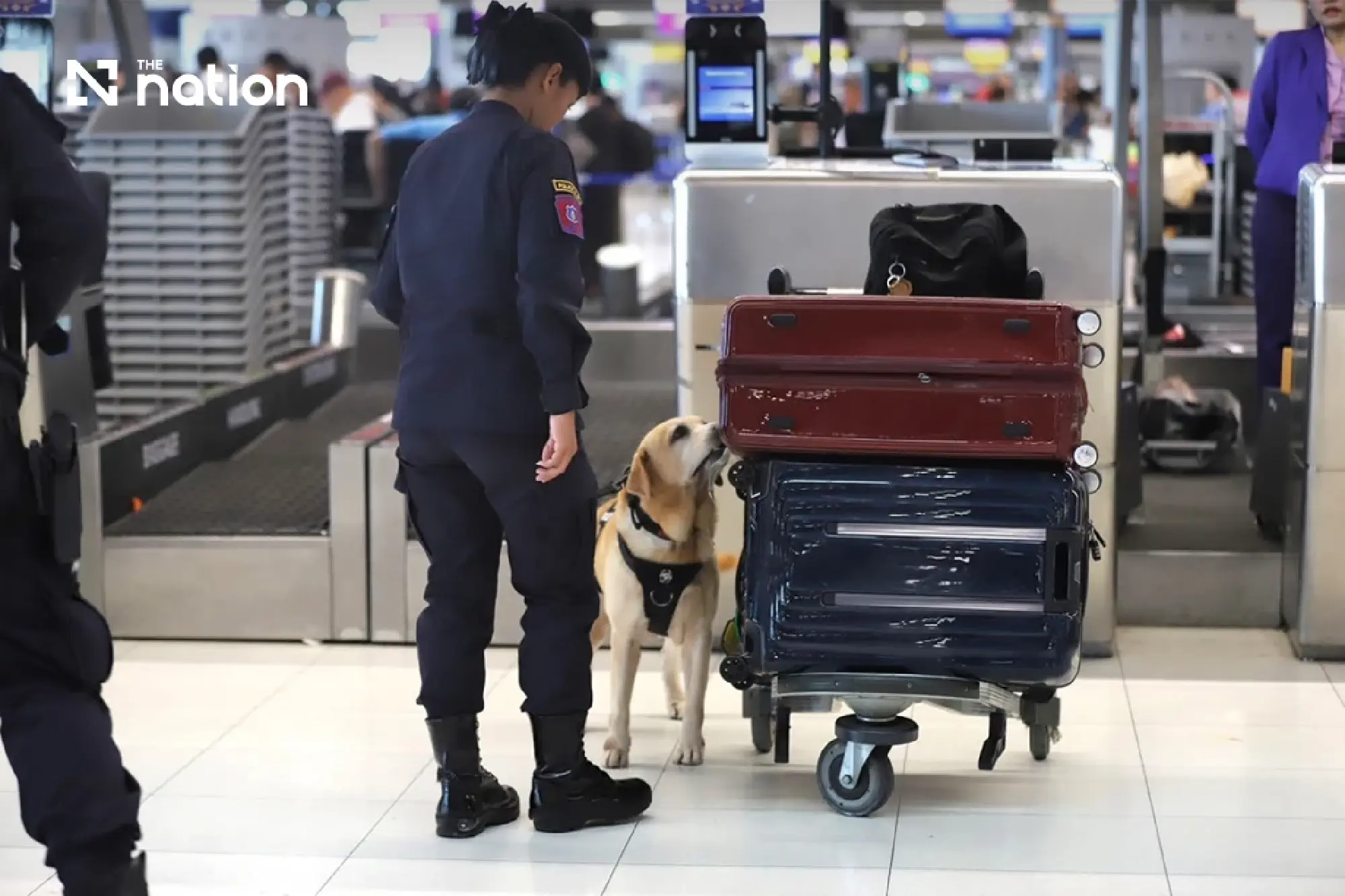
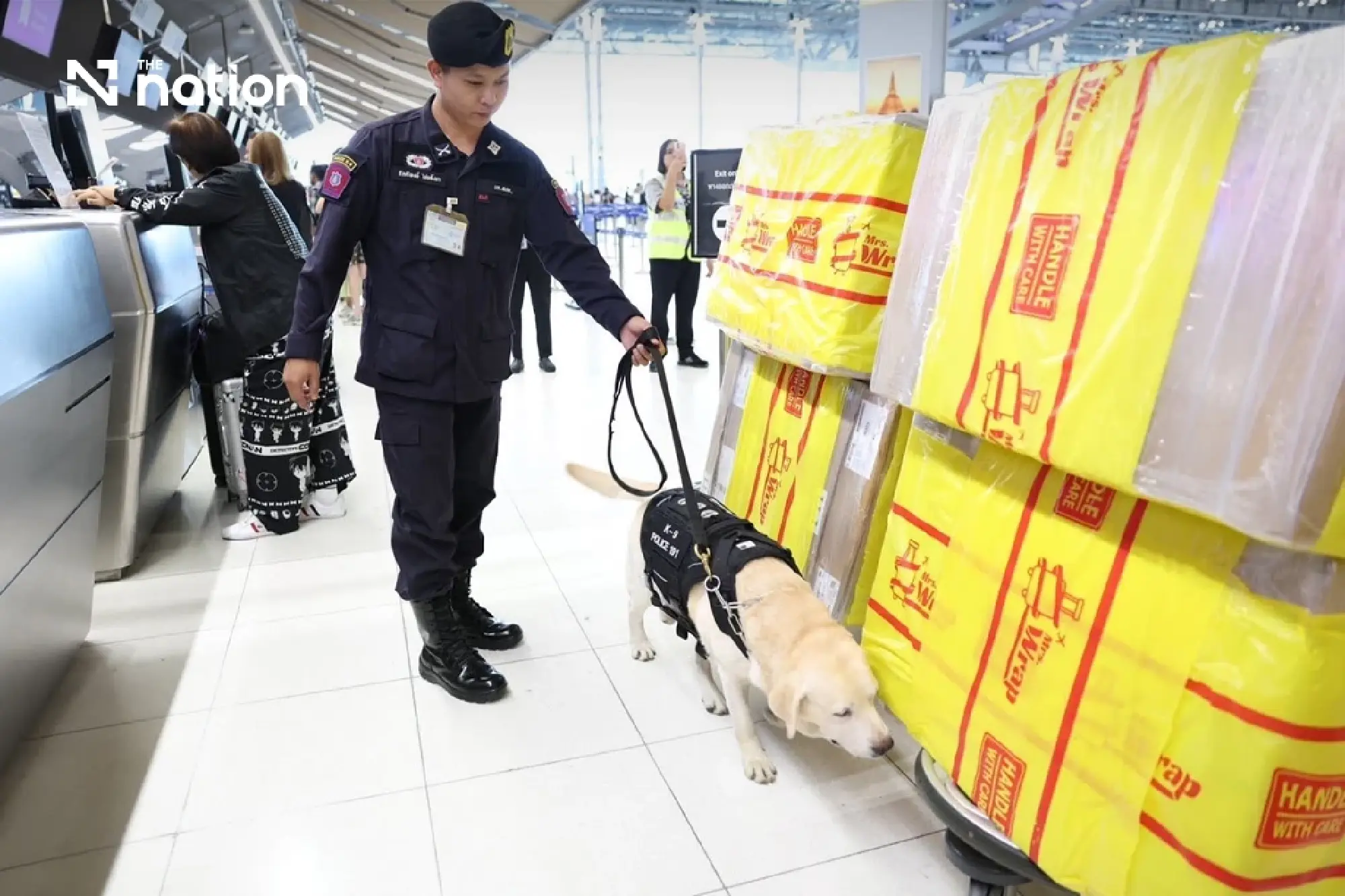
Since Tuesday (July 7), K-9 teams from the Police Dog Sub-Division under the Patrol and Special Operations Division have been carrying out random baggage inspections in the departure hall and at international passenger departure screening points.
Move follows Australia arrest
The heightened checks come after a Thai airline flight attendant was arrested and charged in Australia on suspicion of importing heroin after arriving at Melbourne Airport while on duty. Thai Airways confirmed that one of its employees had been detained and said it was cooperating with authorities.

The case has raised concern over whether international trafficking networks are targeting airline crew and exploiting gaps in outbound baggage checks.
Earlier x-ray clarification
Suvarnabhumi Airport had earlier acknowledged that its outbound X-ray screening system was designed mainly to detect explosives and aviation-security threats, not narcotics. Airport director Kittipong Kittikachorn said standard outbound aviation-security X-ray checks are not intended to serve as drug inspections, which often rely on other methods, including sniffer dogs.
That clarification has added weight to AOT’s latest move to combine existing X-ray screening with K-9 narcotics-detection teams, rather than relying on one system to cover both aviation-security threats and drug interdiction.

AOT responds to government policy
AOT president Paweena Jariyathitipong said the enhanced measures were in line with government policy following a Narcotics Control Board meeting chaired by Prime Minister and Interior Minister Anutin Charnvirakul on July 3, 2026.
The Prime Minister instructed relevant agencies, including the Immigration Bureau and AOT, to link and exchange information and integrate operations to improve drug prevention and suppression.

Three-pronged screening upgrade
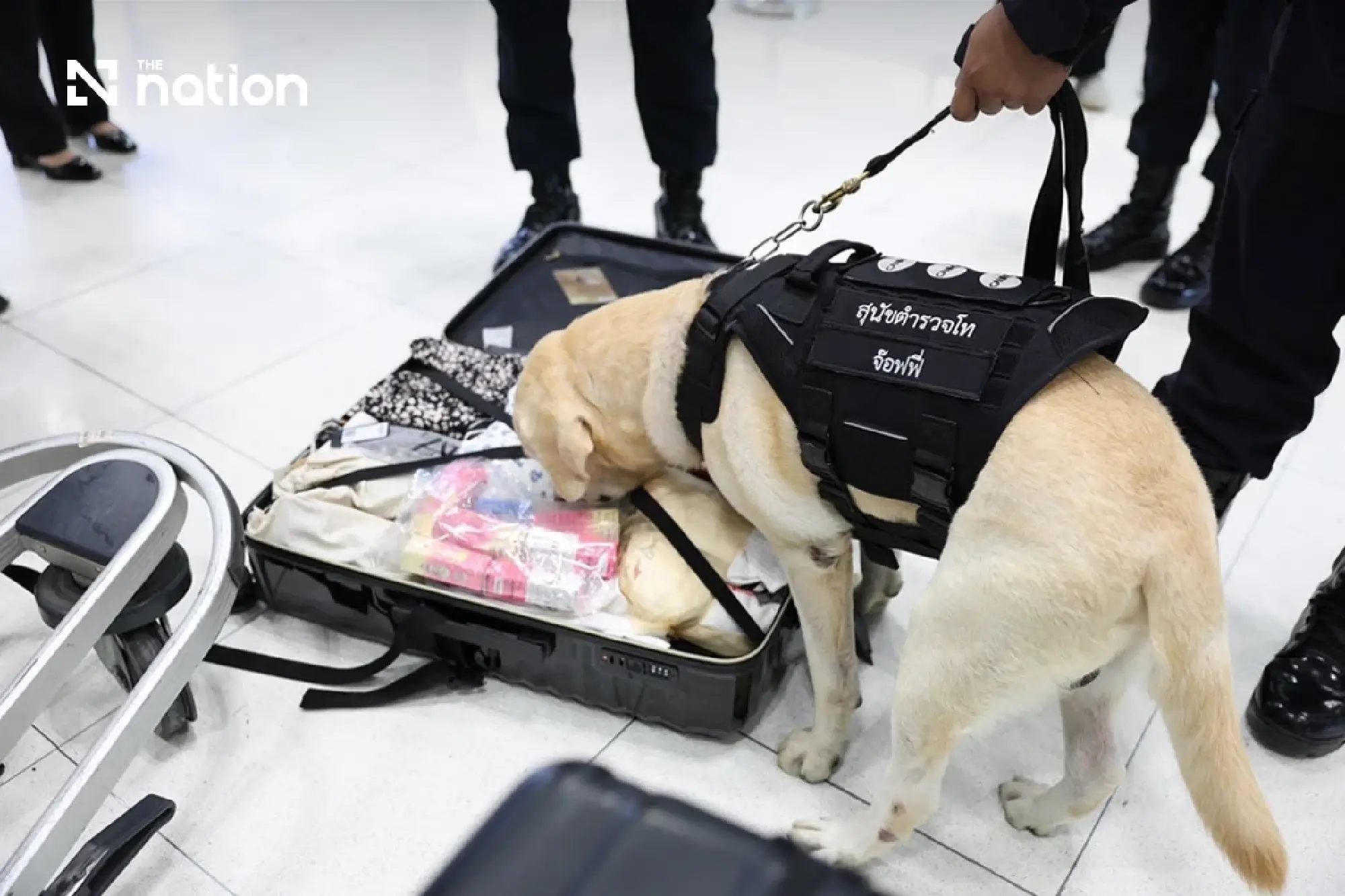
Under the first measure, AOT is working with the Customs Department and the Royal Thai Police to enhance outbound screening of passenger baggage and transported baggage through X-ray checks and K-9 sniffer dogs.
The second measure focuses on stricter and more thorough baggage checks for crew members. Airlines are also expected to enforce stricter rules on crew carrying or accepting items on behalf of others, with disciplinary action for violations.
The third measure involves linking databases between the Customs Department, AOT and other relevant agencies to improve the speed and efficiency of security information management.

Main gateway under tighter watch
Suvarnabhumi Airport is Thailand’s main international gateway and handles the country’s highest volume of overseas flights. AOT said cooperation with the Civil Aviation Authority of Thailand, the Customs Department, the Immigration Bureau, the Office of the Narcotics Control Board and airlines would be strengthened.
The goal is to prevent Thailand from being used as a transit route for narcotics smuggling to third countries, while reinforcing confidence among passengers and airlines in the country’s aviation security standards.
