
PM heeds business concerns, reshapes Landbridge plan around Chumphon–Ranong links
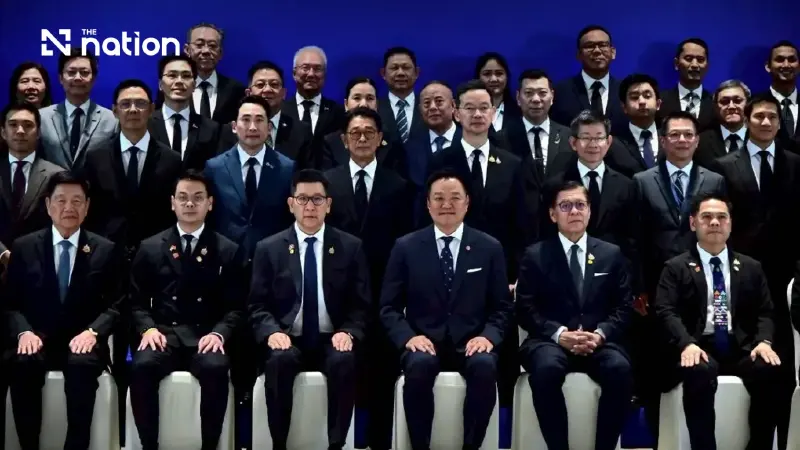


Anutin says Thailand will prioritise missing rail, road and port links while continuing to assess the cost and timing of the full Landbridge project
- The Thai government, following advice from business leaders, will delay the full Landbridge megaproject to prioritize completing existing missing rail, road, and port connections.
- This shift in strategy is a direct response to concerns from the private sector, which recommended focusing on more practical and immediate infrastructure links sufficient for the next 5-10 years.
- The immediate focus will be on improving the deep-sea port in Ranong and connecting it with Chumphon and Thailand's wider land-based logistics network.
- While the full Landbridge project will continue to be studied, the government believes upgrading existing infrastructure is a faster and more proportionate response to current investment needs.
Thailand will prioritise completing missing rail, road and port connections before committing to the full Landbridge megaproject, Prime Minister Anutin Charnvirakul said during an economic mission to Chengdu on Saturday.

The Landbridge remains part of the government’s policy direction and will continue to be studied, but Anutin said infrastructure that could be improved immediately should come first.
Speaking to reporters at 4pm local time on July 18, one hour ahead of Thailand, the Prime Minister said the country’s central position in Southeast Asia gave it the potential to connect neighbouring economies by both land and sea.
The immediate priority was therefore to close gaps in the existing transport network, particularly missing railway links, rather than wait several years for the complete Landbridge scheme to begin.
“We need to accelerate the land infrastructure connections that are still missing, including the rail system,” Anutin said.
He said Thailand was uniquely positioned at the centre of ASEAN, with the ability to connect north, south, east and west through regional land routes and maritime gateways.
Ranong port to be improved first
Asked whether development would begin with the western port component of the Landbridge, Anutin said the government would first improve the deep-sea port in Ranong.
The port would then be connected with Chumphon and Thailand’s wider land-based logistics network, allowing cargo to move onwards to other countries.
The Transport Ministry is continuing its study of the broader Landbridge project in parallel, assessing its economic viability and the most appropriate investment timetable.
The review is intended to ensure that any eventual development produces the greatest possible benefit for Thailand.
The proposed Landbridge would connect deep-sea ports on Thailand’s Andaman Sea and Gulf of Thailand coasts through railways, motorways and logistics infrastructure, providing an alternative cargo route across the southern peninsula.
Anutin, however, indicated that upgrading the existing ports and completing missing rail and road sections could offer a faster and more proportionate response to Thailand’s investment needs over the next five to 10 years.
Private sector urges practical connections first
The Prime Minister outlined the revised emphasis earlier on Saturday during a luncheon with senior Thai business executives at the Tianfu International Convention Center in Chengdu.
The “Prime Minister–Thai Private Sector Luncheon” began at about 12.30pm and brought together more than 100 business representatives to exchange views on investment, logistics and economic cooperation with China.

Anutin told the gathering that Thailand should look ahead with confidence because its position at the heart of ASEAN allowed it to connect with markets in every direction.
He said business leaders had advised the government that the complete Landbridge did not need to be implemented immediately.

During earlier discussions with the Federation of Thai Industries, the Thai Chamber of Commerce and the Thai Bankers’ Association, private-sector representatives instead proposed completing railway links towards Thailand’s eastern and western regions and connecting them with the main north-south railway network.
Improving ports on both southern coasts alongside those connections could be sufficient for the country’s investment requirements over the next five to 10 years, they told the government.
Anutin said the government had listened to the recommendation.
Even without opposition, a new Landbridge could take another three to five years before construction began, while improvements to existing ports, railways and roads could proceed much sooner through established development processes.
“This is what we heard from the private sector — that this would be enough for now,” he said.
Government pledges stronger investment support
Anutin told business leaders that foreign partners already regarded Thailand as having a strong infrastructure base.

He said the government wanted to go beyond merely facilitating private investment by creating practical routes for businesses to reach their investment and expansion targets.
The administration would support Thai companies seeking overseas partners and help investors operate in Thailand, provided their activities complied with the law.
More than 150 Thai business representatives travelled to China as part of the delegation to explore commercial opportunities and potential partnerships.
Anutin rejected suggestions that the government had simply brought businesspeople along for the visit, saying the companies had joined because they recognised opportunities for growth.
“They would not spend their time travelling here if they saw no benefit,” he said.
The presence of more than 100 private-sector representatives at the luncheon demonstrated their readiness to pursue partnerships and business-matching opportunities, he added.

The Cabinet and government would stand behind them, remove unnecessary obstacles and provide every lawful form of support available.
Delegation arrives in Chengdu
Anutin, who also serves as interior minister, arrived at Chengdu Shuangliu International Airport at approximately 11.30am on July 18 with his wife and members of Team Thailand.
The delegation included Deputy Prime Minister and Finance Minister Ekniti Nitithanprapas, Deputy Prime Minister and Foreign Minister Sihasak Phuangketkeow, Industry Minister Varawut Silpa-archa and Digital Economy and Society Minister Chaichanok Chidchob.
The Prime Minister began his economic programme shortly after reaching Chengdu by attending the private-sector luncheon at the Tianfu International Convention Center.
His official China itinerary covered Shanghai, Chengdu and Beijing, with the visit focused on strengthening trade, investment, innovation and high-technology cooperation.
Among the senior business figures at the luncheon were Federation of Thai Industries chairwoman Pimjai Leeissaranukul; Thai-Chinese Chamber of Commerce chairman Narongsak Putthapornmongkol; Thai Chamber of Commerce vice-chairman Viboon Supakornpongkul; and CP Group senior vice-chairman Suphachai Chearavanont.
Other participants included TCP Group chief executive Saravoot Yoovidhya; The Mall Group chairwoman Supaluck Umpujh; Amata Corporation chairman and chief executive Vikrom Kromadit; Saha Group chairman and chief executive Vichai Kulsomphob; and 304 Industrial Park chairman Yothin Dumnernchanvanit.
PTT senior executive vice-president Chaya Chandavasu and Sahafarms executive chairwoman Manoonsri Chotitawan were also among those attending.
A total of 48 Thai companies, represented by 153 people, joined the business programme in Chengdu. Of those, 110 representatives attended the luncheon with the Prime Minister.
The companies included businesses already working with Chinese investors and others seeking new commercial partnerships.
FastPass linked to trillion-baht investment momentum
Anutin said the Thailand FastPass programme operated by the Board of Investment had helped reduce procedural obstacles facing major investment projects.
He linked the mechanism to stronger investment momentum, noting that applications submitted since the start of the year had exceeded 1 trillion baht.
Official BOI figures show that Thailand received 624 investment applications worth a combined 1.017 trillion baht during the first quarter of 2026, led by digital and electronics projects connected with artificial intelligence.
The FastPass scheme was established to accelerate strategic projects by coordinating solutions to issues such as electricity supply, access to clean energy, land availability, visas, work permits and regulatory approvals.
Anutin said the investment figures reflected a new phase in which Thailand was returning to the attention of the international investment community.
Talks with Chinese premier set for July 20
After his Chengdu programme, Anutin was scheduled to travel to Beijing on Sunday, July 19, for discussions with senior Huawei executives on digital technology and innovation.
On Monday, July 20, he was due to meet the chairman of the Standing Committee of China’s National People’s Congress before attending an official welcoming ceremony and full bilateral talks with Chinese Premier Li Qiang.
The two prime ministers were also scheduled to witness the signing of agreements between Thai and Chinese government agencies, followed by a luncheon hosted by Li.
Anutin’s China visit was designed to combine government-level discussions with direct engagement involving major companies in technology, robotics, e-commerce and other advanced industries.
The Prime Minister said feedback collected from Thai businesses in Chengdu would be used in the government’s subsequent discussions with the Chinese side.
