
PWA to move Chiang Rai water production to Mae Lao basin amid Kok River contamination concerns
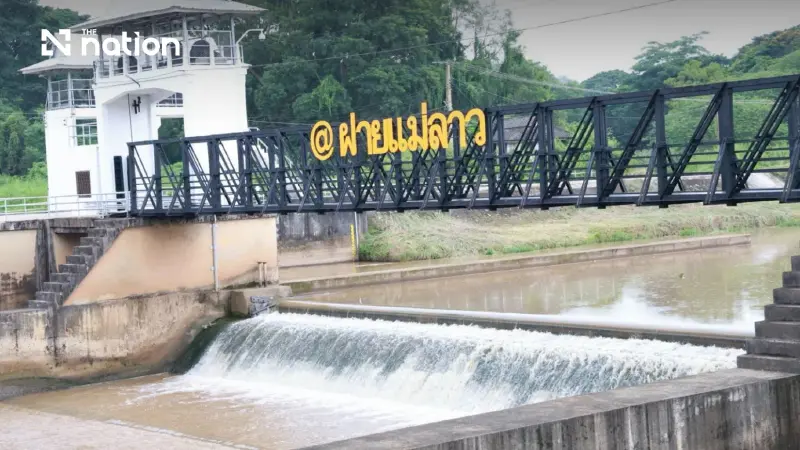


Thailand is accelerating a long-term water security plan in Chiang Rai, with the Provincial Waterworks Authority preparing to shift its main raw water source from the Kok River to the cleaner Mae Lao River basin.
Thailand is moving ahead with a major water security strategy in Chiang Rai to address public concern over the quality of water used for consumption and daily use in the North.
State agencies are closely monitoring efforts to resolve environmental contamination in the Kok River, while the Provincial Waterworks Authority (PWA) is preparing a major overhaul of the regional water supply system by shifting its main raw water source to the Mae Lao River basin, which has cleaner water and a stable year-round flow.
The plan aims to reduce long-term health risks and lay the foundations for a modern utility system that meets international standards and supports the future growth of Chiang Rai.

Deputy Prime Minister Songsak Thongsri said during an inspection visit to the Mae Lao weir in Dong Mada subdistrict, Mae Lao district, Chiang Rai, that the province is currently facing contamination in several key rivers, including the Kok, Sai, Ruak and Mekong rivers.
The Kok River is of particular concern because it is a transboundary river flowing from Myanmar and serves as the main raw water source for the PWA’s Chiang Rai branch.
Recent tests found heavy metal contamination, especially arsenic, exceeding standard levels.

Although the PWA’s water production system follows standard control procedures and remains safe, the findings have caused concern among local residents over possible residual contamination.
Songsak said the government recognises the seriousness of the problem and has assigned relevant agencies to accelerate long-term solutions.
Under the plan, the PWA will relocate its raw water production source to the Mae Lao River. The project has already been approved by the National Water Resources Committee, with construction of the new Mae Lao water production station scheduled to begin in 2027 and expected to be completed in 2029.

The new facility will expand tap water services to cover Mueang Chiang Rai, Wiang Chai and Mae Lao districts, while strengthening confidence in water cleanliness, safety and supply stability as Chiang Rai continues to grow.
Songsak said the PWA has been assigned as the lead agency, working with relevant authorities to drive the waterworks expansion project in a systematic way.

The Royal Irrigation Department has also been instructed to speed up and improve water management around the Mae Lao weir to match rising demand.
The government is emphasising balanced and sufficient water allocation for both agriculture, which remains the main occupation of local communities, and household consumption.
Agencies have also been told to prepare for the transfer of raw water to the new water production station.
On water quality monitoring, the Pollution Control Department has been assigned to continuously inspect and monitor water conditions in the Mae Lao River to ensure public confidence that water supplies remain clean and safe.
Songsak said Chiang Rai province and relevant agencies must urgently communicate with local residents to build understanding, reduce concern and provide knowledge on water quality monitoring and proper safety practices to reduce risks from heavy metals.
The Office of the National Water Resources will oversee coordination and closely monitor overall progress to ensure that the solution is completed effectively and delivers concrete benefits to the public, he said.

