
From repairer to builder: Thailand’s DEMU bid for rail industry leap
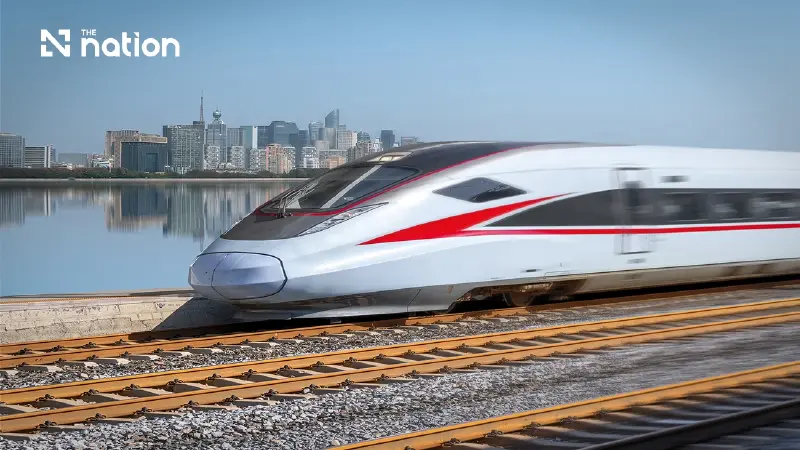


Thailand’s DEMU prototype could support domestic rail manufacturing, with plans to raise local content and unlock billions in investment
- Thailand is developing a prototype Diesel Electric Multiple Unit (DEMU) train with the primary goal of building domestic capability in the railway manufacturing industry.
- The project aims to increase the use of local materials and components in train production, starting at 20% and targeting 75% within five years.
- By localizing production for planned procurement projects worth over 200 billion baht, the initiative is expected to generate over 100 billion baht for the Thai economy and reduce long-term maintenance costs.
Thailand is developing a new generation of rail technology through a prototype Diesel Electric Multiple Unit (DEMU), which aims to improve passenger services while building domestic capability in the railway industry.
The State Railway of Thailand (SRT) plans to introduce DEMU trains as a replacement for existing diesel railcars, with the project focusing not only on transport upgrades but also on increasing local participation in rail manufacturing.
The DEMU uses a diesel engine to generate electricity, which then powers electric motors connected to the wheels instead of relying on direct mechanical drive systems.
The train features a hybrid energy system that stores energy generated during braking, allowing it to reach speeds of up to 160 kilometres per hour. It can also operate using electric power when entering stations, reducing smoke and noise.
DEMU technology differs from traditional diesel railcars

Assoc Prof Dr Wichai Siwakosit, a railway systems and renewable energy engineering specialist at Kasetsart University, said the prototype project was developed through cooperation between the Rail Technology Research and Development Institute under the Ministry of Transport, Kasetsart University engineers and Italian railway design specialists.
The design follows European standards, according to Wichai.
Compared with conventional diesel railcars, DEMU technology offers several differences:
- Propulsion system: Traditional diesel railcars use engines connected directly to the wheels through gears, while DEMU trains use diesel-generated electricity to drive wheel motors without a gearbox system.
- Braking system: DEMU trains combine electric braking, which can recover energy into batteries, with conventional air brakes, reducing brake wear.
- Station operations: DEMU trains can enter and leave stations using electric motors, reducing exhaust emissions.
- Maximum speed: DEMU trains can reach 160 kilometres per hour, compared with around 120 kilometres per hour for older diesel railcars.
“DEMU trains provide more efficient propulsion, better torque and do not require maintenance of gearbox systems. The hybrid system also improves braking efficiency and reduces brake consumption,” Wichai said.
Domestic manufacturing opportunities
The project is also being positioned as an opportunity to develop Thailand’s rail supply chain by encouraging local manufacturers to move beyond maintenance work and participate in production.
Thai companies already have capabilities in areas such as large structural welding and European-standard air-conditioning systems, according to the source.
The project aims to increase domestic content in rail production, starting with 20% use of local materials and components before raising the share to 75% within five years.
The SRT has planned rail procurement projects worth more than 200 billion baht over the next 10-15 years, including around 110 billion baht for DEMU trains and more than 40 billion baht for passenger carriages.
If Thailand can produce more components domestically, the project could generate more than 100 billion baht in economic circulation, according to the source.
The project could also reduce long-term costs. Over a 40-year operating period, railway maintenance costs are estimated at around 600 billion baht. Developing domestic production of components and spare parts could reduce combined procurement and maintenance costs by up to 70%.
Next phase focuses on detailed design and prototype development
The DEMU project has completed its first phase, which covered conceptual engineering design, public consultation and manufacturer assessments.
The next phase will involve detailed design of individual components with domestic manufacturers and the development of a prototype train.
The project will require clear government policy, including a roadmap to support domestic production and establish a long-term direction for Thailand’s railway industry.
