
Thai Government Unveils THB 115 Billion Economic Boost
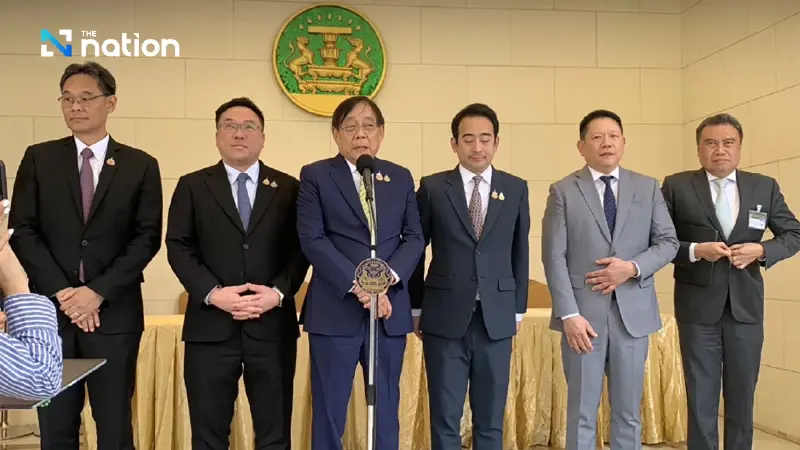


Thailand's Economic Stimulus Board has approved an initial 115 billion baht spending package, mainly for water and transport, projected to significantly uplift GDP as the Prime Minister demands transparency
Thailand's Finance Minister, Pichai Chunhavajira, announced on Wednesday that the Economic Stimulus Board has given the green light to a substantial initial funding allocation aimed at invigorating the national economy.
This first tranche of 115 billion baht forms part of a broader 157 billion baht framework.
Speaking after the Economic Stimulus Project Policy Committee meeting, Pichai detailed that 70% of this initial sum will be channelled into crucial water and transportation infrastructure projects.
This includes initiatives for consumption, flood and drought prevention, and enhancing road connectivity between major and secondary cities.
A further 10% of the funds, approximately 10.53 billion baht, has been earmarked for tourism projects. The remaining funds are designated to address US tax measures, education, and other unspecified schemes.

The Ministry anticipates that this 115 billion baht injection will boost the country's Gross Domestic Product (GDP) by approximately 0.4–0.5%. Should the full 157 billion baht framework be utilised, the projected GDP increase could reach 0.5–0.6%.
Following its approval by the committee, the proposal is set to be presented to the Cabinet for consideration next week. A strict deadline has been imposed, requiring all funds to be committed by September 2025.
Notably, over 42 billion baht in proposed projects remain unapproved. These projects, submitted by local administrative organisations (LAOs), encountered issues of duplication and failed to secure endorsement from their parent ministries, necessitating revisions and re-evaluation.
Prime Minister Paetongtarn Shinawatra addressed the meeting, highlighting Thailand's current economic growth which she described as "below its potential".
She pointed to low levels of both public and private investment relative to GDP, which has led to a build-up of structural problems over time. Consequently, the Prime Minister stressed the necessity of leveraging this budget as a primary tool for economic recovery.
Paetongtarn underscored the critical importance of transparency, cost-effectiveness, and accountability in the expenditure of the entire 157 billion baht. She insisted on strict adherence to the Public Debt Management Act and the Budget Act.
To ensure genuine economic and public benefit, both in the short and long term, the Prime Minister ordered the establishment of a sub-committee tasked with monitoring and evaluating all projects.
