
Thailand to overhaul economic and social framework; NESDC tackles key structural issues
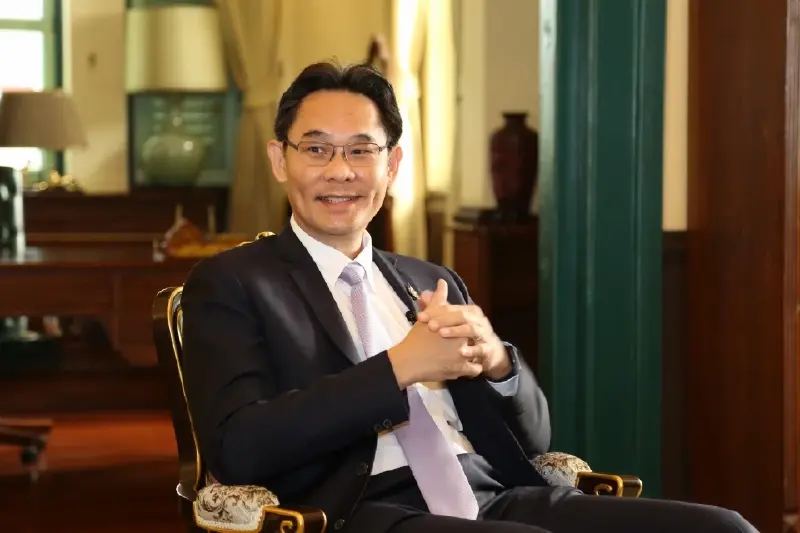


NESDC holds annual 2025 forum to address structural and institutional barriers, paving the way for Thailand’s 14th National Economic and Social Development Plan.
Danucha Pichayanan, Secretary-General of the National Economic and Social Development Council (NESDC), announced that the council will hold its 2025 annual meeting on September 26, focusing on Thailand’s Institutional Reform. The key objective is to restructure the country’s production and service sectors, and improve income distribution to promote more equitable development.
“NESDC will review the outcomes of the 13th National Economic and Social Development Plan and highlight the challenges and limitations that have prevented expected results,” Danucha said. “Key issues include institutional mechanisms, regulatory shortcomings, and corruption, all of which affect public sector efficiency and confidence.”
This year’s forum will examine structural and institutional constraints that have hindered national development. Despite continuous implementation of the 13th Plan (2023-2027) with significant budget allocations and resources, tangible outcomes remain limited. Challenges such as low competitiveness, workforce development gaps, environmental management issues, and bureaucratic inefficiency have substantially reduced public trust and expectations.
NESDC has identified five key structural and institutional limitations:
- Regulations that do not foster competitiveness
- Corruption distorting incentive structures
- Weak rule of law
- Incomplete checks and balances in democracy
- Redundant and inefficient public administration
These factors contribute to monopolies, reduce citizen participation, weaken competitiveness, and increase social inequality.
The event will also feature a forum titled “Overhauling Thailand’s Structure: How to Make it Work”, bringing together experts from various fields to discuss practical solutions. Insights from the meeting will inform adjustments to the remaining period of the 13th Plan and provide a foundation for the 14th National Economic and Social Development Plan (2028-2032).
“Everyone attending the forum can help design solutions to ensure that both public and private development mechanisms deliver expected outcomes. All feedback will be used to shape the 14th Plan, which we aim to develop inclusively so all sectors benefit from shared progress,” Danucha concluded.
Veerathai Santiprabhob, former governor of the Bank of Thailand and chairman of the Thailand Development Research Institute Foundation (TDRI), said that over the years Thailand has implemented several development plans, with everyone working hard to elevate the country’s economy and society and improve the quality of life for Thai people.
“However, when we look at the challenges and problems Thailand faces today, it is clear that no matter how hard we work, we seem to be lagging behind peer countries in terms of productivity. Inequality in Thailand continues to rise, both in income and wealth.
“At the same time, the resilience of Thailand’s economy and society appears to be declining, from the national level down to households. Public finances face multiple challenges, household debt has increased significantly, and ultimately, the ability to adapt to new challenges — particularly climate change, demographic shifts, and technological changes — remains limited.
“Technology now plays a major role in economic and social development, which highlights why Thailand’s progress has not kept pace with other countries. This requires serious attention to institutional structures. The structures of society, the economy, and especially the state are crucial — from policymaking and incentives to regulation and guiding other sectors of society.
“If Thailand’s institutional framework is not seriously reformed, it will be difficult to keep up with peer countries and the challenges ahead. We must work together to find solutions, which is the purpose of this forum,” he added.
