
Thai Government to Finalise High-Speed Rail Tenders by 2026
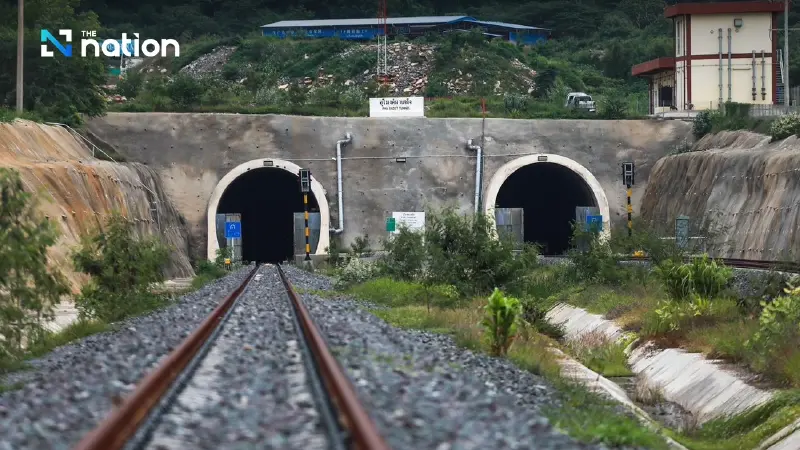


State Railway of Thailand reveals phased bidding for the 357km Phase 2 extension, targeting a 2031 launch for the full Bangkok-to-Nong Khai link
- The State Railway of Thailand (SRT) plans to auction all civil works contracts for the high-speed rail's Phase 2 extension (Nakhon Ratchasima to Nong Khai) by the end of 2026.
- The bidding process for the 357km extension will be divided into three tranches, with the first tenders launching this year and the final auctions scheduled for February 2026.
- Following the completion of the tendering process and a four-year construction period, the full Bangkok-to-Nong Khai line is targeted to begin service in 2031.
State Railway of Thailand reveals phased bidding for the 357km Phase 2 extension, targeting a 2031 launch for the full Bangkok-to-Nong Khai link.
The State Railway of Thailand (SRT) has announced an ambitious roadmap to auction all remaining civil works contracts for the Thai-Chinese High-Speed Rail project, spanning from Bangkok to the border town of Nong Khai, by the end of 2026.
Anan Phonimdang, acting governor of the SRT, confirmed that the organisation is currently drafting Terms of Reference (TOR) and determining median prices for the initial three contracts of Phase 2 (Nakhon Ratchasima to Nong Khai).
Public hearings regarding these tenders are expected to commence on the SRT website by the end of this month.
The second phase of the project covers 357.1 kilometres with a total investment of 341.35 billion baht. The civil engineering works have been divided into eight primary contracts:
Initial Tranche (Contracts 1–3): Covering the route from Nakhon Ratchasima to Ban Haet. Tendering is slated for the first and second quarters of this year.
Second Tranche (Contracts 4–6): Stretching from Ban Haet to Sra Krai. Public hearings are scheduled for January 2026.
Final Tranche (Contracts 7–8): Including the final stretch to Nong Khai and a maintenance centre at Chiang Rak Noi. Auctions are expected to begin in February 2026.
The SRT anticipates that construction for Phase 2 will take approximately four years, with the line officially opening for service in 2031.
While Phase 2 gains momentum, Phase 1—the 253km stretch from Bangkok to Nakhon Ratchasima—continues to face hurdles. Two critical contracts remain stalled:
Bang Sue to Don Mueang (Contract 4-1): This section shares infrastructure with the separate "Three Airports" high-speed link. Work is currently suspended pending a revised joint-venture agreement with the private partner, CP Group.
Ban Pho to Phra Kaeo (Contract 4-5): This contract has been delayed by heritage concerns regarding the Ayutthaya UNESCO World Heritage site. The SRT is currently undertaking a redesign of the section, a process expected to take a further six months.
The 341 billion baht budget for the Phase 2 extension is allocated across four key areas:
- Civil Works: 235.1 billion baht
- Rail Systems & Rolling Stock: 80.2 billion baht
- Land Acquisition: 10.3 billion baht
- Project Management & Consultancy: 10.1 billion baht
Once fully operational, the high-speed link will serve as a vital artery connecting Thailand to the pan-Asian railway network via Laos and China, significantly boosting regional trade and logistics.
