
7,000+ cannabis shops close as rules tighten—patients assured
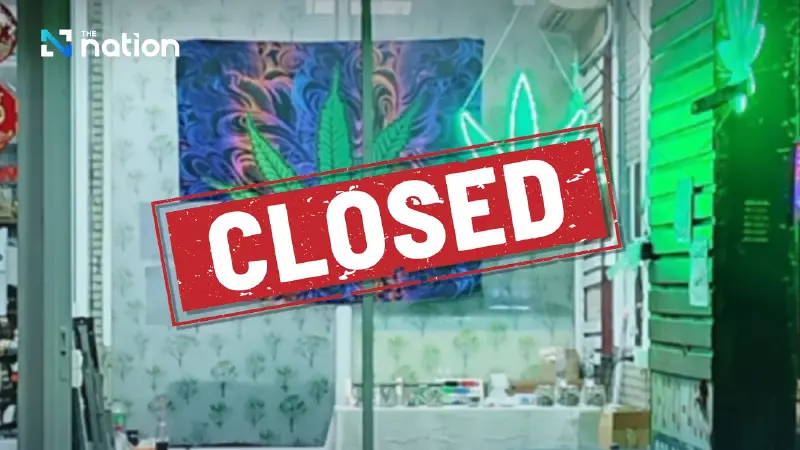


Thailand’s health minister says over 7,000 cannabis shops shut in 2025 as renewals slump, with new licences limited to four legal facility types and patients assured of access.
Public Health Minister Pattana Promphat said on Monday that the ministry had been briefed on progress on a draft ministerial regulation governing permits to study, research, export, sell or process “controlled herbs” for commercial purposes, after it was approved by the Cabinet.
He said the existing 2016 ministerial regulation did not reflect the current cannabis landscape, and that a dedicated control mechanism was needed for the export, sale and processing of cannabis for commercial use, in order to protect consumers and reduce impacts on communities.
Under the new regulation, he said, it would be made clear that sellers must be legally designated facilities, with doctors responsible for prescribing and clearly identified personnel authorised to dispense cannabis to users. He added that Thailand had sufficient medical personnel in the relevant fields to support the licensing system.

Shops that still hold valid licences will be able to continue using them, Pattana said. However, once the new regulation takes effect, any licence renewal or new application will have to comply with the new criteria.
“Cannabis-related businesses will have to adapt, and operators will need to consider the process,” he said, adding that the ministry would ensure patients who require cannabis to treat medical conditions would not be left without medicine.
He said that, because dispensing would be carried out by doctors in medical facilities, hospitals nationwide would be able to accommodate demand and had licensed personnel in place. “Patients who use cannabis for treatment will certainly not face shortages,” he said.
According to the latest official figures on cannabis establishments as of December 28, 2025, there were 18,433 such businesses nationwide. In 2025, licences for 8,636 cannabis shops expired, but only 1,339 renewal applications were filed—about 15.5%. A further 7,297 shops did not seek renewal, leaving an estimated 11,136 establishments.
Looking ahead, the ministry said 4,587 licences are due to expire in 2026 and 5,210 in 2027.
The new ministerial regulation would “upgrade” establishments by limiting eligible premises to those specified by law: medical facilities, pharmacies, herbal product retailers, or the workplace of a traditional healer.
It would also require effective odour and smoke elimination systems to prevent nuisance or disruption to nearby residents, and stipulate that licensed premises must be located on property the applicant owns or has legal rights to occupy.
On storage and quality standards, the rules require an appropriately sized warehouse space, with cannabis stored separately to avoid contamination. Establishments must control temperature and humidity, avoid direct sunlight, and must not place products directly on the floor.
The regulation also raises standards for staff, requiring at least one on-duty worker at all times who has completed training provided by the Department of Thai Traditional and Alternative Medicine, to ensure operations meet professional and safety requirements.
During the transition period, existing licences will remain valid until they expire. However, renewals must immediately follow the new rules once the regulation takes effect. Applications submitted before the regulation comes into force will also be assessed under the new standards.
