
Government eyes 10pm petrol station closure, pushes WFH to cut fuel use


Ministries and state enterprises are being told to save energy, with wider WFH and possible limits on petrol station hours as Thailand moves to curb fuel use.
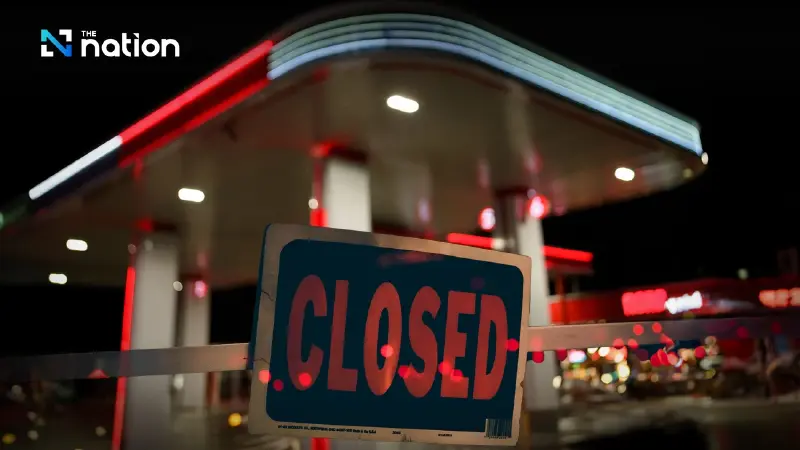
- The government is considering a mandatory measure to limit petrol station operating hours, requiring them to close by 10 p.m. to control fuel consumption.
- As part of its energy-saving plan, the government is pushing for immediate work-from-home (WFH) arrangements for public sector employees in roles that do not affect public services.
- These potential measures are a response to the global energy price crisis, aiming to reduce the country's oil consumption and ease the economic impact on the public.
- The actions are part of a wider six-point package for government agencies that also includes adjusting air-conditioner use, promoting car-pooling, and suspending overseas trips.
The government is considering additional energy-saving measures, with one key option being to limit the operating hours of fuel stations nationwide to no later than 10pm in order to control oil consumption during the global energy price crisis.
At the same time, it is introducing a six-point package for government agencies and state enterprises to reduce energy use and cut the country’s short-term expenses.
Airin Phanrit, deputy government spokeswoman, said on Tuesday (March 10) the Cabinet had acknowledged the Ministry of Energy’s proposed guidelines on reducing energy use in the public sector in response to volatile global energy prices and to ease the impact on the economy and people’s cost of living.
She said geopolitical tensions, particularly in the Middle East, a key source of global energy production and transport routes, had caused oil and energy prices on world markets to remain highly volatile.
The government is therefore closely monitoring the country’s energy management.
The Ministry of Energy has set up the Energy ICS centre to closely track the energy situation and prepare response measures in case the country’s energy supply is affected.
As for Thailand’s energy situation, the country currently has an average demand for refined oil of about 124 million litres per day.
Thailand still relies heavily on crude oil imports from overseas, particularly from the Middle East.
In terms of national oil reserves, the country currently has total reserves of about 8,054 million litres, comprising statutory reserves and commercial reserves, which can support domestic energy demand to a certain extent.
Airin added that, to prepare for possible developments, the Ministry of Energy had proposed energy-saving measures for government agencies, with an emphasis on efficient energy use and setting an example for other sectors of society.
The key measures are as follows:
- Adjust air-conditioner use appropriately and set the temperature at around 26–27 degrees Celsius; wear short-sleeved shirts and refrain from wearing suits and ties except for formal ceremonies.
- Reduce electricity use in office buildings, such as switching off lights and electrical equipment that are not necessary.
- Use Energy Saver mode for computers and switch them off when not in use.
- Reduce lift use by encouraging the use of stairs for short distances.
- Reduce the use of paper and photocopiers, while promoting the use of electronic systems in place of documents.
- Promote online meetings and work-from-home arrangements where appropriate.
There are also fuel-saving measures, such as checking vehicle conditions regularly, driving at appropriate speeds, car-pooling, and planning journeys to reduce energy use.
In addition, the government has assigned the Department of Public Relations to coordinate with television and radio stations as well as social media platforms to promote energy conservation across all sectors during the crisis.
If the situation escalates to the point that it affects the country’s energy supply, it may be appropriate to propose additional mandatory measures, such as avoiding the use of electricity for advertising signs for goods or services, shop signs, cinema signs and business premises from 10pm onwards, while setting fuel station opening and closing hours at no later than 10pm, with exceptions for stations on main highways.
The deputy government spokeswoman also said that if oil consumption could be reduced by about 5%, it would cut oil use by about 330,000 litres per month, equivalent to about 10.45 million baht per month.
If electricity use could be reduced by 5%, it would save about 31 million units of electricity per month.
“These measures are aimed at promoting efficient energy use, reducing the public sector’s energy expenses, and creating a model for energy conservation for other sectors of society, while also helping to strengthen the country’s long-term energy security.”
Airin also said that, beyond the WFH measure that the Ministry of Energy had already circulated for agencies to follow, the Prime Minister had instructed the Cabinet meeting that government agencies and state enterprises should proceed as follows: 1. begin WFH immediately in areas of work that do not affect public services; 2. suspend overseas study visits or training, and conduct them domestically instead.
